
Headlines
- Japan’s new prime minister, Sanae Takaichi, will reportedly request a fiscal stimulus package larger than the one enacted last year.
- US president Donald Trump is scheduled to meet with Prime Minister Takaichi in Japan early next week to discuss policy and trade matters.
- The United States and Canada are reportedly close to reaching a new trade agreement covering aluminum, steel, and energy.
Global Economics
United States
- We are now over three weeks into the government shutdown.
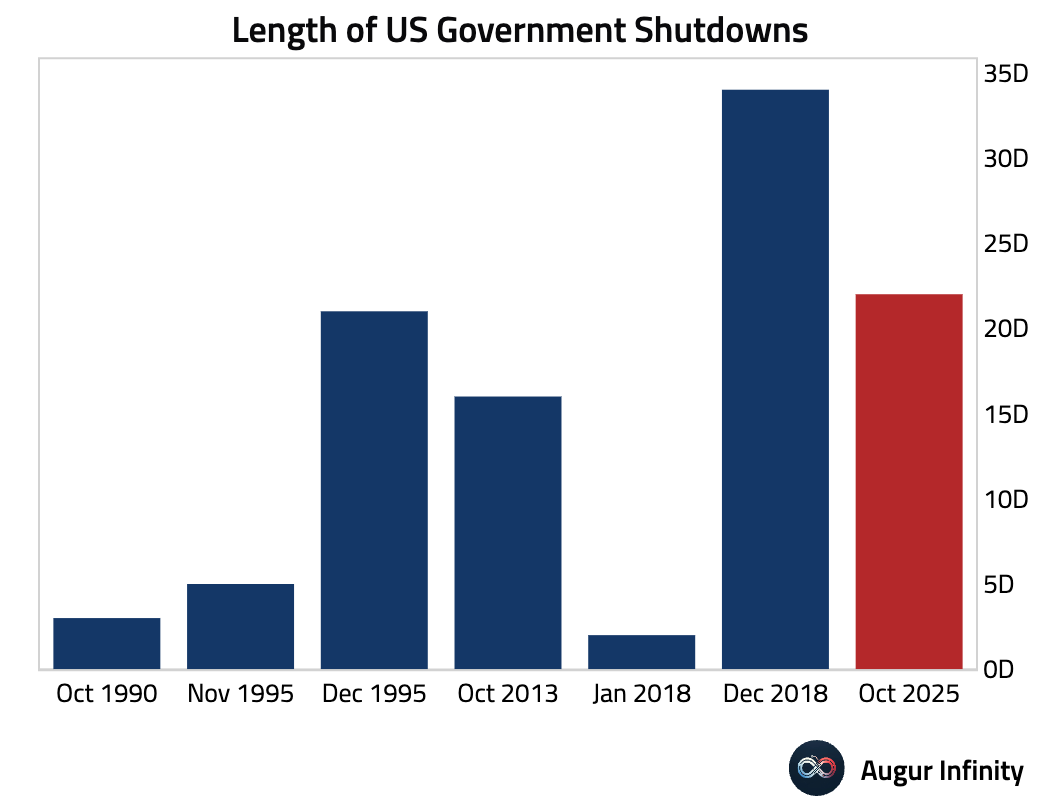
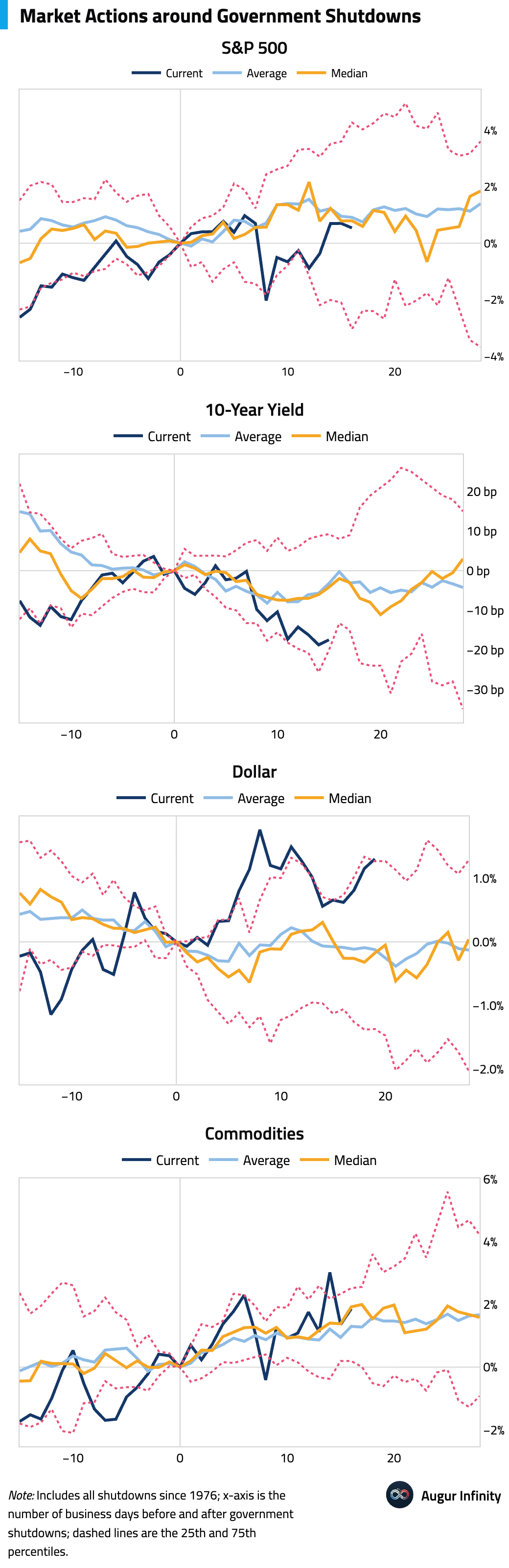
Here’s how markets are moving compared to their typical patterns following past government shutdowns (distorted by trade tensions).
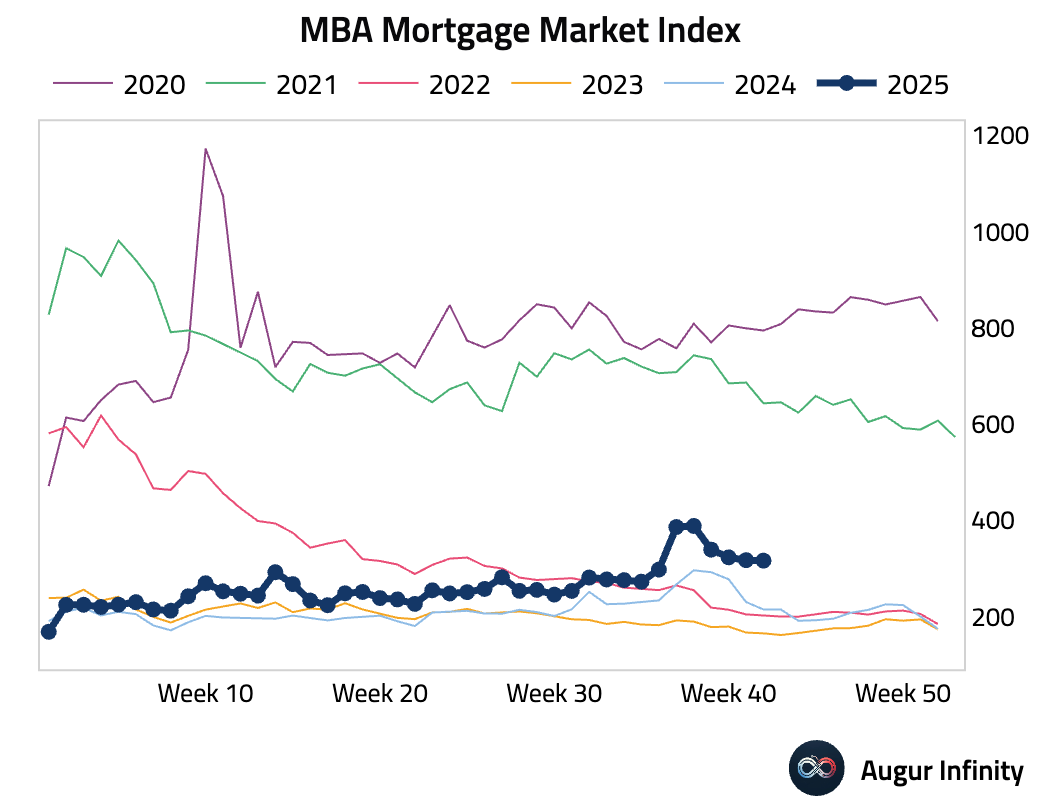
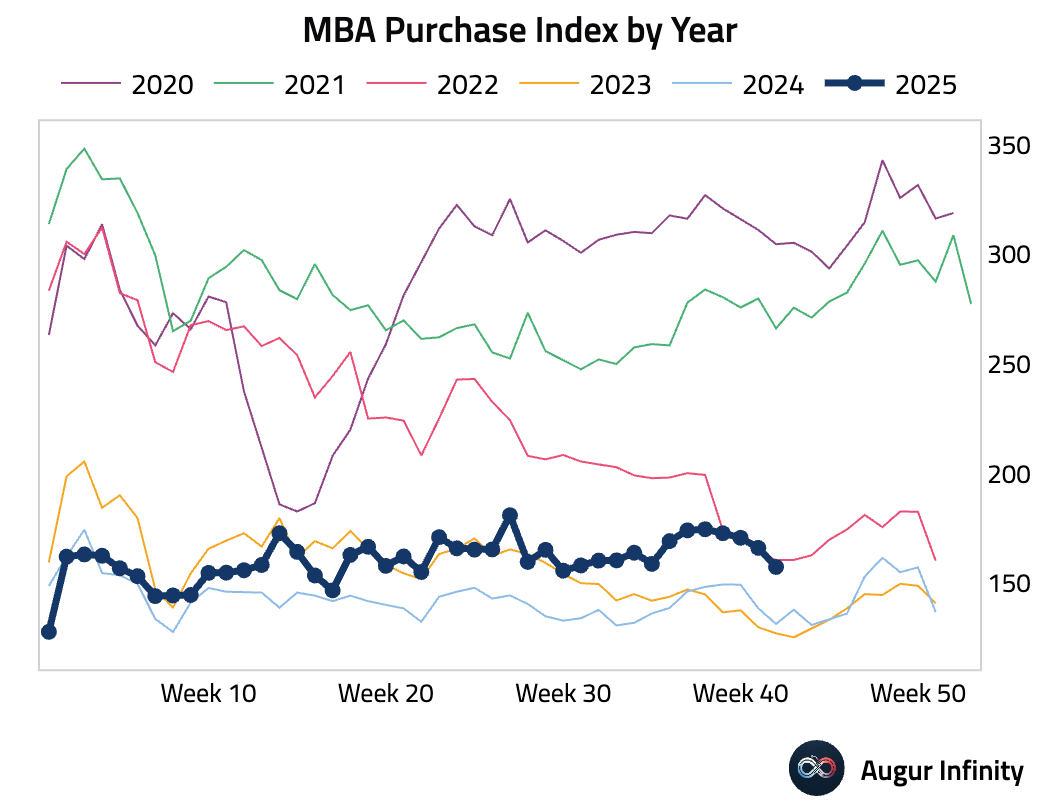
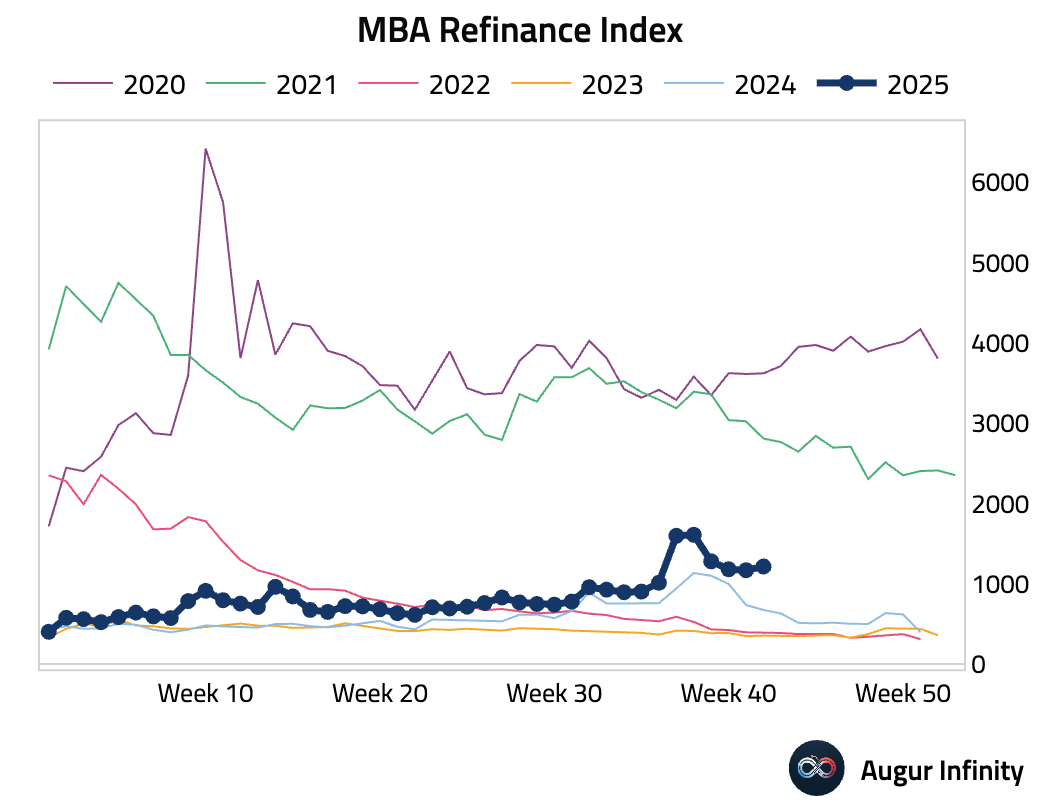
- Mortgage applications contracted for a second consecutive week (act: -0.3% week-over-week, prev: -1.8%). A modest rise in refinancing activity was more than offset by a sharper drop in purchase applications.
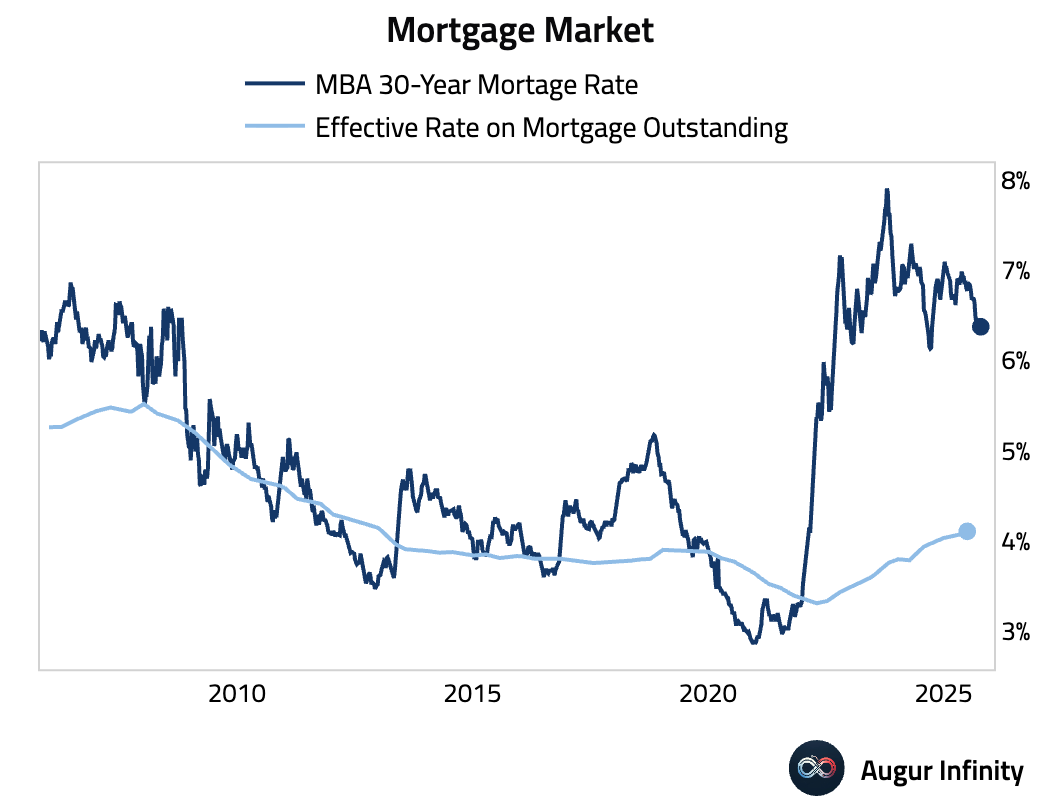
- The average 30-year mortgage rate dipped slightly last week but remains elevated (act: 6.37%, prev: 6.42%).
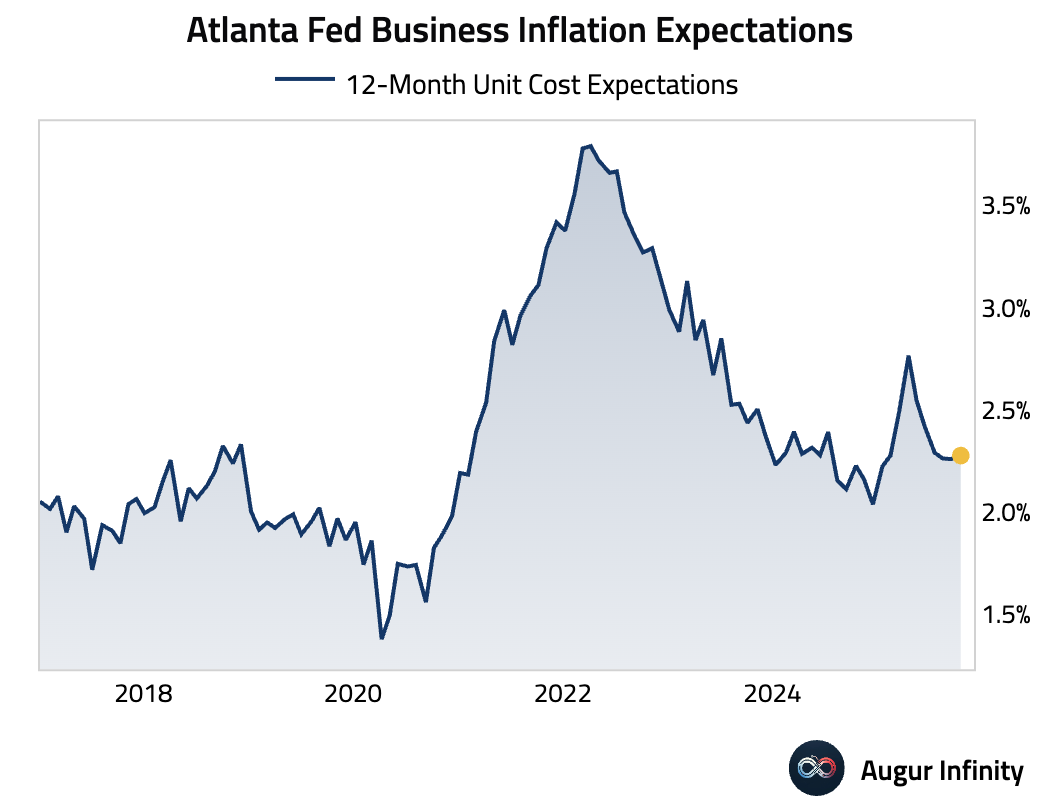
- Business inflation expectations remained stable at 2.3%.
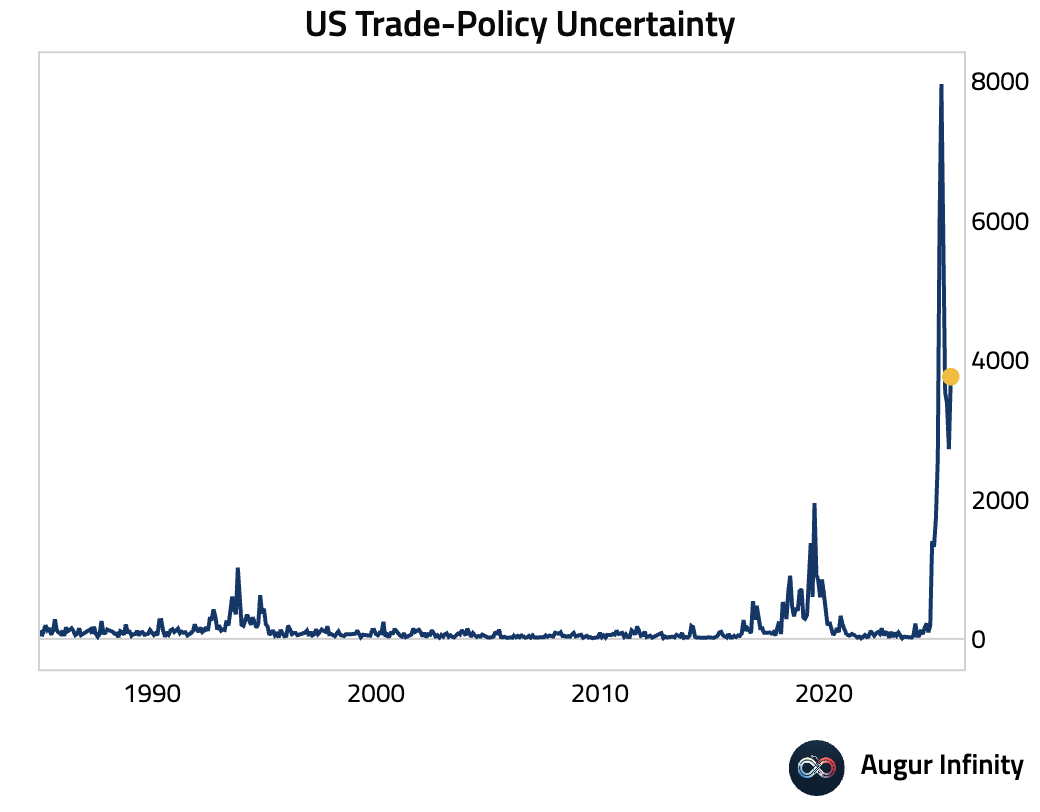
- US trade-policy uncertainty rose again.
Interactive chart on Augur Infinity
Europe
- Barclays is forecasting -0.4% M/M for retail sales volumes in September, compared to consensus of -0.3%.
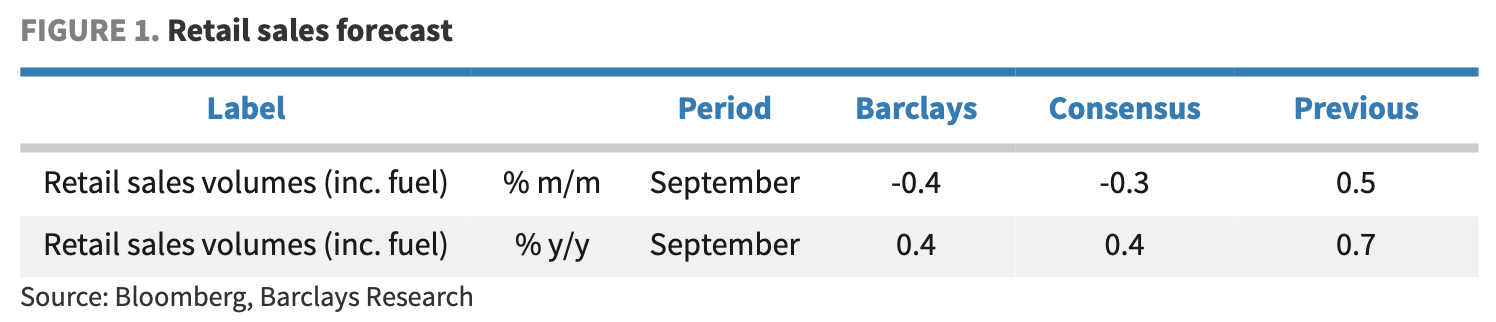
Source: Barclays
- UK headline inflation was unexpectedly stable at 3.8% Y/Y in September, missing consensus for a rise to 4.0%. Core CPI also surprised to the downside, decelerating to 3.5% Y/Y from 3.6%. The miss was broad-based, driven by softer-than-expected core goods, food, and services inflation.
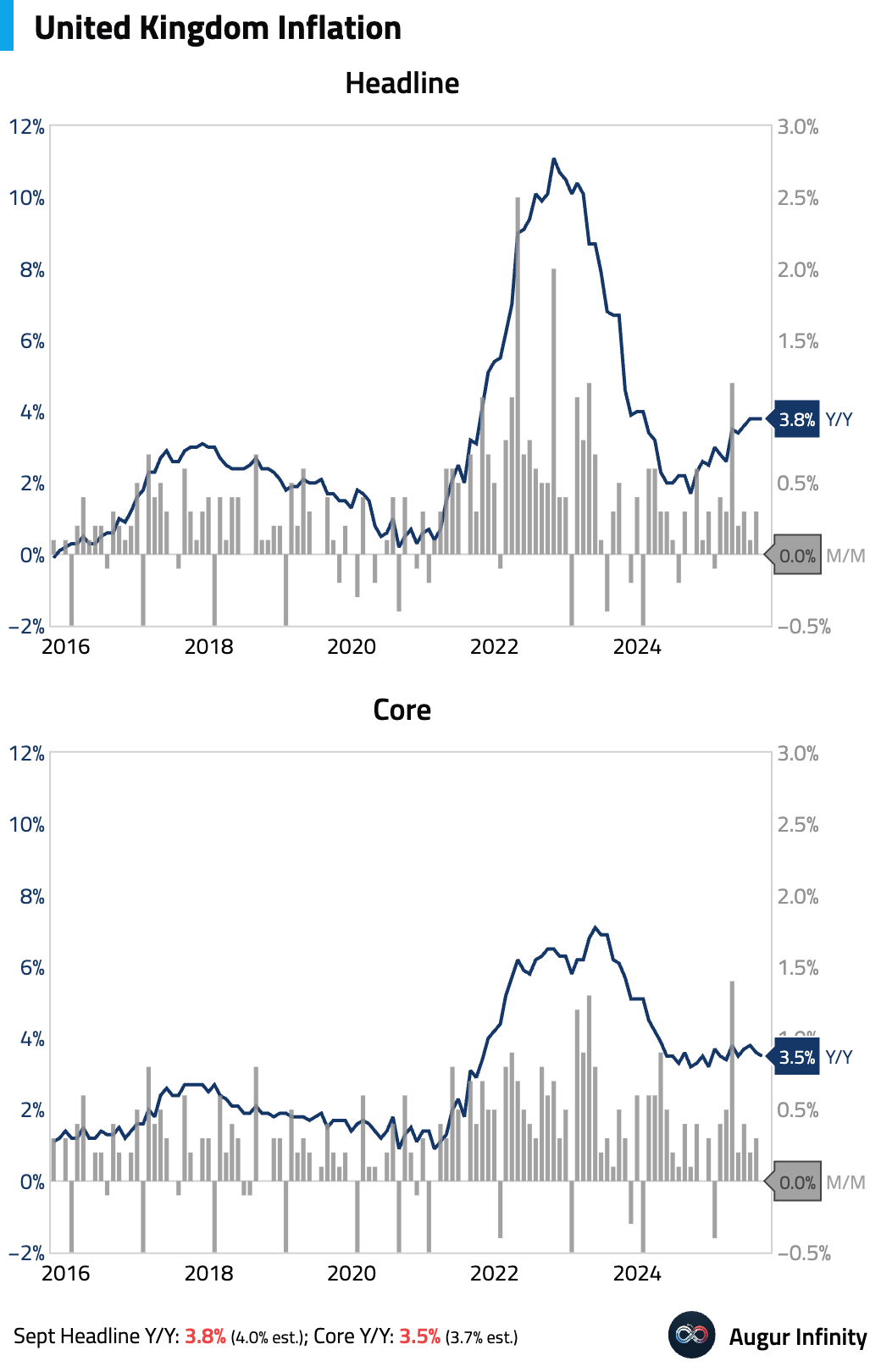
Services inflation decelerated notably, increasing the probability of an earlier-than-expected rate cut from the central bank.
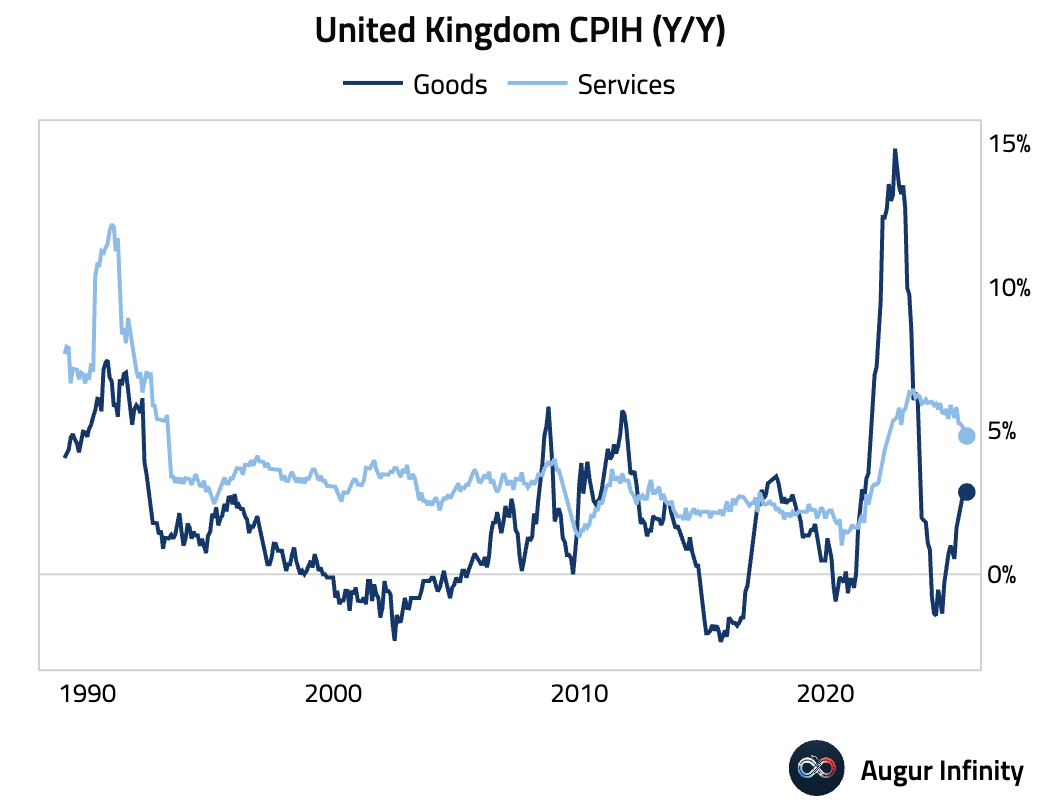
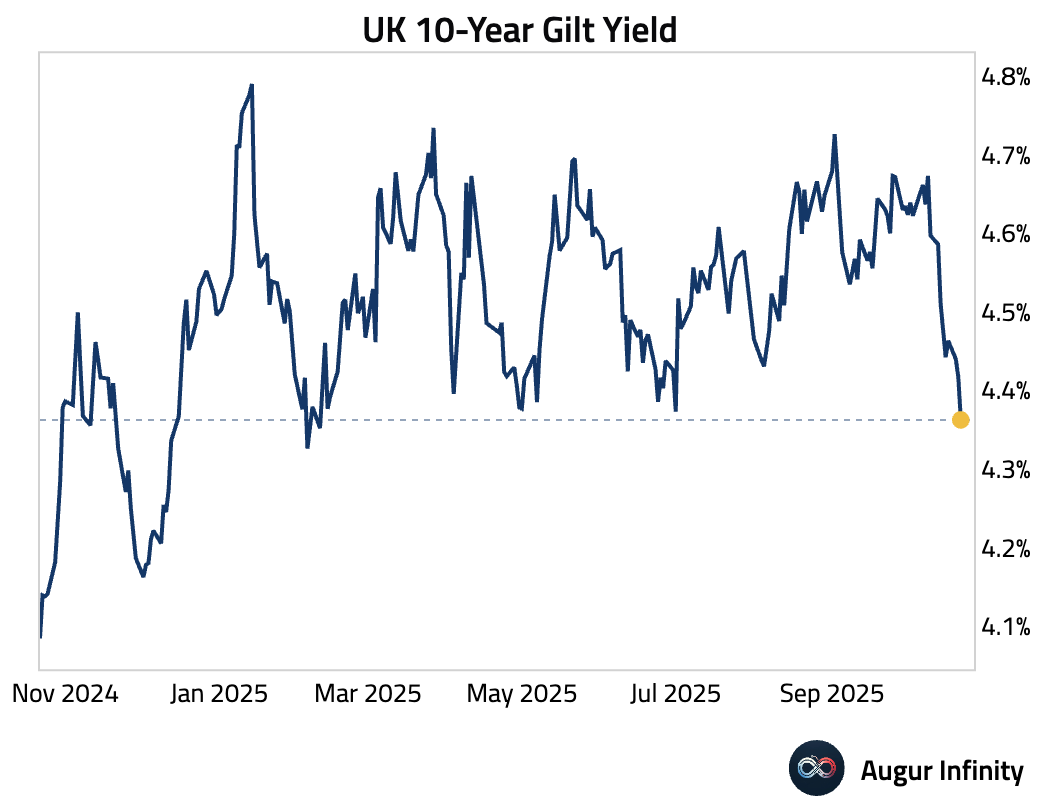
- Gilt yields declined sharply.
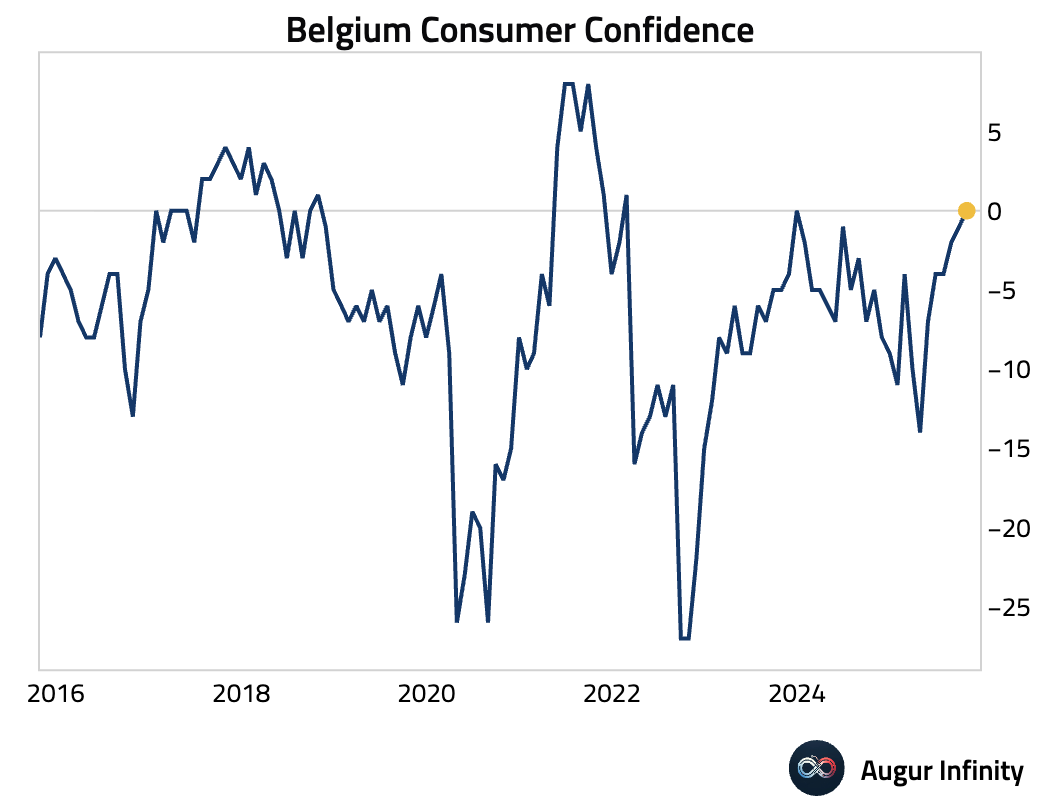
- Belgian consumer confidence improved in October, rising to its highest level since February 2022.
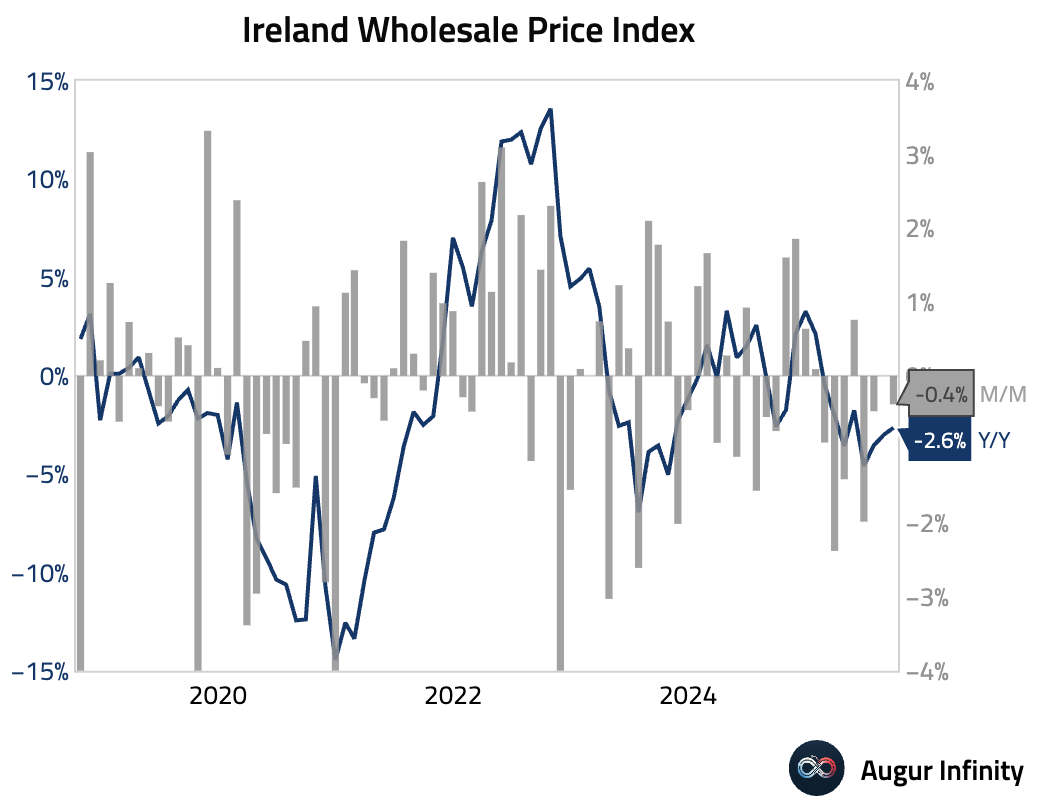
- Irish wholesale price deflation eased in September.
Asia-Pacific
- New Japanese PM Takaichi has ordered an economic stimulus package to combat inflation, including winter energy subsidies and business investment incentives, funded by a supplementary budget. Notably, it excludes cash handouts and signals a shift to more "responsible" fiscal policy.

Source: Bloomberg
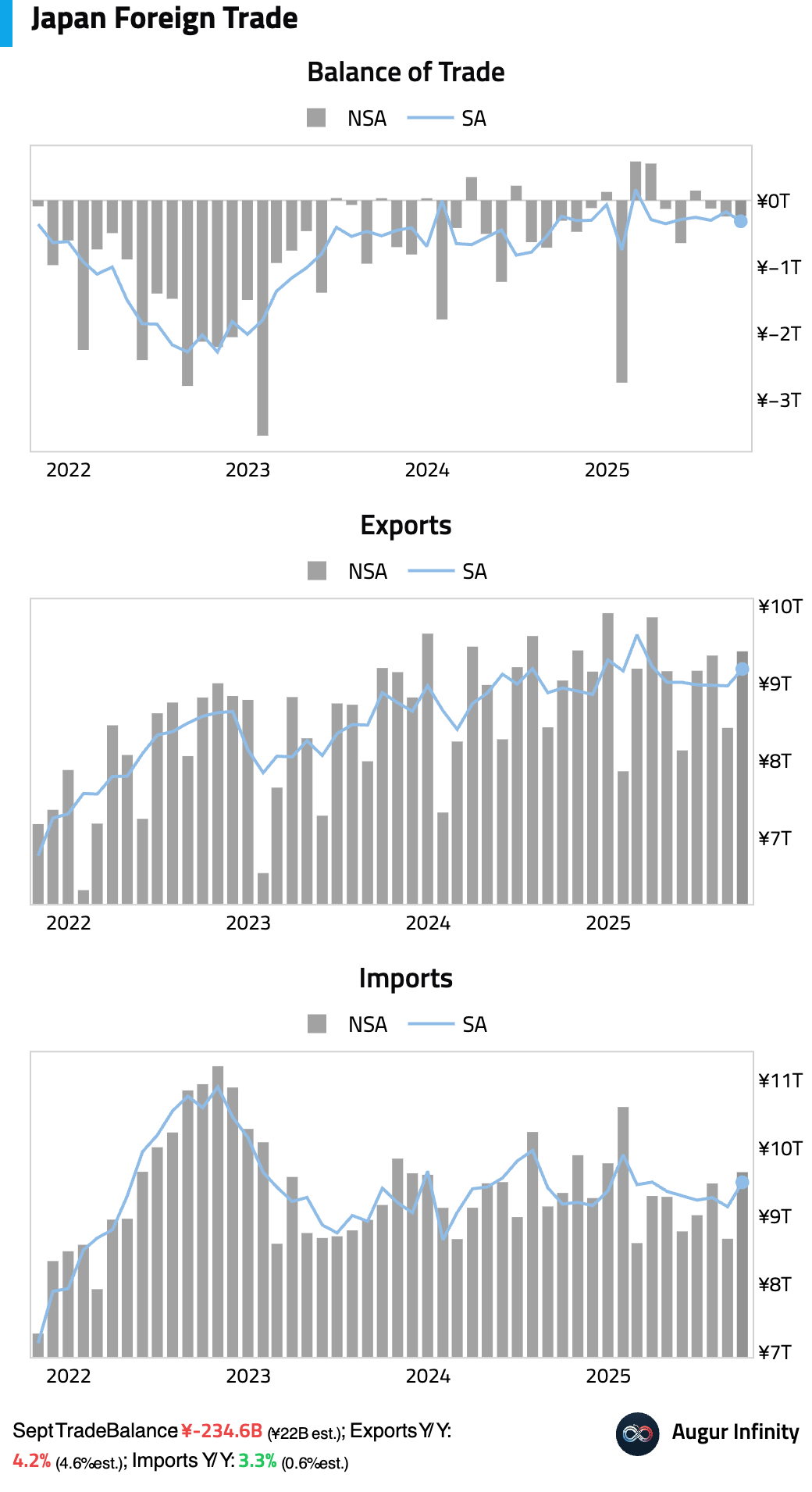
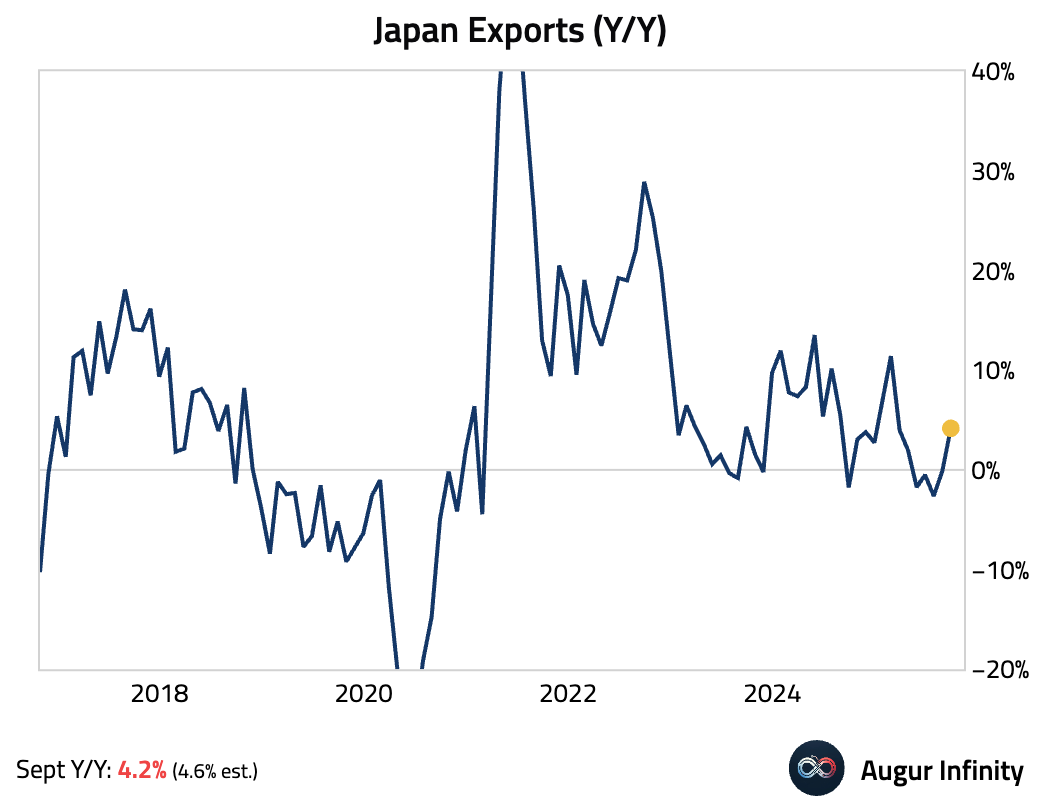
- Japan posted a surprise trade deficit of ¥234.6 billion in September, sharply missing the consensus forecast for a ¥22.0 billion surplus. The deficit was driven by a larger-than-expected 3.3% Y/Y jump in imports, which overshadowed a 4.2% rise in exports—the first export gain in five months. Demand from the EU and China supported exports, but shipments to the US fell 13.3% amid tariffs.
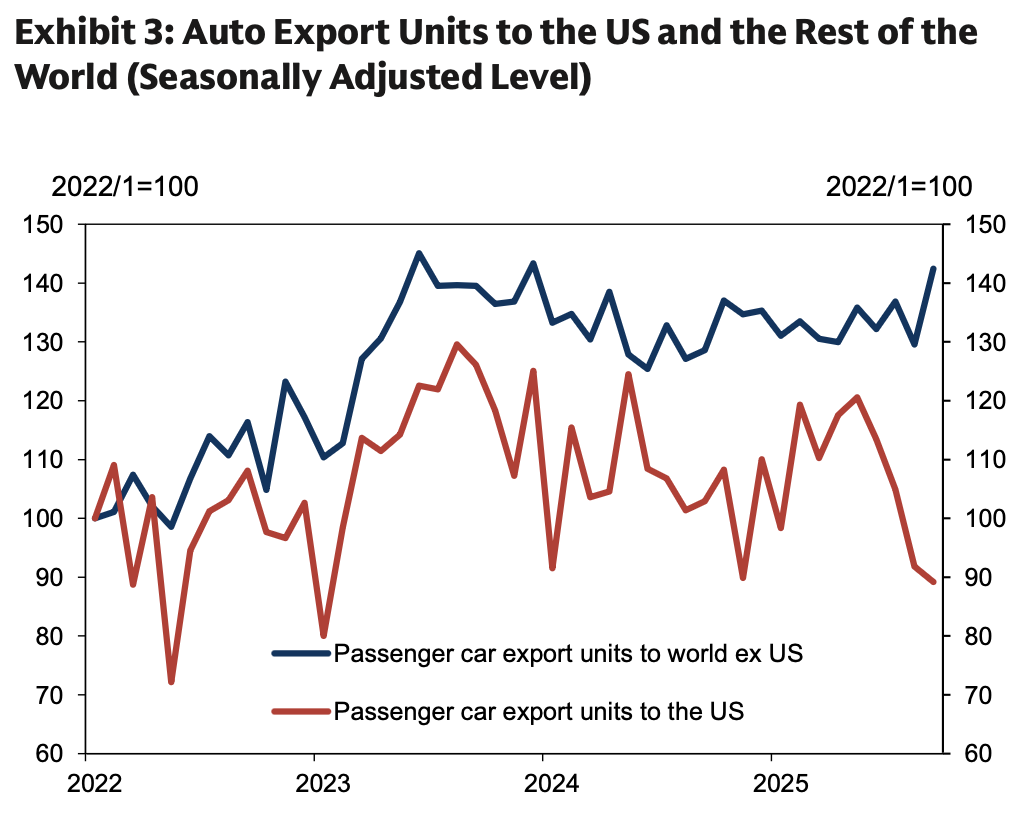
- Passenger car export volume to the US declined further in September, while passenger car exports to destinations other than the US increased.
Source: Goldman Sachs
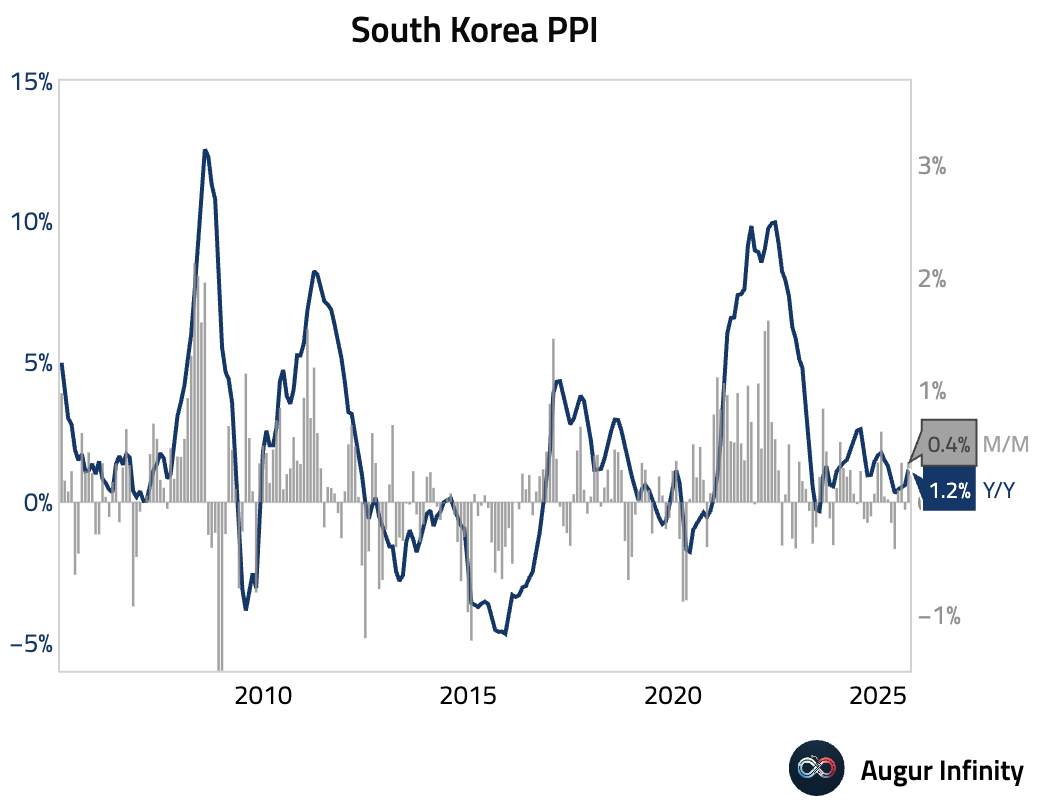
- South Korean producer price inflation accelerated in September, rising to 1.2% Y/Y from 0.6% in August.
China
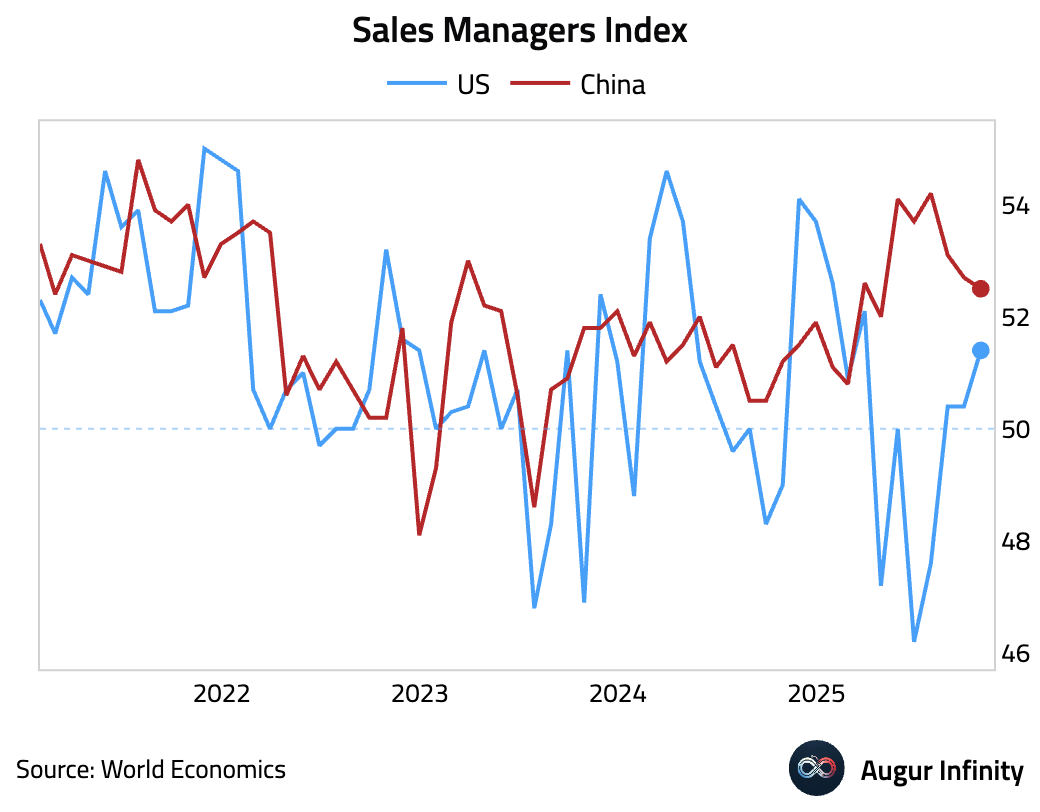
- China's sales manager business confidence index declined this month, while US sales manager confidence rose.
Source: World Economics
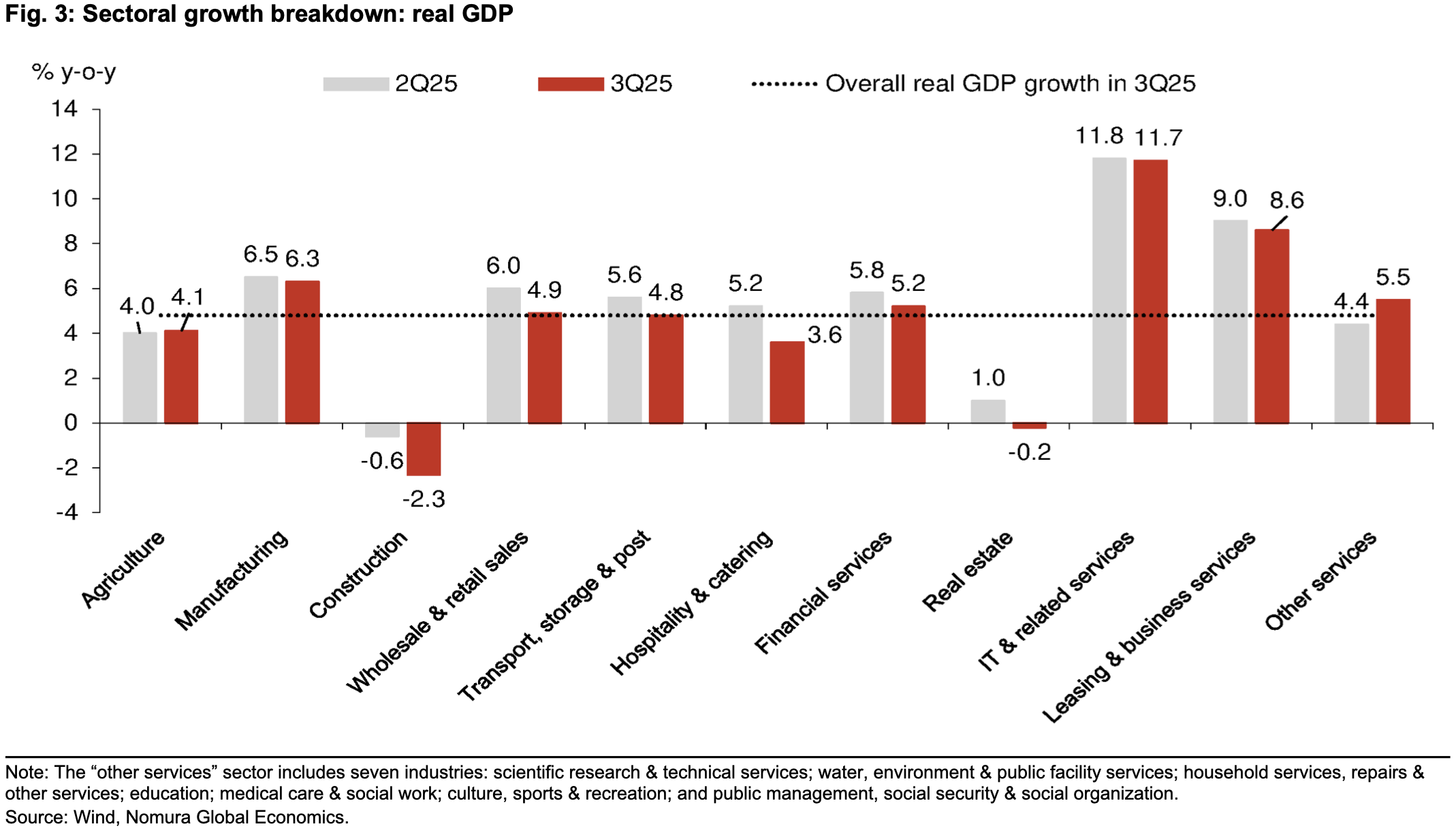
- Here's China's Q3 real GDP growth by sector.
Source: Nomura
Emerging Markets ex China
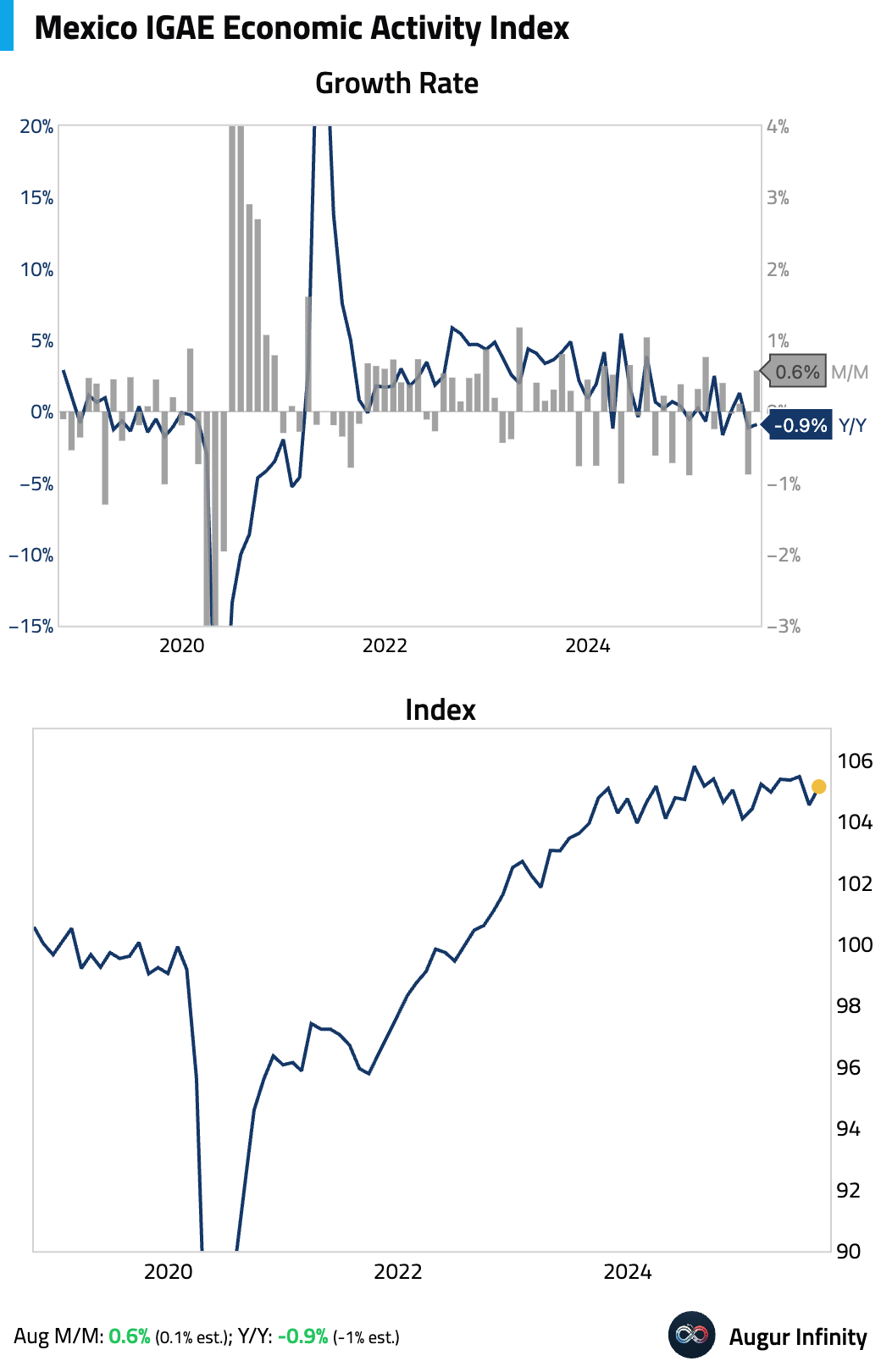
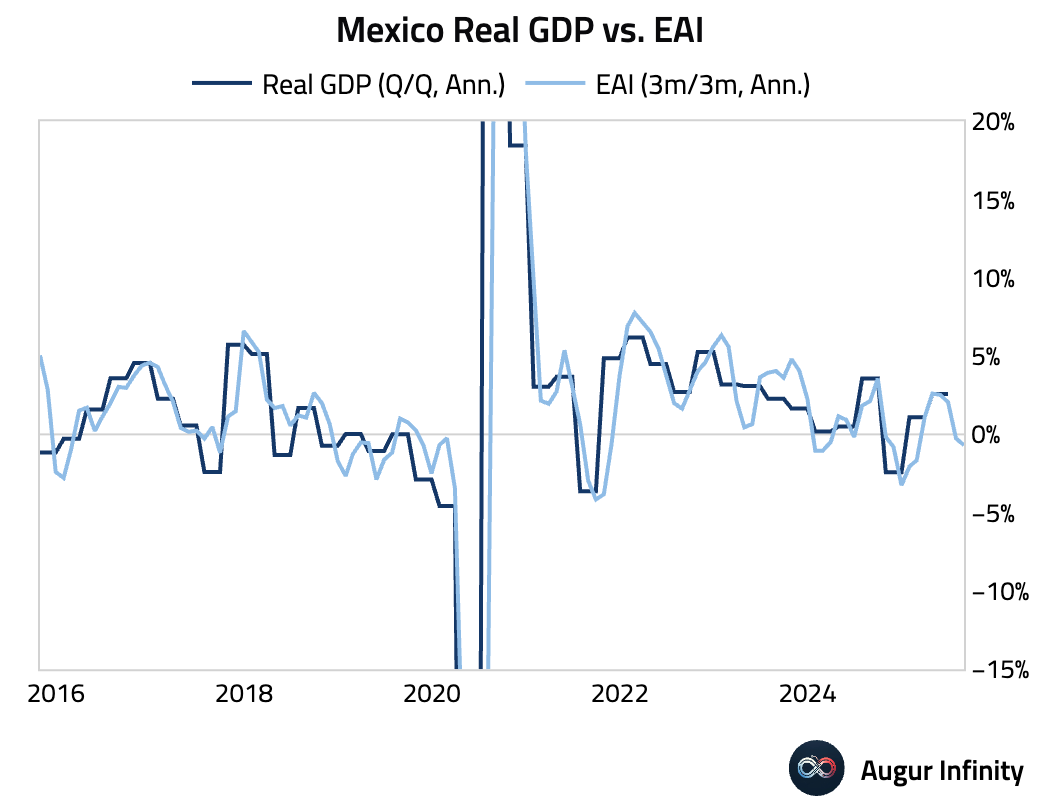
- Mexico’s economic activity expanded robustly, strongly beating consensus. The upside surprise was driven by the primary and services sectors, which offset a drop in industrial activity. Despite the monthly beat, the annual figure missed expectations and the statistical carry-over for Q3 GDP is now tracking negative.
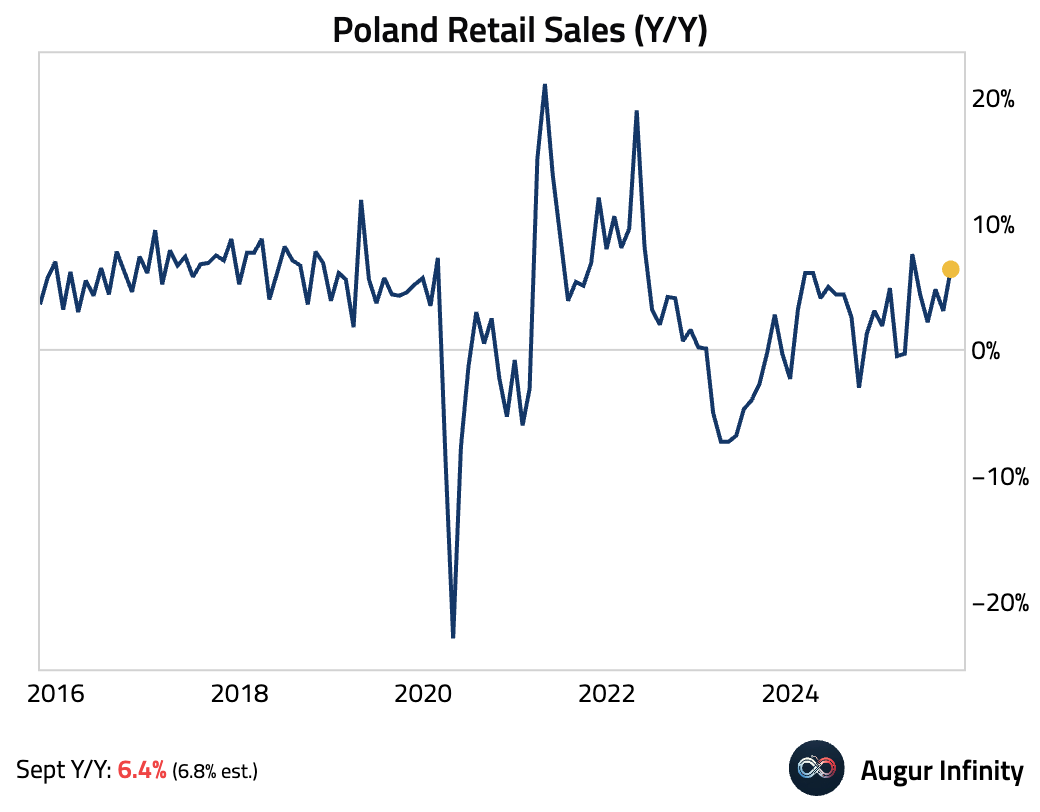
- Polish retail sales growth accelerated in September but missed expectations.
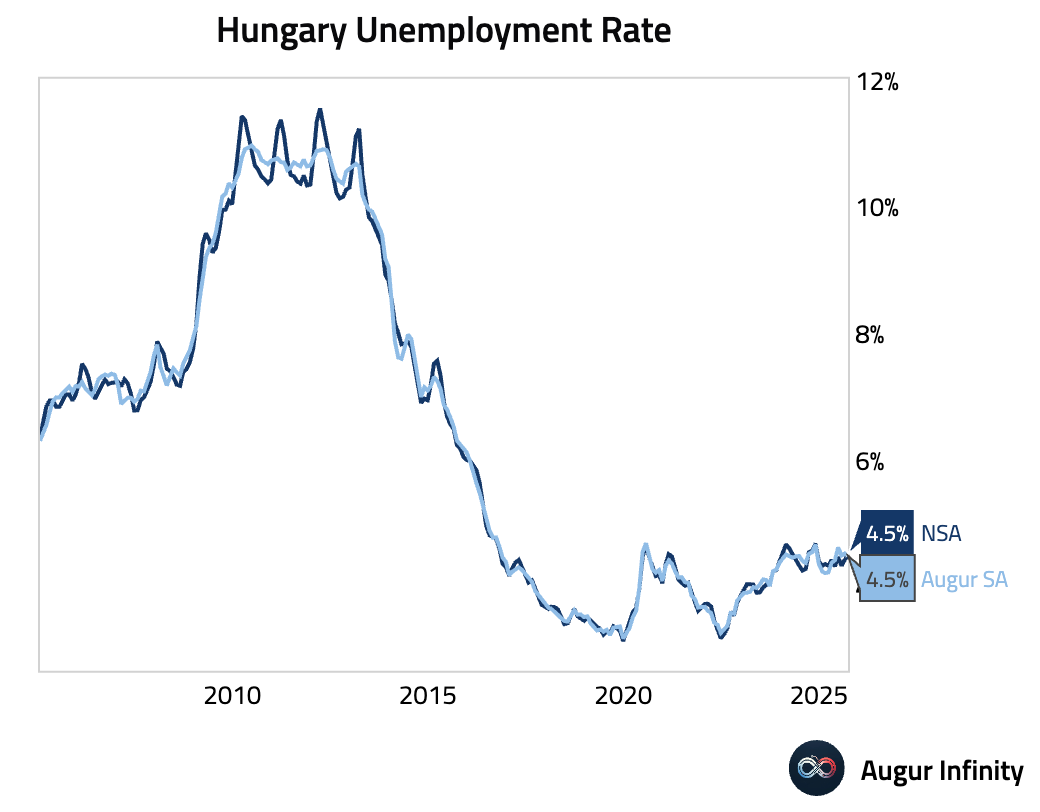
- Hungary’s unemployment rate edged higher in September (act: 4.5%, prev: 4.4%).
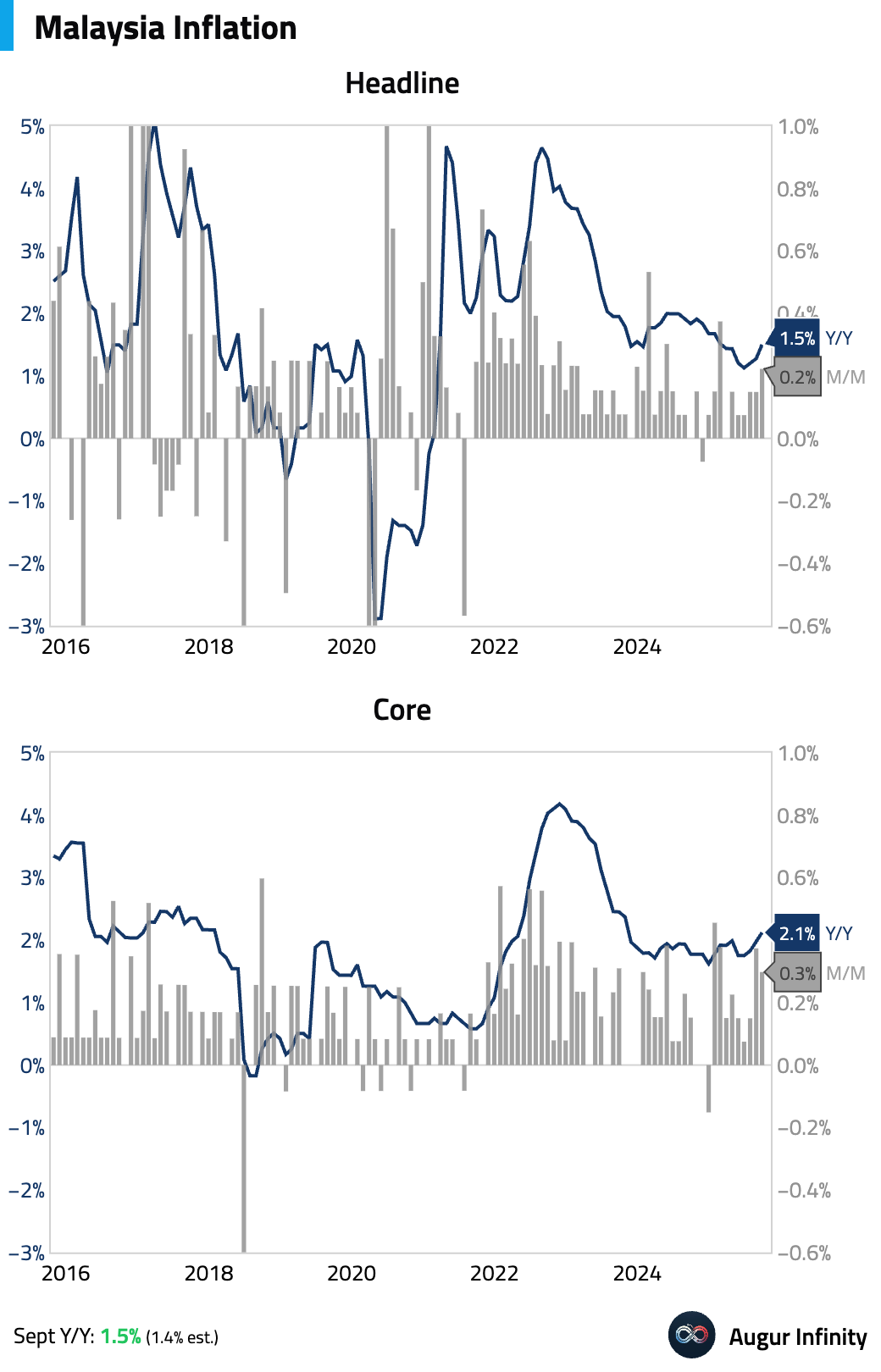
- Malaysian inflation ticked up.
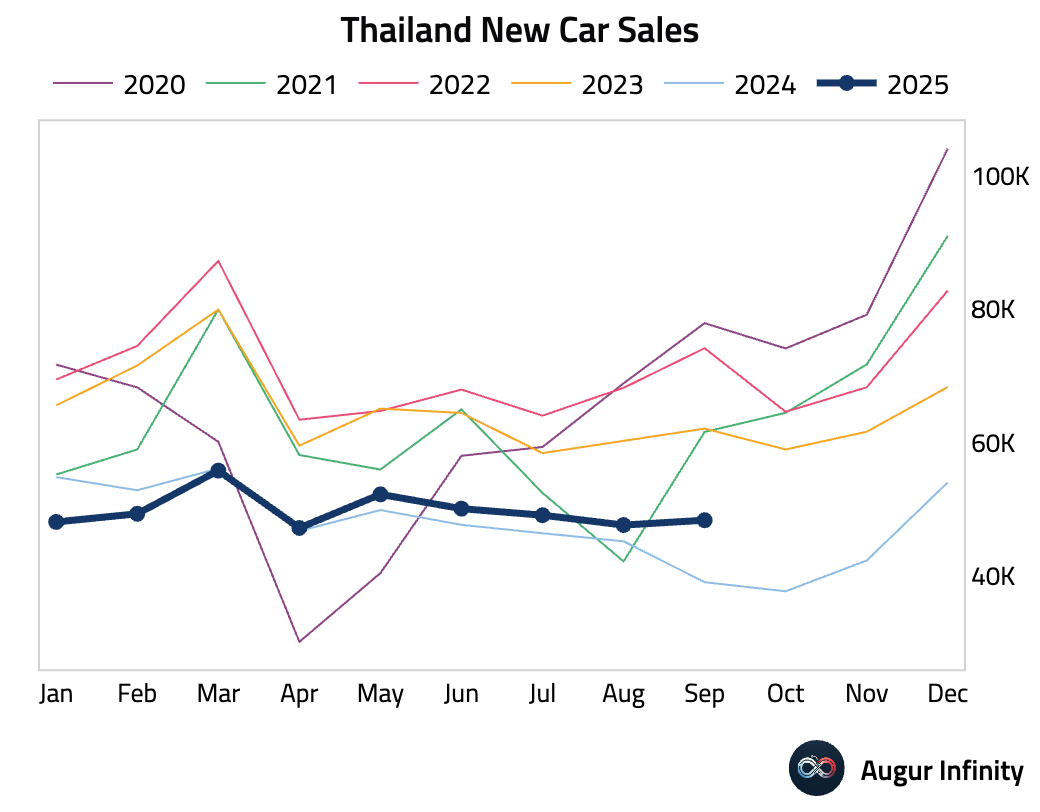
- New car sales in Thailand surged in September, rising to their highest year-over-year growth rate since August 2022 (act: 23.82% Y/Y, prev: 5.38%).
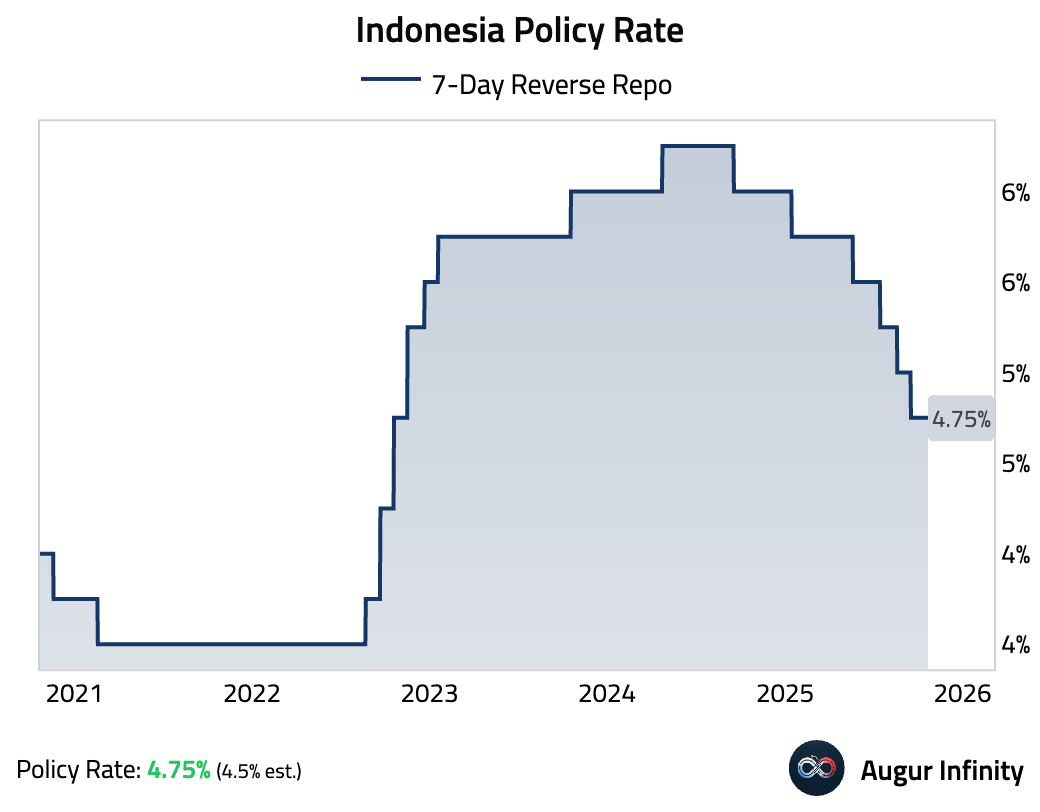
- Bank Indonesia unexpectedly held its policy rate at 4.75%, defying consensus expectations for a 25-basis-point cut. The central bank cited the need to maintain exchange rate stability amid global uncertainty and noted active FX interventions, which have drawn down reserves. The hold raises the risk that anticipated rate cuts could be delayed into early 2026 if the rupiah remains under pressure.
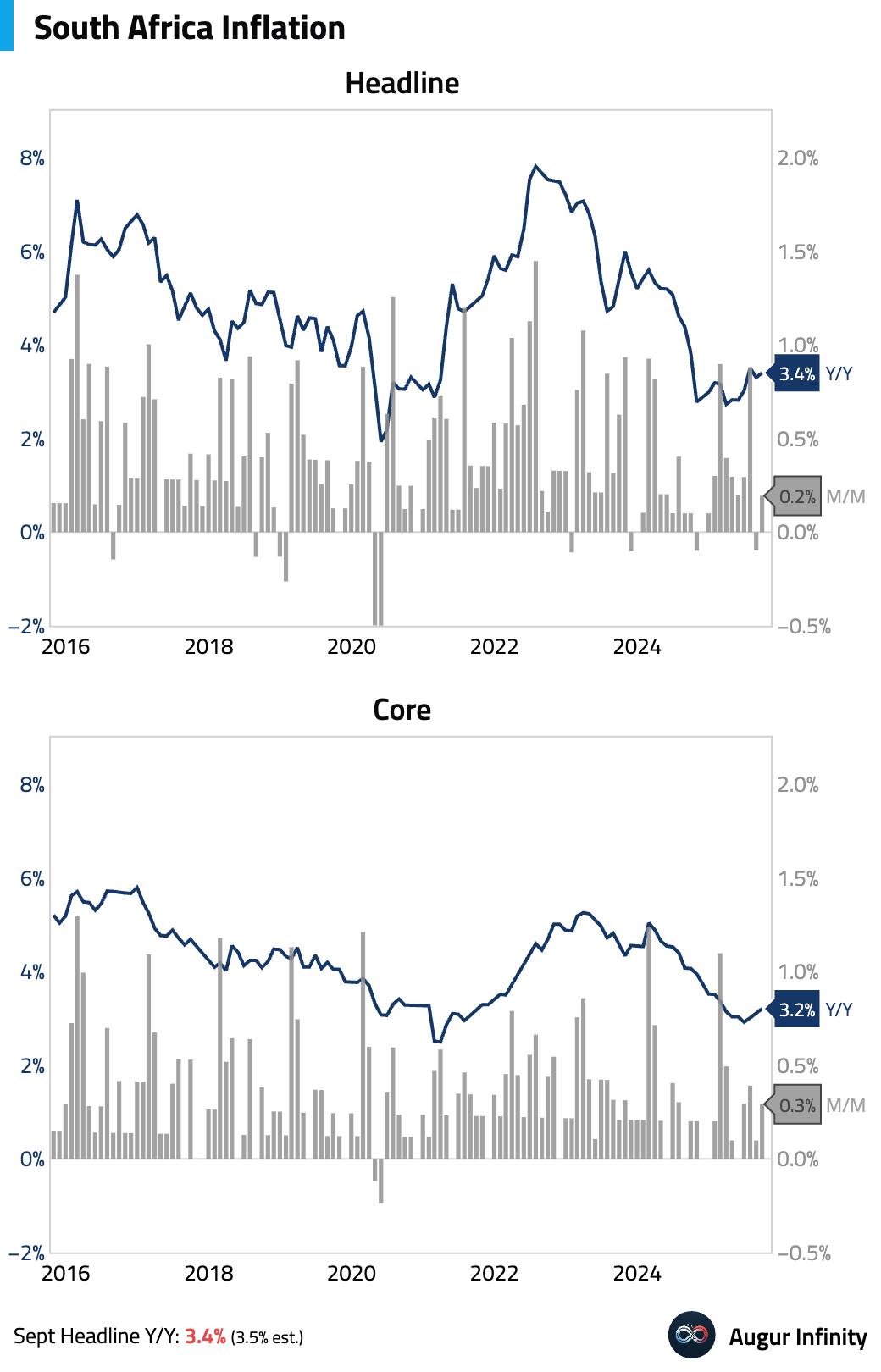
- South African headline inflation rose to 3.4% Y/Y in September from 3.3%, just missing the 3.5% consensus. Core inflation ticked up to 3.2% Y/Y, slightly above expectations, driven by a lumpy quarterly housing survey rather than broad-based pressures. A sharp deceleration in food inflation, stemming from a positive agricultural supply shock, confirmed a dovish inflation trend that may prompt the central bank to cut rates in November.
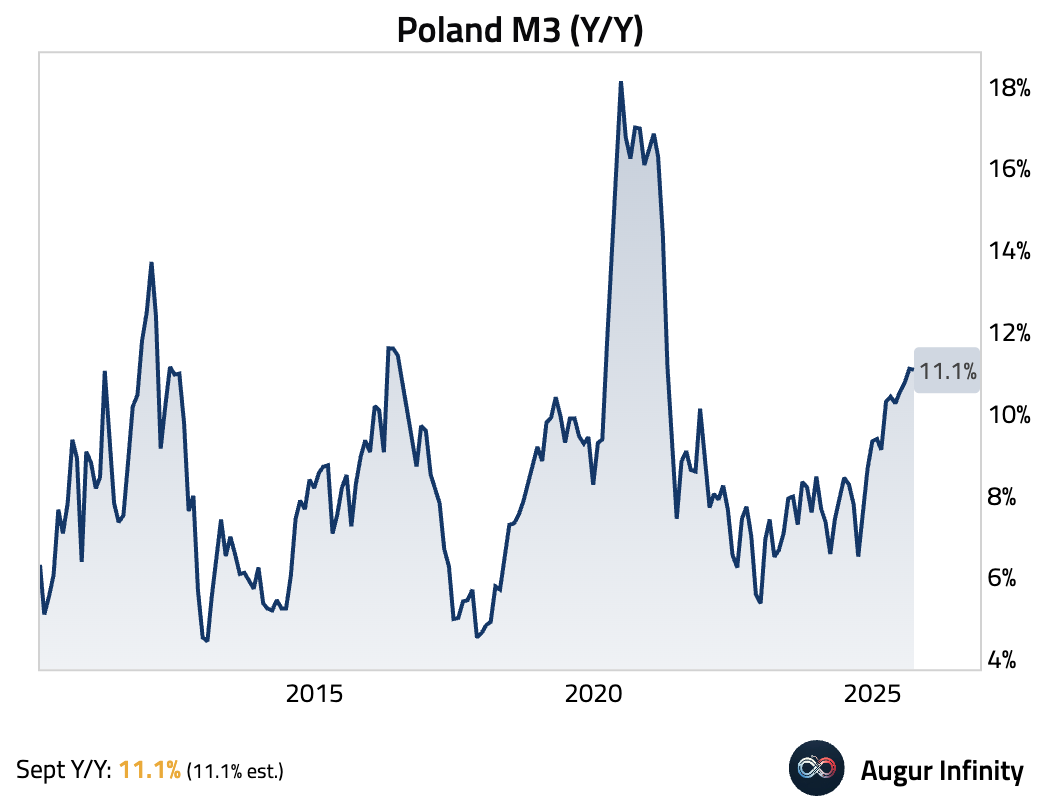
- Growth in Poland’s M3 money supply was unchanged in September.
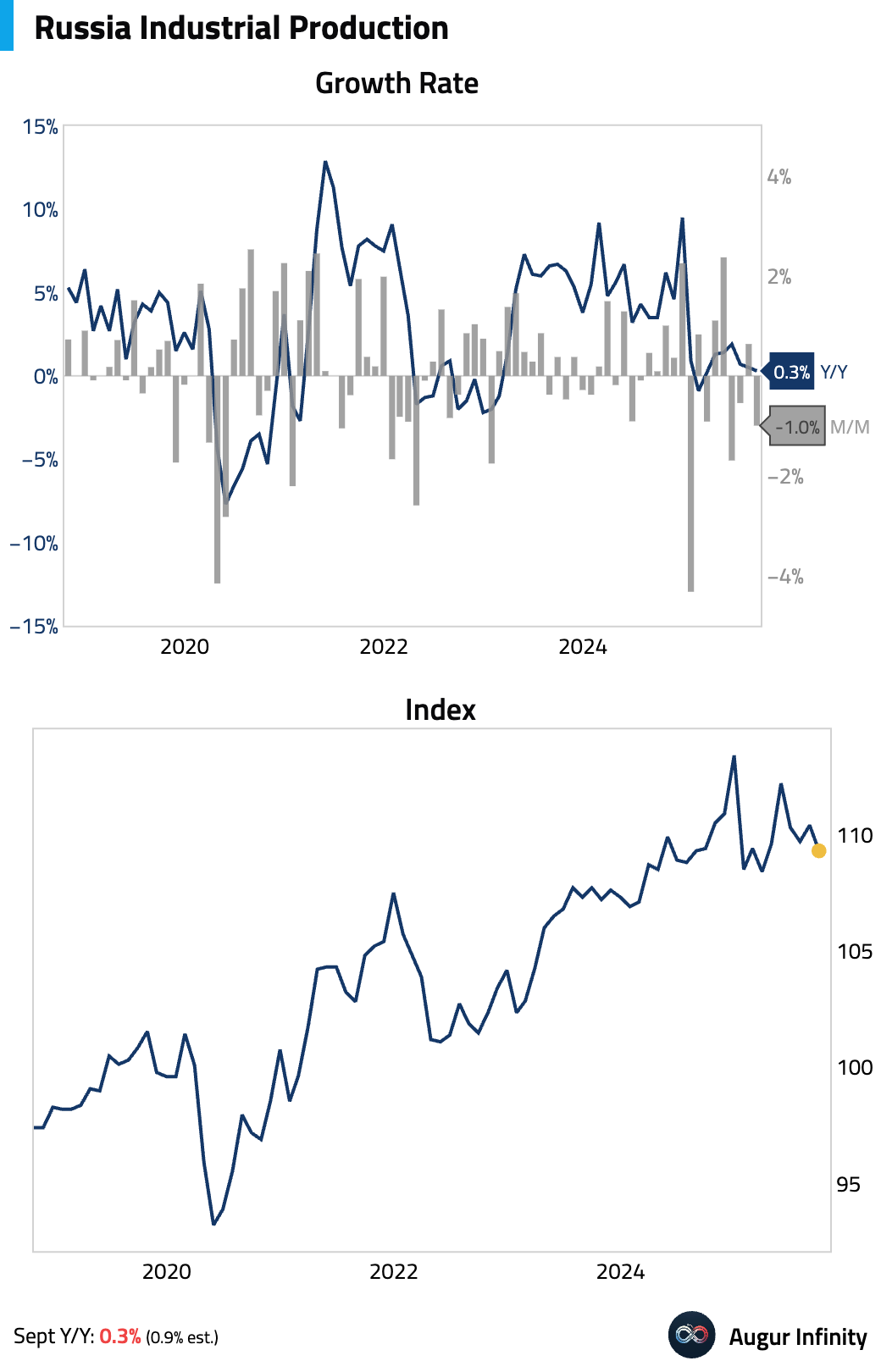
- Russia industrial production was well below consensus.
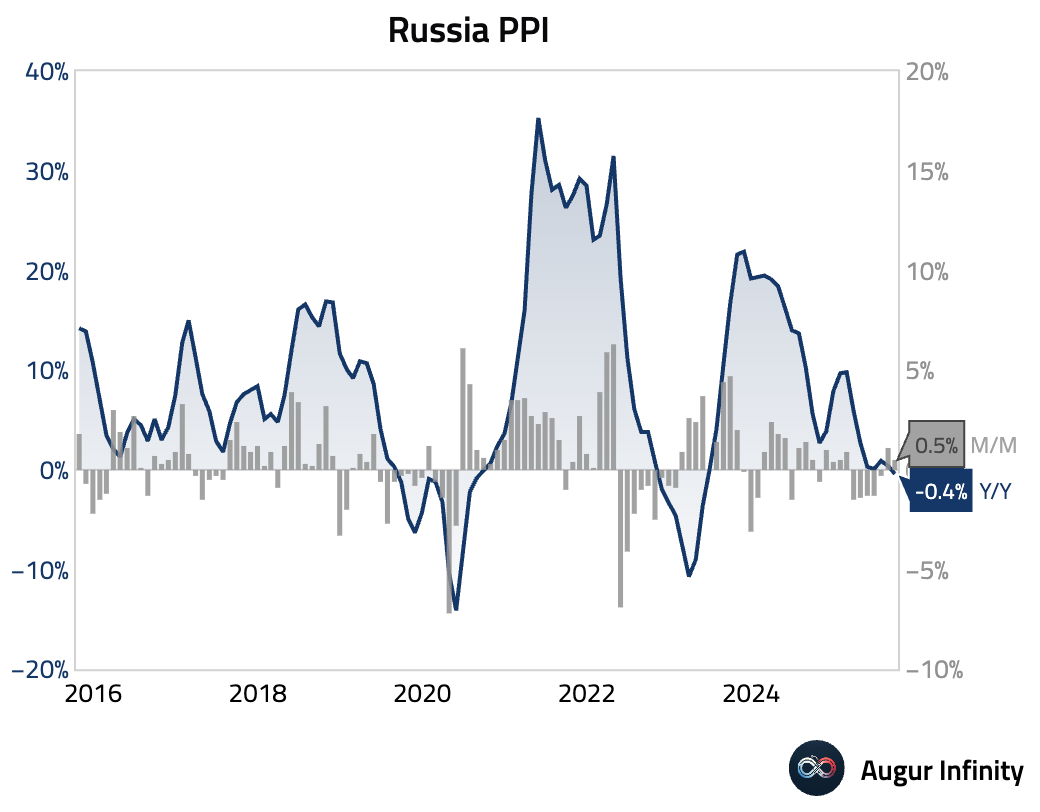
- Russia's PPI M/M slowed to 0.5% in September, while Y/Y PPI turned negative.
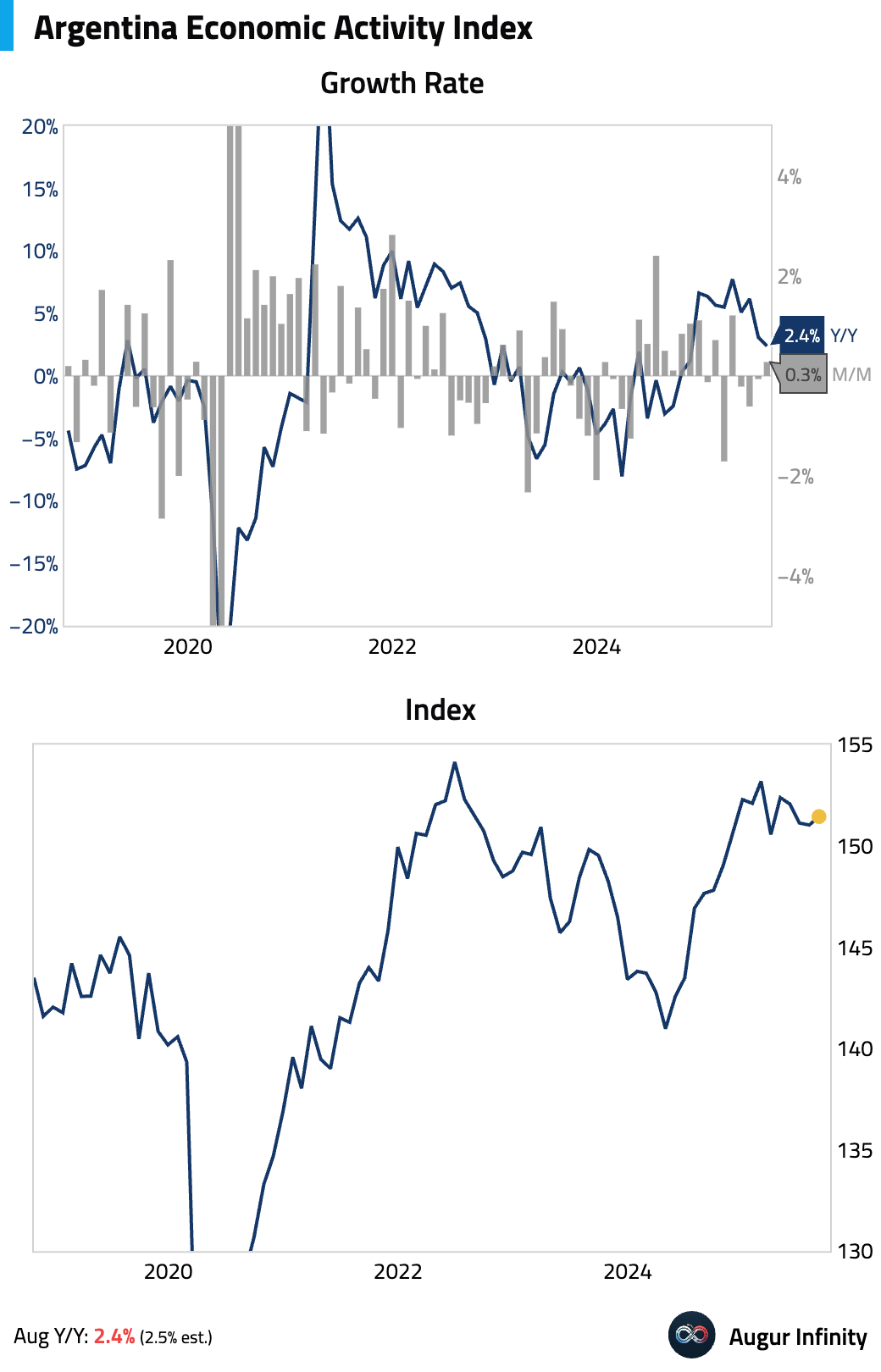
- Argentina's Economic Activity moderated further on a year-over-year basis, while the M/M measure did increase for the first time in four months.
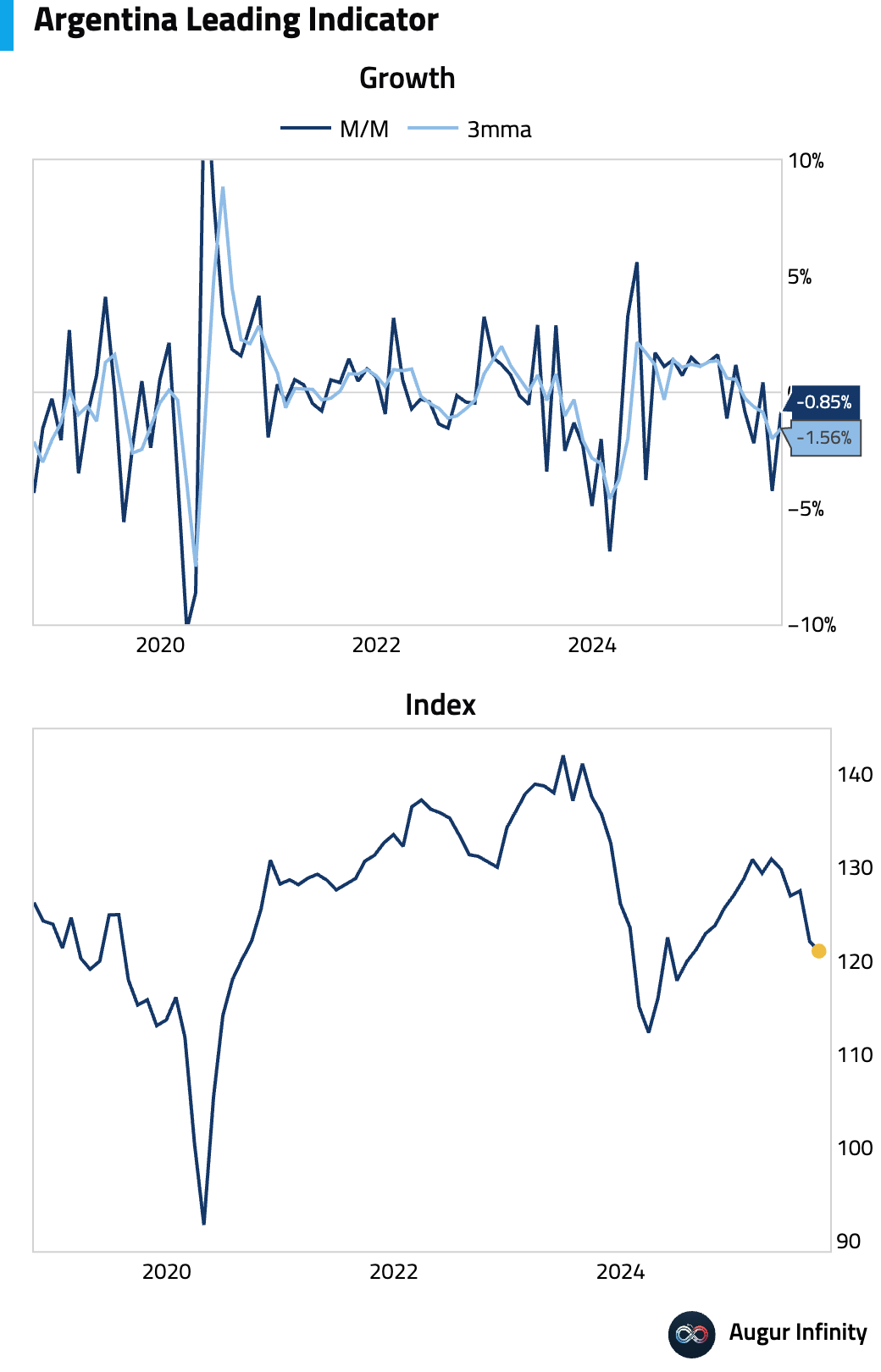
- Argentina's leading indicator fell again in September.
Global Markets
Equities
- Global equities traded lower, with the S&P 500 falling 0.5%; the tech-heavy Nasdaq underperformed, declining 0.9%. European markets were mixed, with France marking its third straight day of losses, while the United Kingdom bucked the trend with a 0.9% gain. In Asia, Chinese equities also saw a second day of declines. South Korea was a notable outperformer, rising 0.9%.
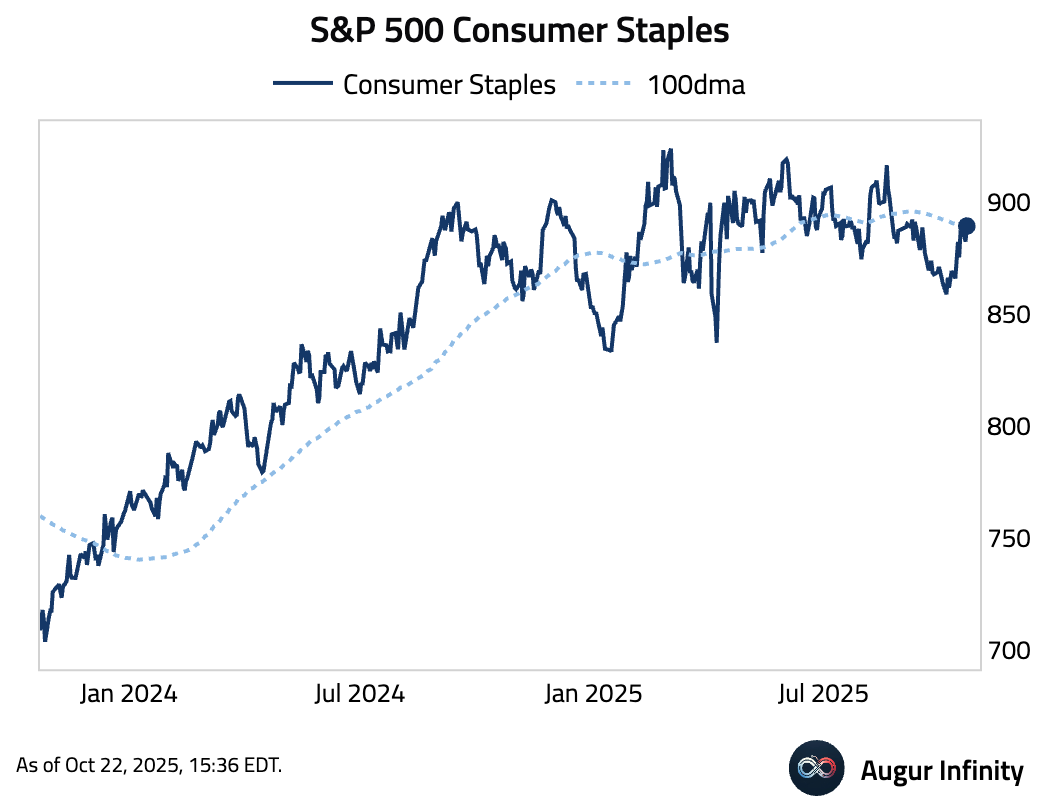
- S&P 500 Consumer Staples is above its 100-day moving average.
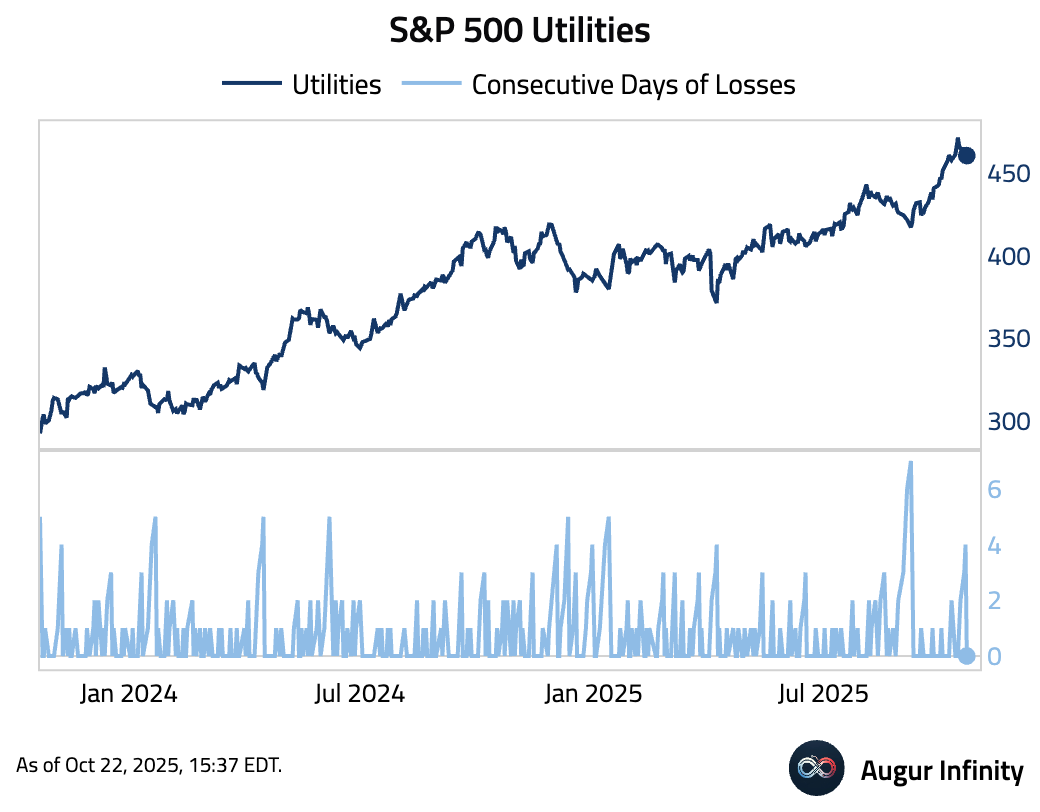
- S&P 500 Utilities declined for the fifth consecutive session.
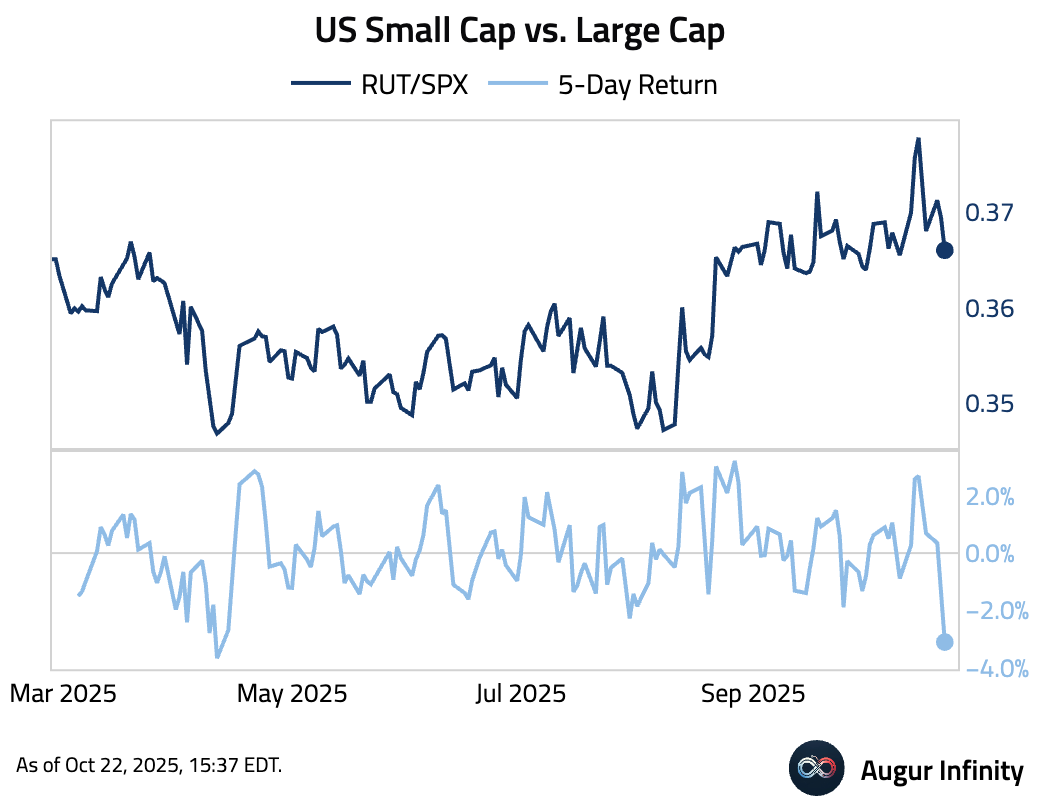
- US Small Cap vs. Large Cap had the worst five days since April.
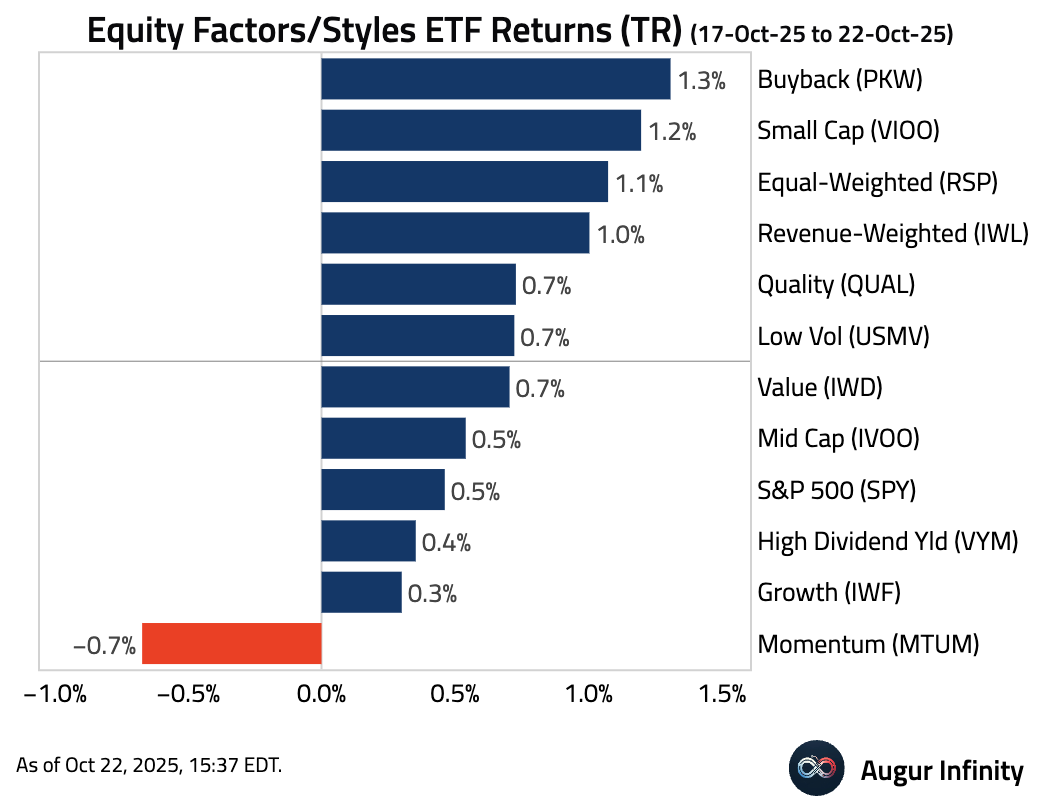
- Momentum is the lone equity factor that's down this week so far.
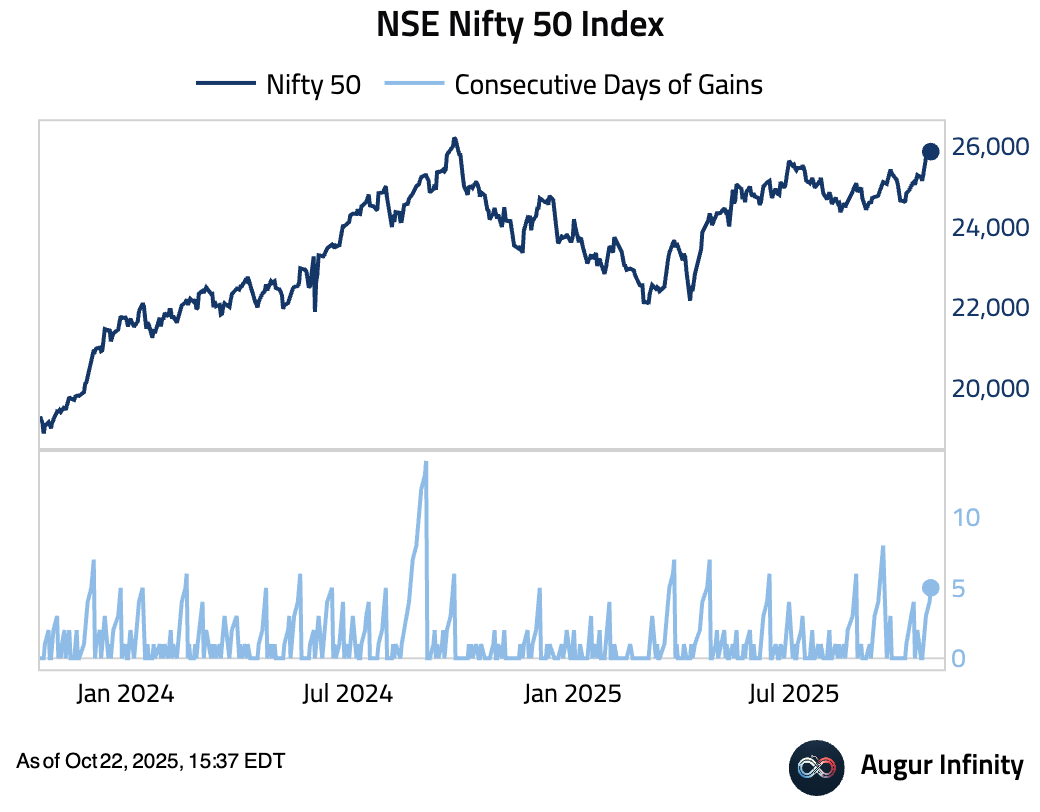
- NSE Nifty 50 Index gained for the fifth day.
Fixed Income
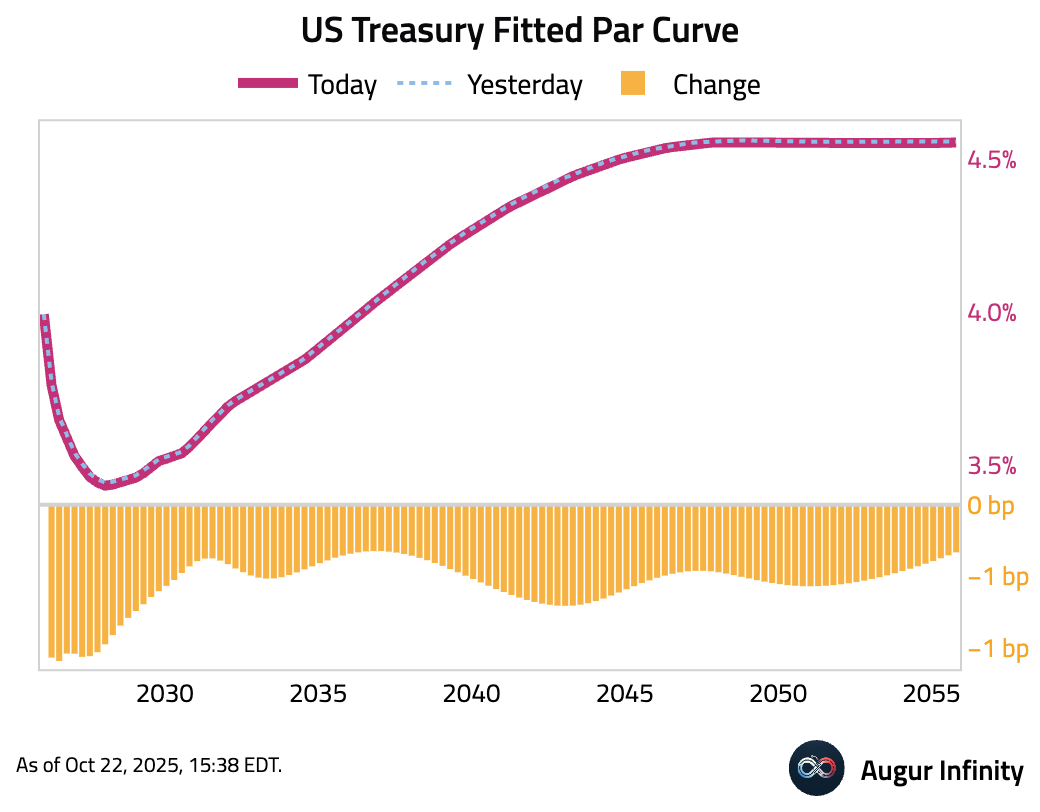
- US Treasury yields declined for the third consecutive day across the curve. The 2-year yield fell by 1.1 bps, while the 10-year yield decreased by 0.6 bps.
Commodities
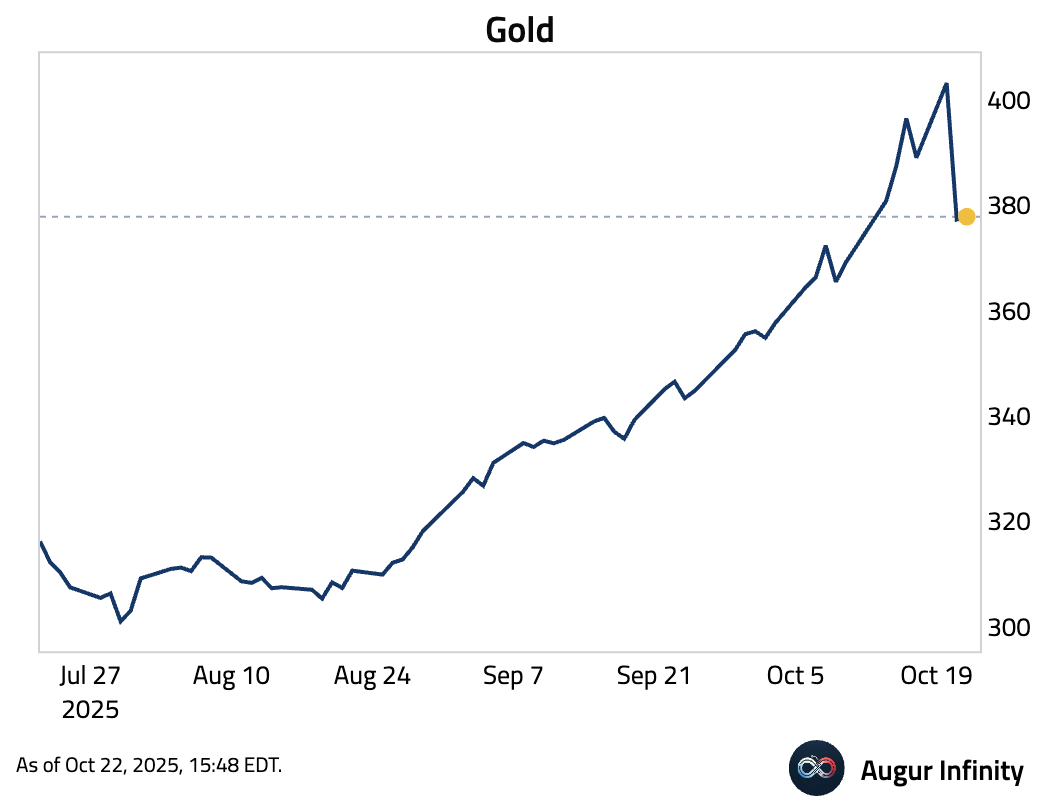
- Gold shook off a rough morning to end the day in the green.
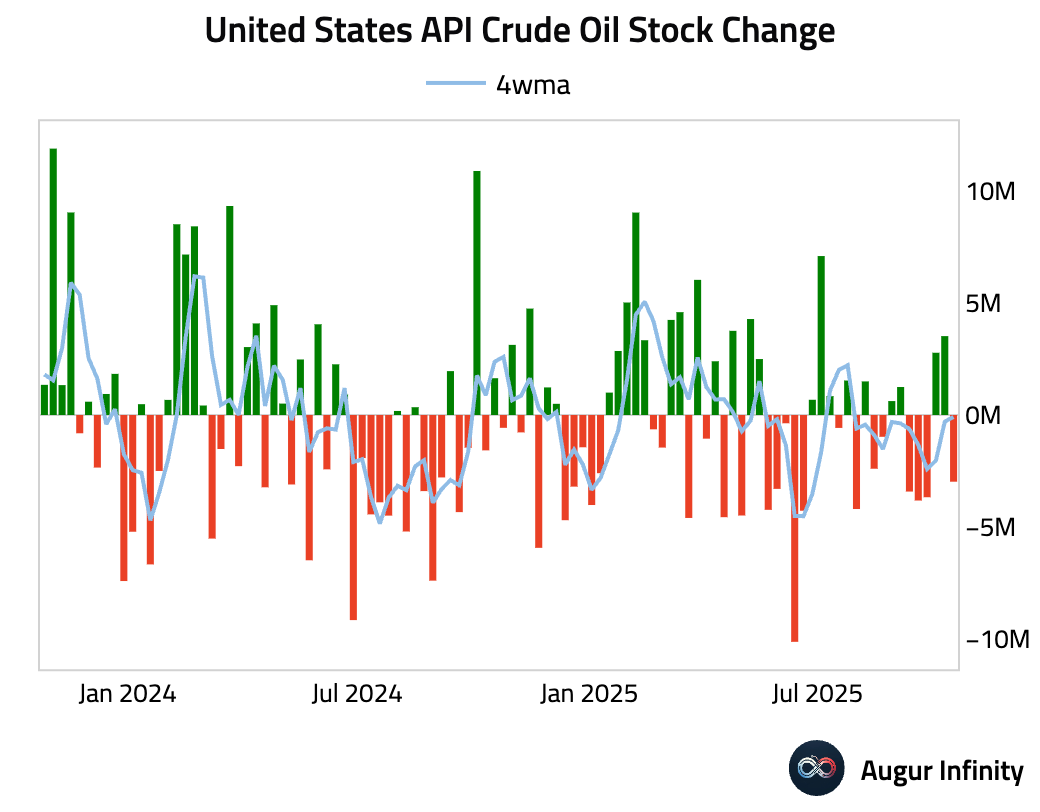
- API data showed a drawdown in US crude oil inventories last week, reversing the prior week’s build (act: -2.98M, prev: 3.52M).
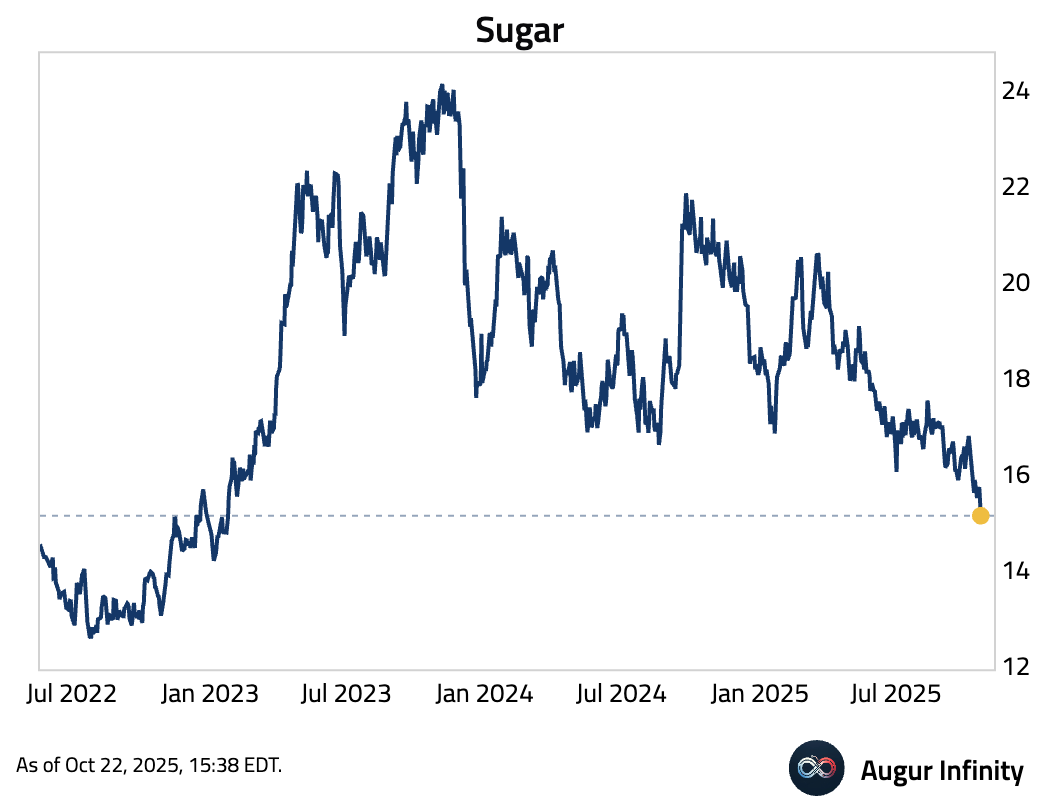
- Sugar is at the lowest level since January 2023.
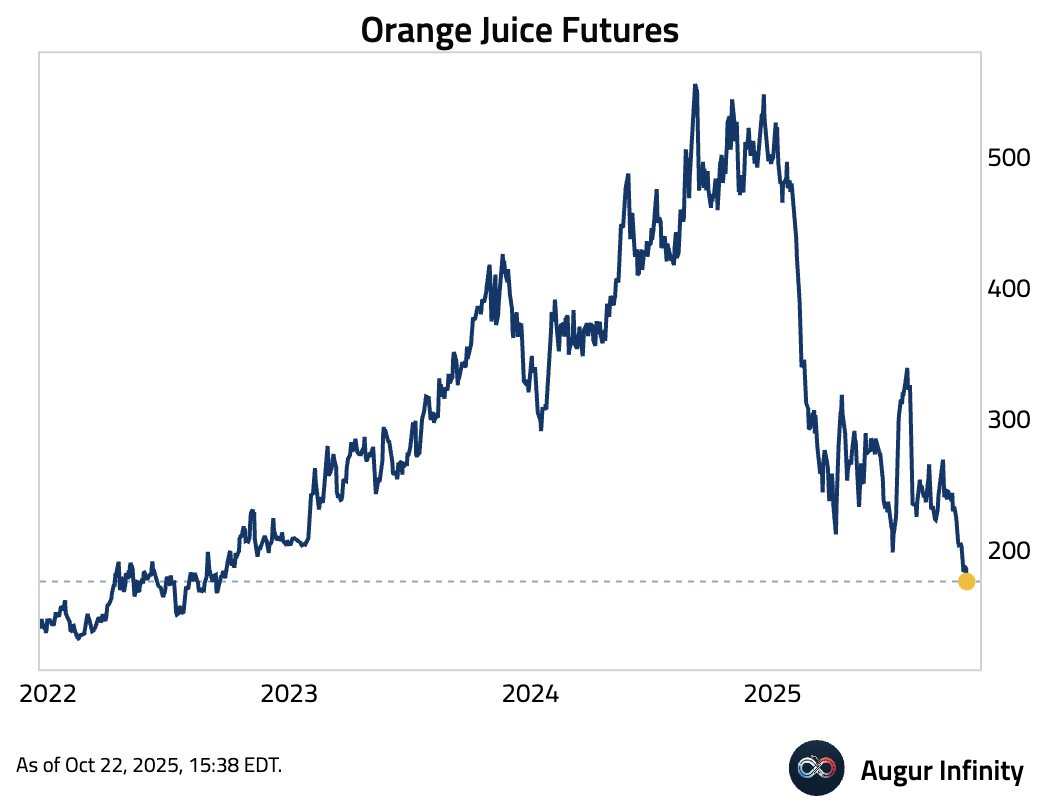
- Orange Juice has fallen to the lowest level since September 2022.
Musings
- The percentage of US adults who say they drink alcohol has plummeted to the lowest level in the history of a Gallup poll that goes back nearly 90 years.
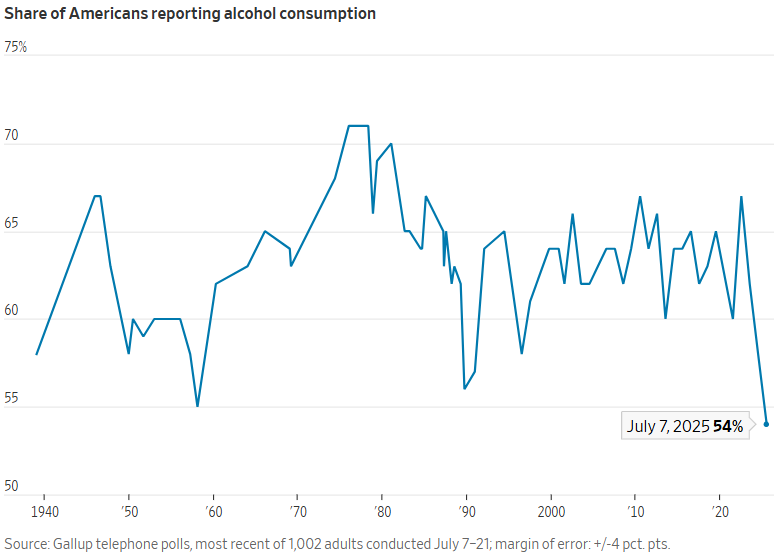
Source: Gallup via Charlie Bilello
Disclaimer
Augur Digest is an automatically generated newsletter edited by humans. It may contain inaccuracies and is not investment advice. Augur Labs LLC will not accept liability for any loss or damage as a result of your reliance on the information contained in the newsletter.
