
The United States
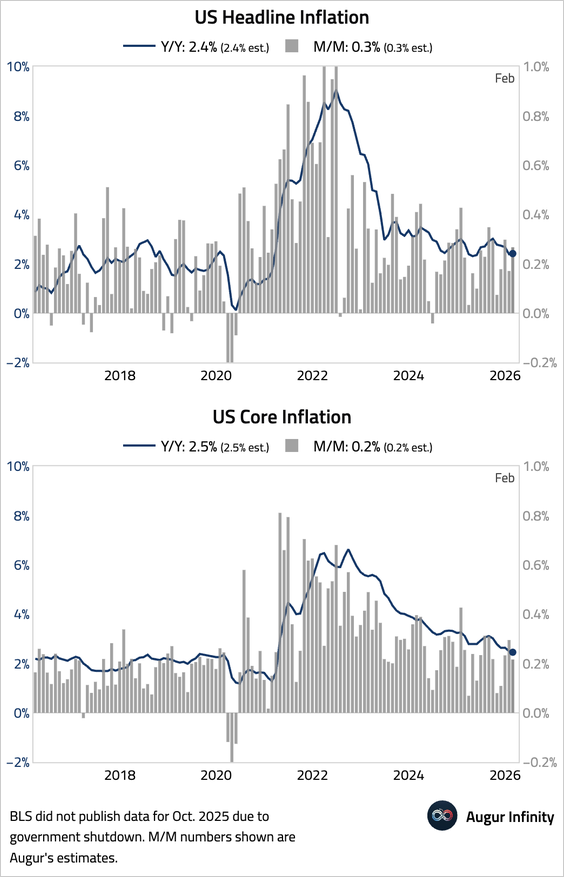
1. February inflation was in line with consensus estimates.
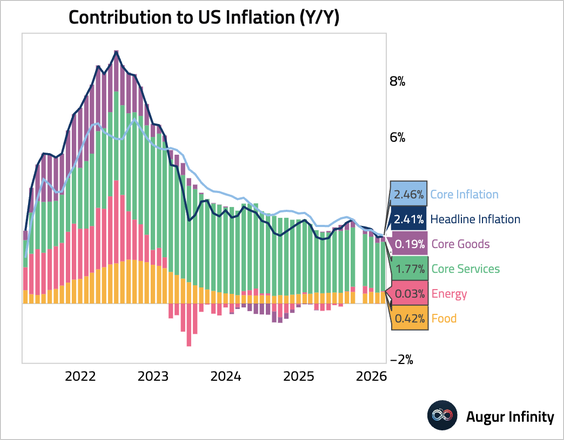
• Here is a breakdown of year-over-year inflation by component.
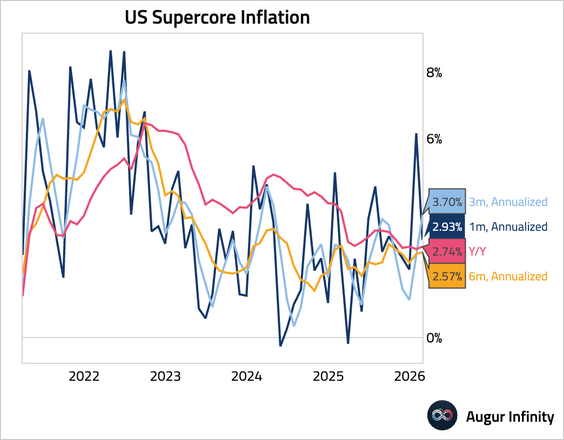
• Supercore inflation is above the 2% target across trailing periods.
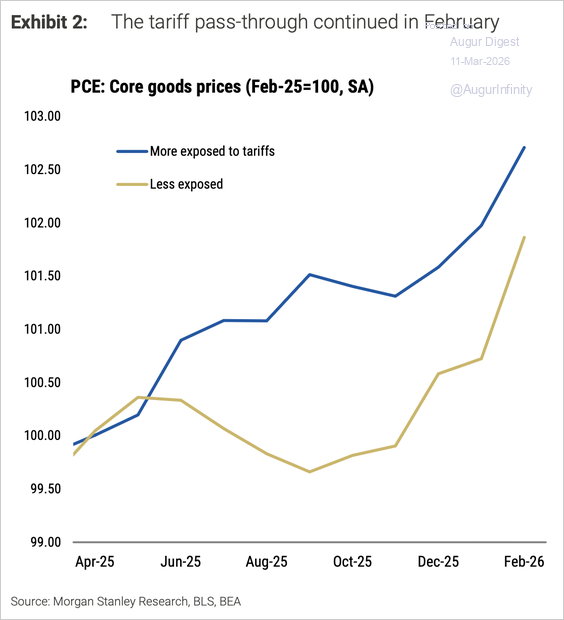
• Core goods prices ticked up month over month, …
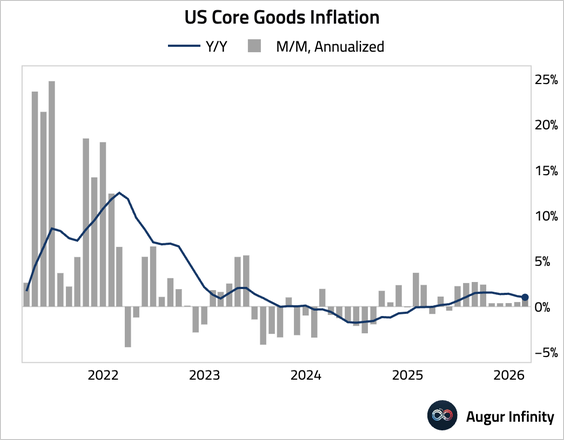
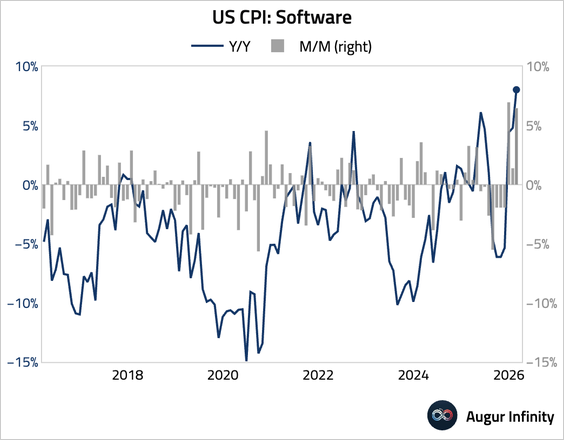
… with continued signs of tariffs being passed through to goods prices. Prices for goods less exposed to tariffs also rose, though the move largely reflects volatility in software inflation and jewelry.
Source: Morgan Stanley Research
– Apparel prices rose at the fastest sequential pace since September 2018.
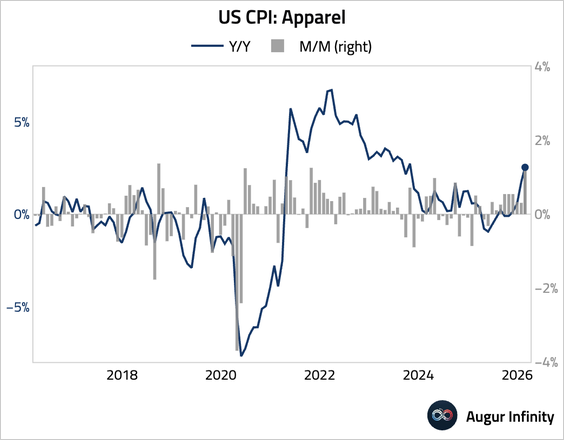
– This chart shows the surge in software prices.
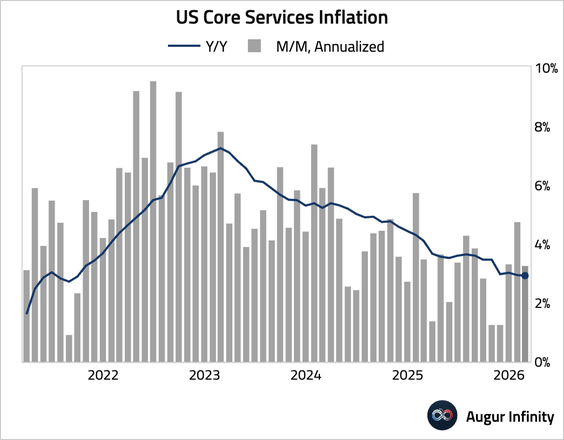
• Core services inflation eased sequentially, but remained elevated.
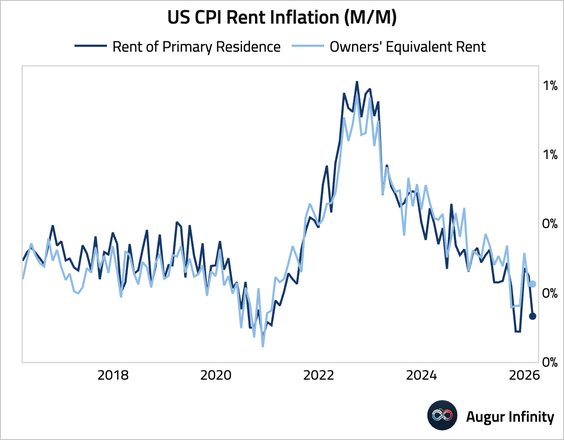
• Shelter inflation eased.
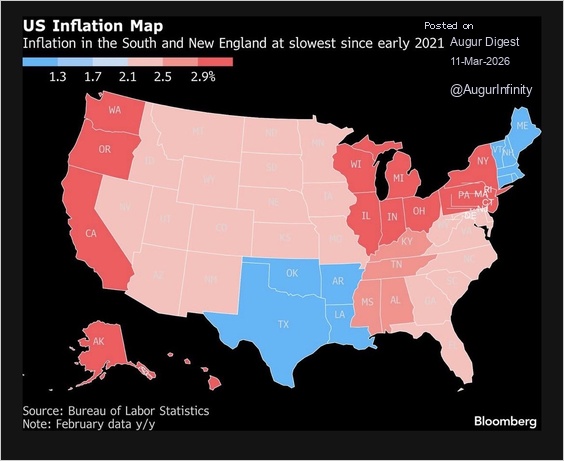
• Inflation was lower in the south, but higher at coastal regions.
Source: @atanzi
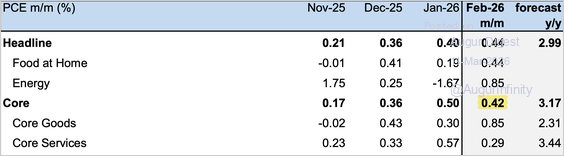
• Following the CPI report, Morgan Stanley raised its February core PCE forecast to 0.42%, up sharply from 0.27% previously.
Source: Morgan Stanley Research
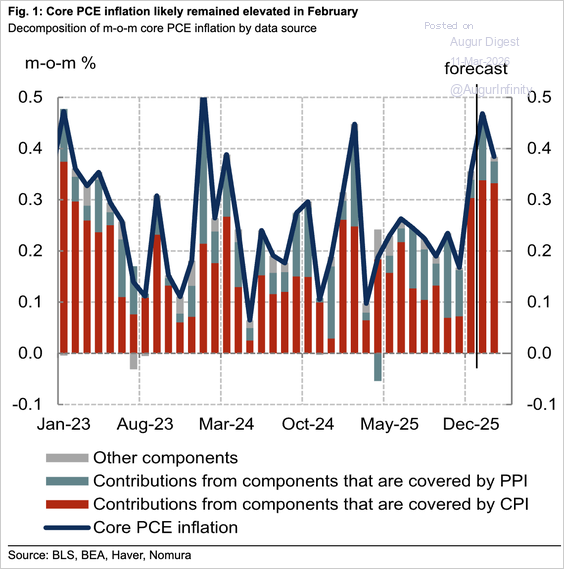
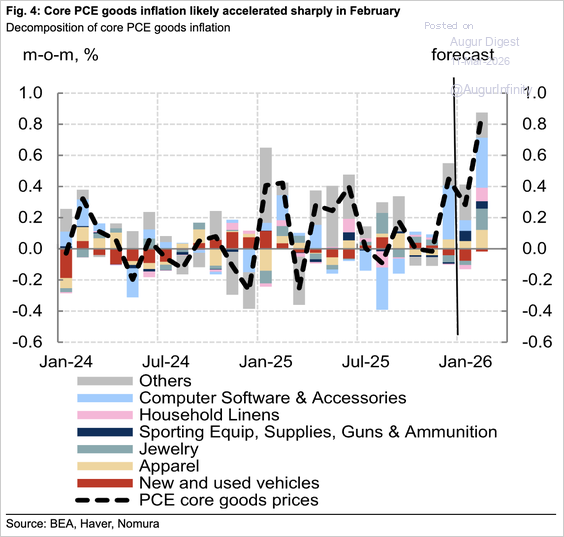
– Nomura similarly raised its February core PCE forecast from 0.254% to 0.384%, …
Source: Nomura Securities
… driven by accelerating core PCE goods inflation.
Source: Nomura Securities
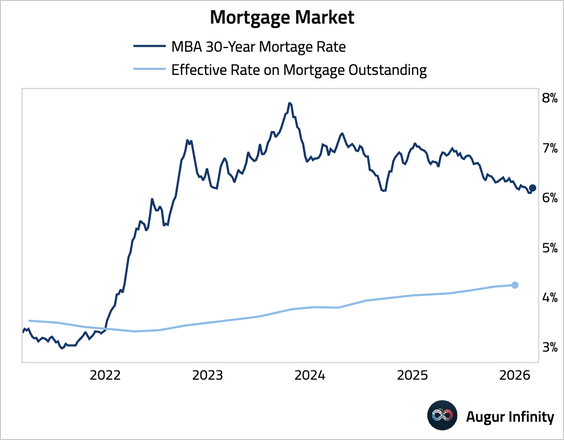
2. Mortgage rates rose 10 basis points to 6.19% last week—the largest increase since September—as higher Treasury yields linked to the Iran conflict lifted borrowing costs.
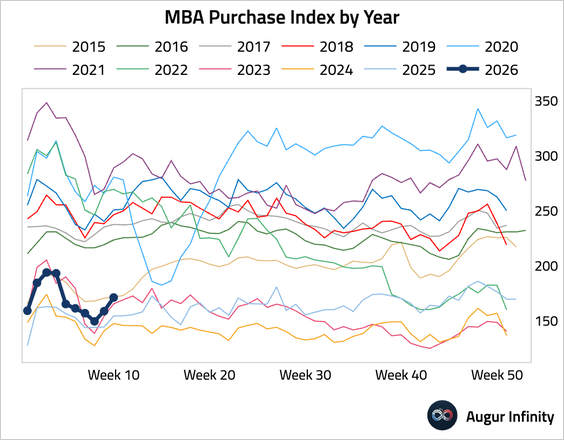
• Mortgage applications rose, suggesting resilient housing demand.
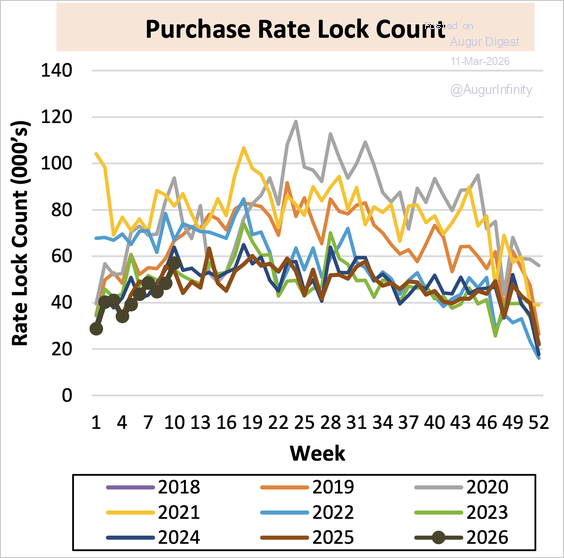
• Purchase rate locks also improved.
Source: AEI Housing Center
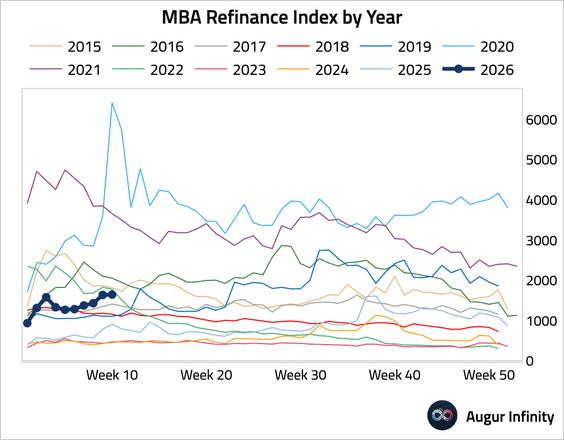
• Refinancing activity was little changed.
3. Green Street’s appraisal-based price index for commercial real estate has been dropping sharply.
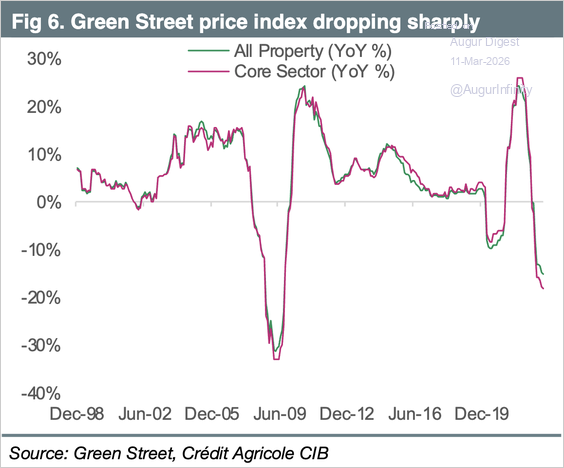
Source: Crédit Agricole CIB
4. Morgan Stanley research shows that short-lived oil price spikes tend to have minimal effects on real consumer spending, as households smooth consumption through savings or short-term credit and businesses often absorb temporary energy cost increases in margins rather than immediately raising prices.
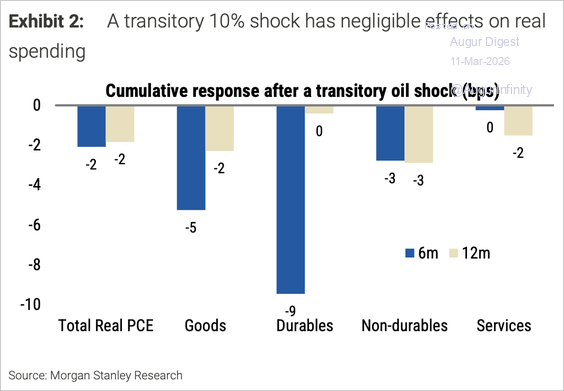
Source: Morgan Stanley Research
• Persistent oil price shocks exert a larger, lagged drag on consumption, with real goods spending declining by roughly 90 basis points about 12 months after the initial shock.
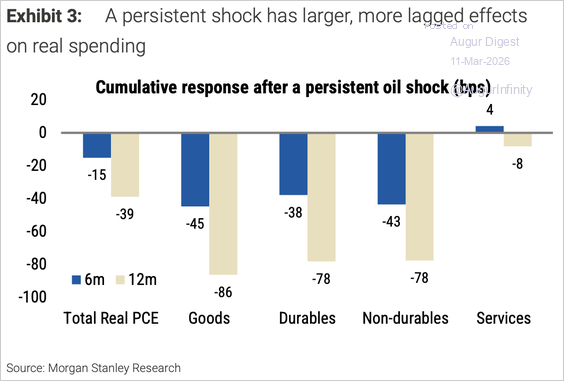
Source: Morgan Stanley Research
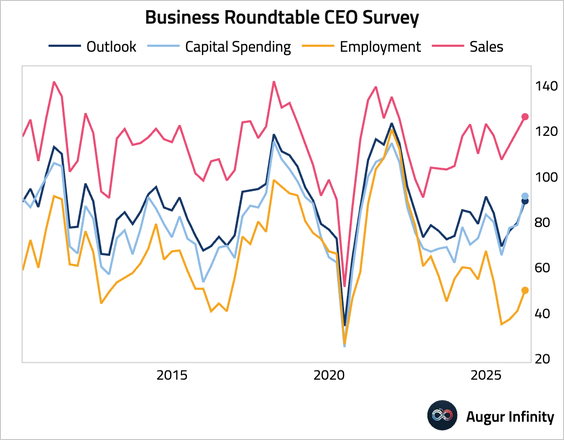
5. The Business Roundtable’s CEO Economic Outlook Index rose in Q1, driven by stronger expectations across sales and capital spending. Hiring plans also improved, but roughly a third of CEOs still reported intentions to reduce employment in the months ahead.
6. Betting markets show a rising probability of a recession in 2026.

Subscribe to read the rest.
Become a subscriber of Augur Digest Premium to see all 65 charts today.
Upgrade