
The United States
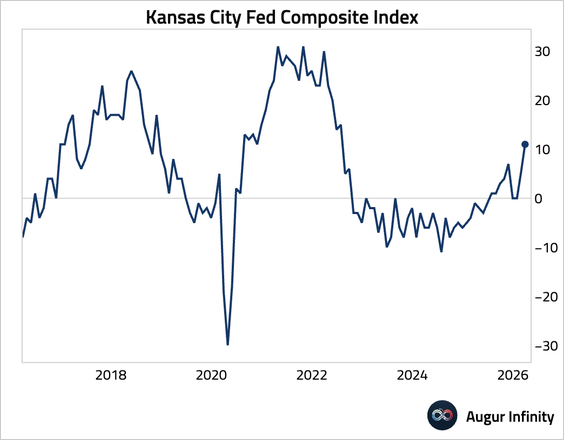
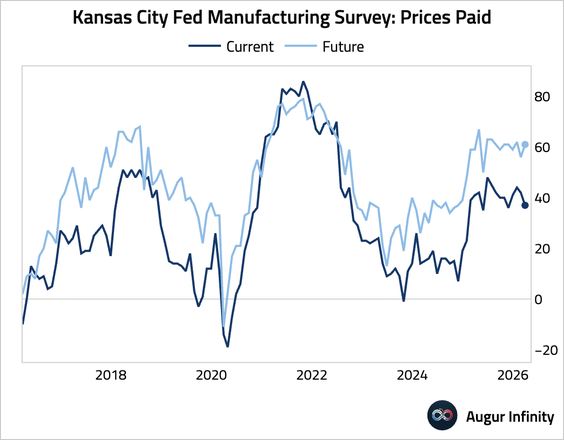
1. The Kansas City Fed’s composite manufacturing index jumped.
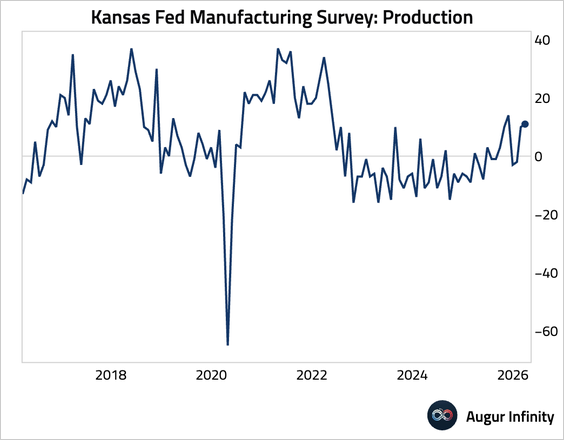
• Production (stable):
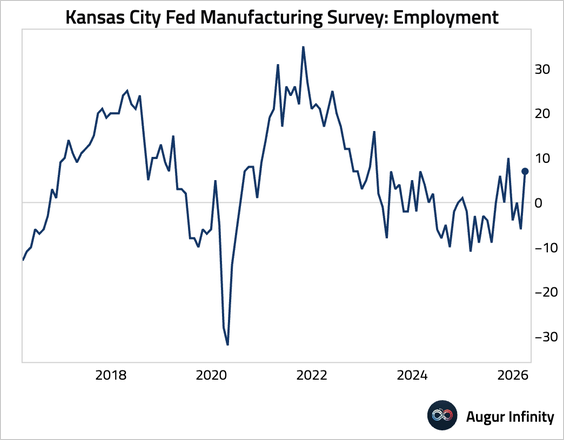
• Employment (returned to expansion):
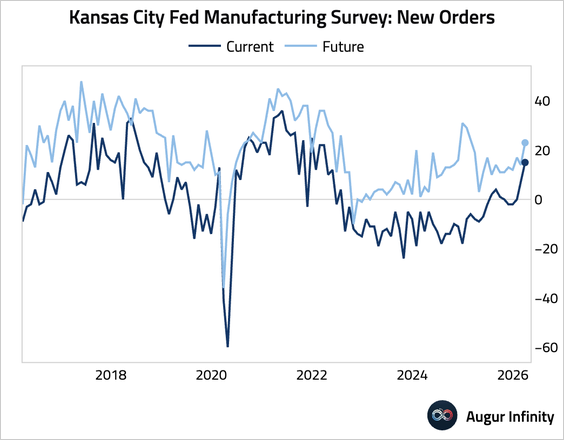
• New orders (improved):
• Price pressure (eased, but future expectations rose):
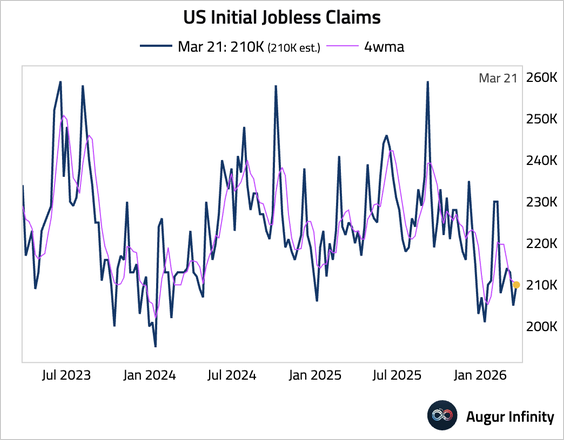
2. US initial jobless claims rose slightly to 210K for the week ending March 21, in line with expectations.
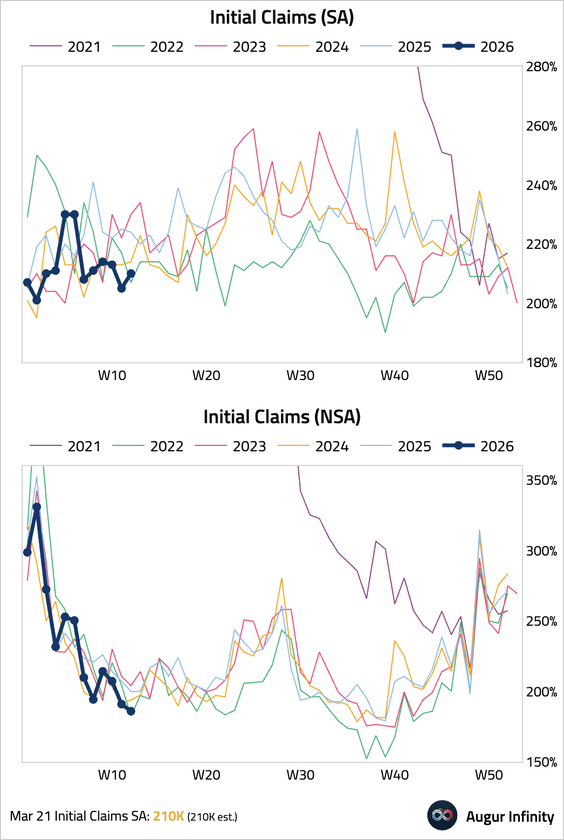
– The four-week moving average declined by 1K, indicating layoffs remain limited and consistent with a low-hire, low-fire labor market.
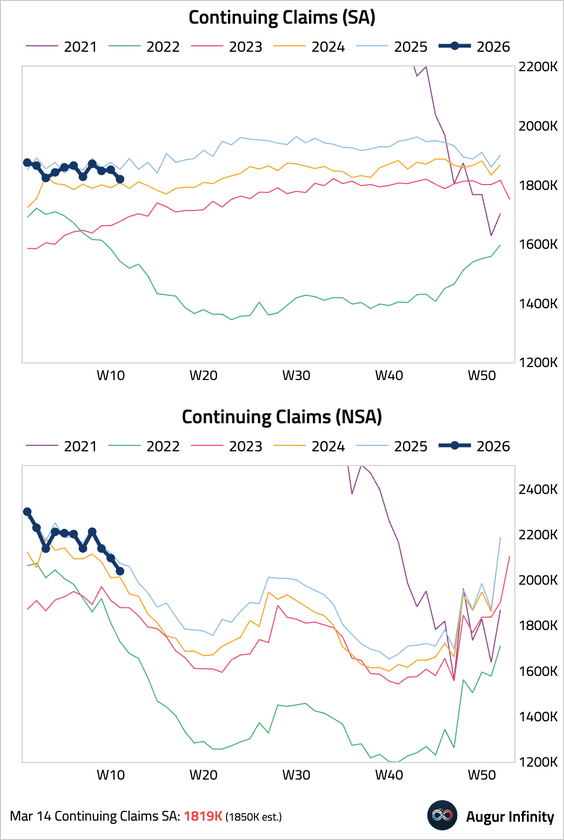
• Continuing claims declined more than expected to 1.819 million, a nearly two-year low.
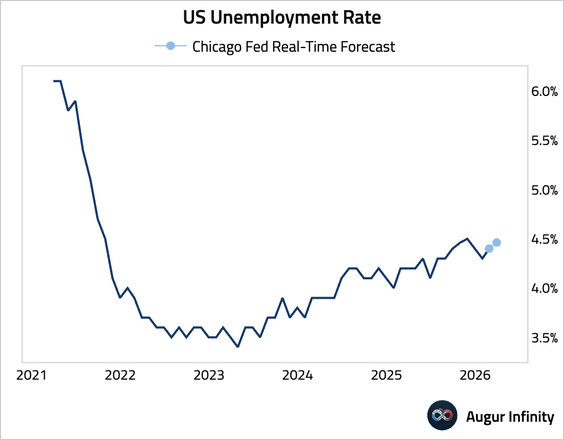
3. The Chicago Fed’s real-time estimate puts the unemployment rate at 4.46% in March, slightly above February.
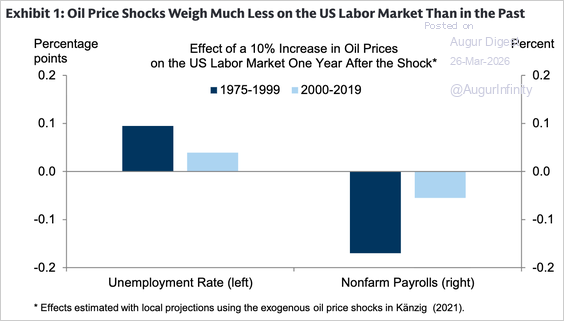
4. Oil price shocks weigh much less on the US labor market than in the past.
Source: Goldman Sachs
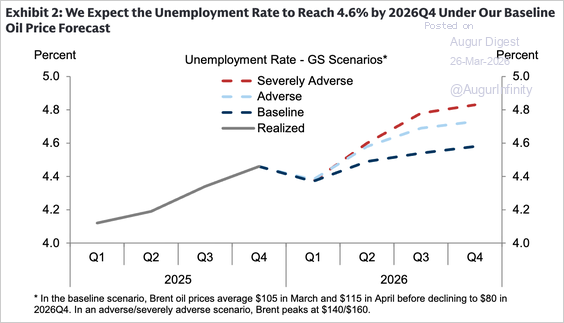
• Goldman expects the unemployment rate to reach 4.6% by Q4 2026 under its baseline oil price forecast.
Source: Goldman Sachs
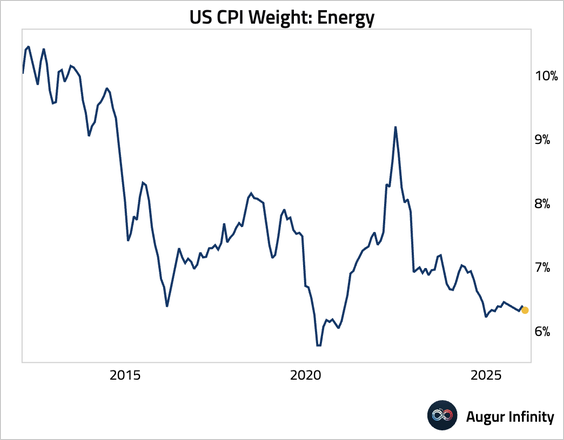
5. The importance of energy in CPI has declined.
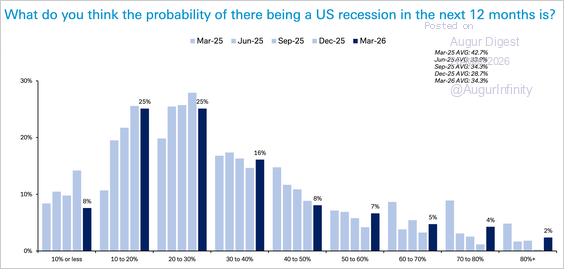
6. Deutsche Bank’s survey of investors shows US recession probability has risen to 42.7% over the next 12 months.
Source: Deutsche Bank Research
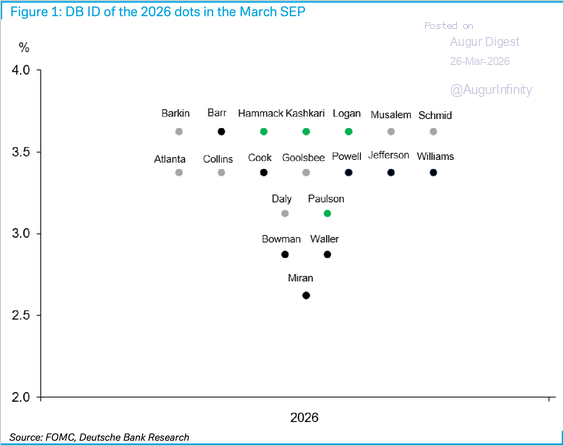
7. This chart shows Deutsche Bank’s identification of 2026 Fed dots.
Source: Deutsche Bank Research
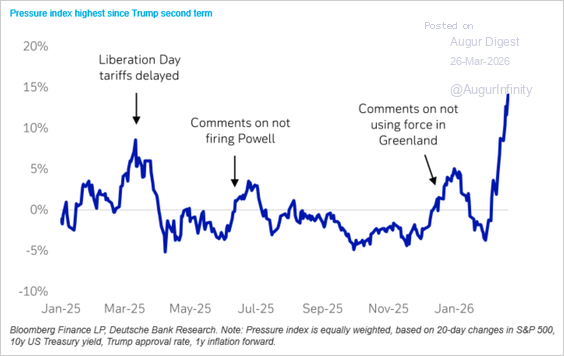
8. Deutsche Bank constructed a pressure index that correlates well with President Trump’s well-known retreats from various threats. The index has reached the highest level in his second term.
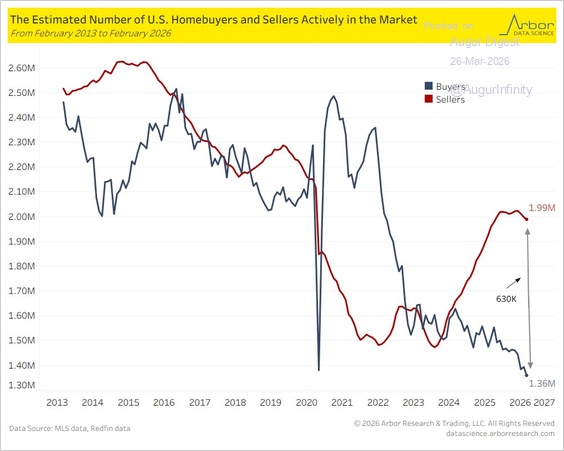
9. According to Redfin, there were 630K more sellers than homebuyers in February 2026. This was up from 449K more sellers than buyers a year earlier.
Source: Refin via @DataArbor
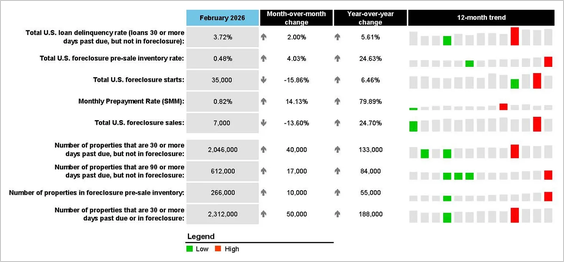
10. Housing market delinquencies and foreclosures are rising from recent record lows.
Source: Calculated Risk
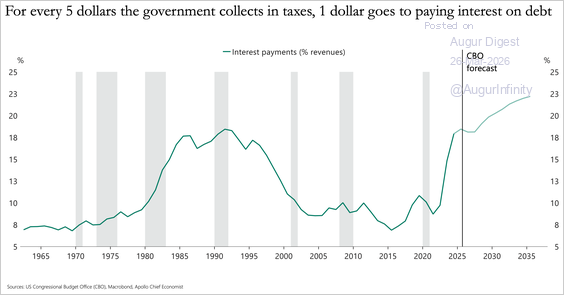
11. For every five dollars the government receives in tax revenue, one dollar is spent on servicing the national debt.
Source: Torsten Slok, Apollo
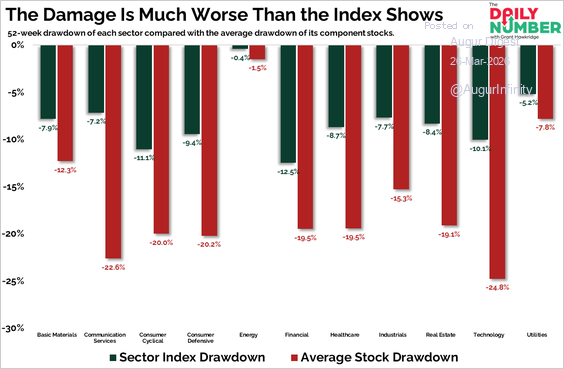
12. The significant underperformance of the average stock relative to sector indices highlights far deeper underlying market weakness than headline benchmarks suggest, with Energy being a notable exception.
Source: Grant Hawkridge
Canada
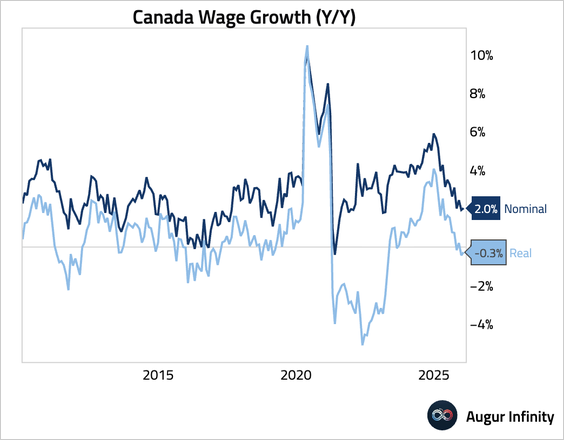
1. Average weekly earnings growth edged up.
The United Kingdom
1. England’s housing affordability has improved to its best level since 2015 as wage growth outpaced house prices, but elevated deposit requirements—driven largely by past price gains—remain the primary barrier for first-time buyers.

Subscribe to read the rest.
Become a subscriber of Augur Digest Premium to see all 111 charts today.
Upgrade