
The United States
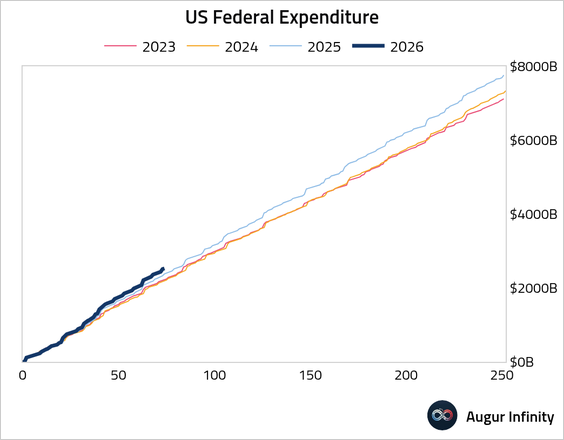
1. Year-to-date federal expenditure is tracking well above prior-year levels.
2. US construction spending has been propped up by residential improvements and data center construction. Excluding these two categories, private nonresidential spending would be down by 9% over the past two years.
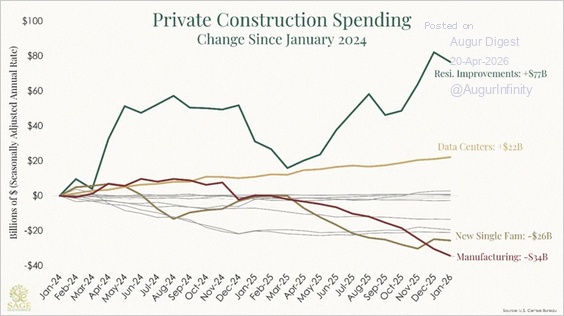
Source: Sage Economics Read full article
3. US manufacturing gains appear driven by AI-related demand, with domestic production rising alongside imports—particularly in electronics—indicating growth is complementing global supply chains rather than replacing them.
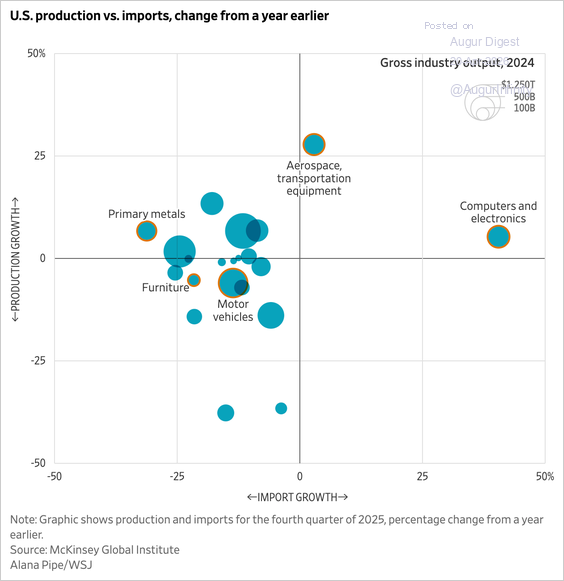
Source: @WSJ Read full article
4. Almost 40% of US data center projects due this year are at risk of falling behind schedule, driven by permitting hurdles, labor shortages, and power and equipment constraints, threatening to slow AI deployments.
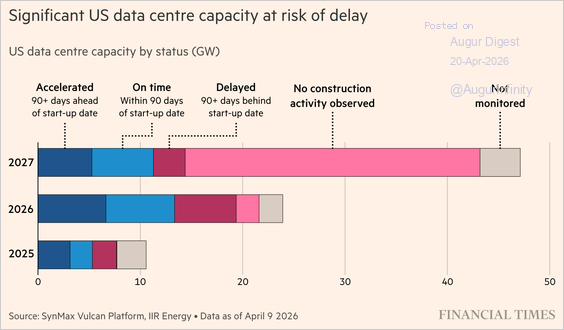
Source: @financialtimes Read full article
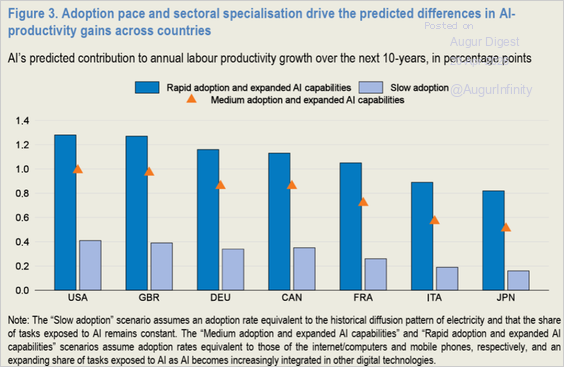
5. In recent years, productivity has grown significantly faster in the US than in other G7 countries. OECD predicts that AI will enable the US to extend this lead, thanks in part to greater AI adoption.
Source: OECD via The Update Read full article
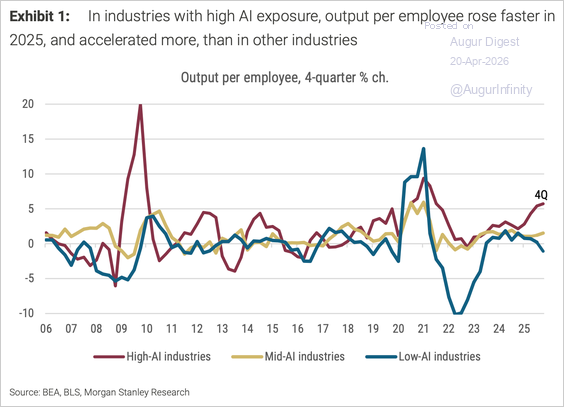
6. Productivity, measured as output per employee, is rising faster in industries Morgan Stanley identifies as having high AI exposure than in those with median or low AI exposure.
Source: Morgan Stanley Research
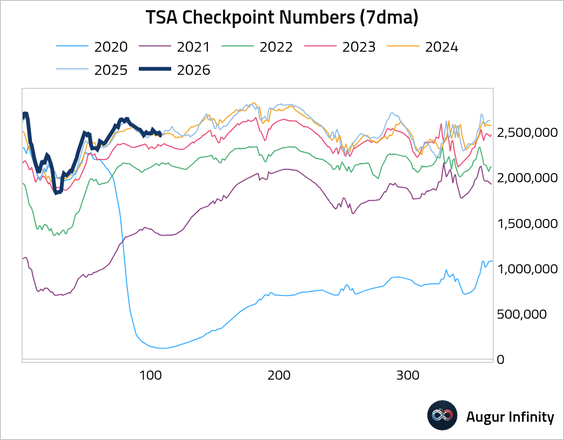
7. Passenger volume at TSA checkpoints dipped below 2025 levels.
Canada
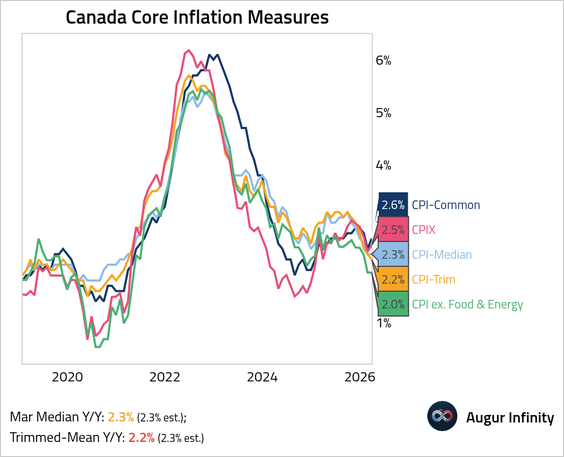
1. Canadian inflation accelerated, driven by a record surge in gasoline prices.
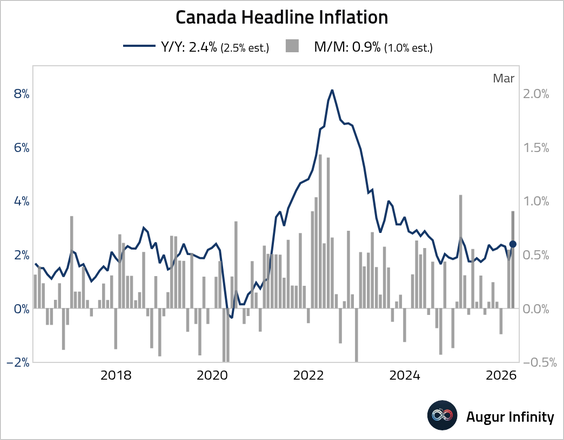
– However, underlying price pressures remained contained.
The Eurozone
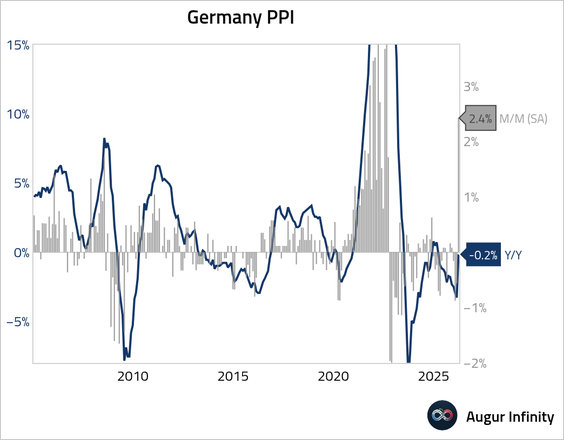
1. Germany’s producer prices surged.
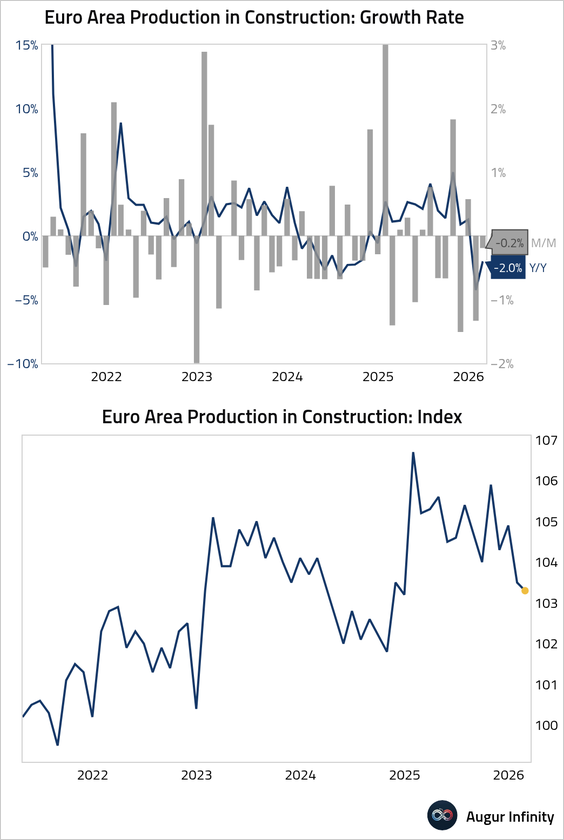
2. The euro area’s construction output weakened further in February, following January’s sharp downward revision, with weakness concentrated in Germany and France.
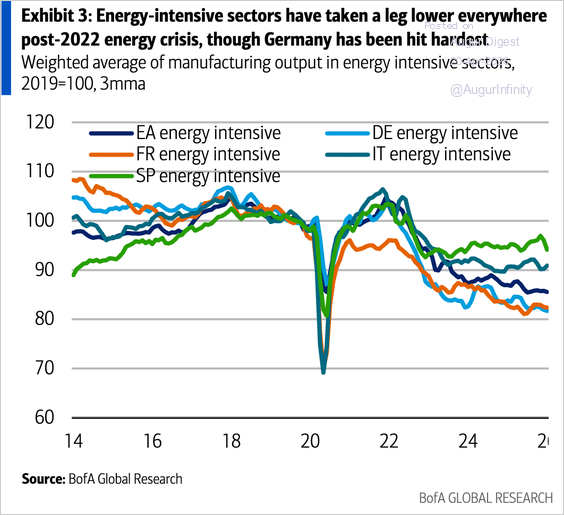
3. Energy-intensive sectors in the euro area have shifted permanently lower after the 2022 energy crisis, with Germany the hardest hit.
Source: BofA Global Research
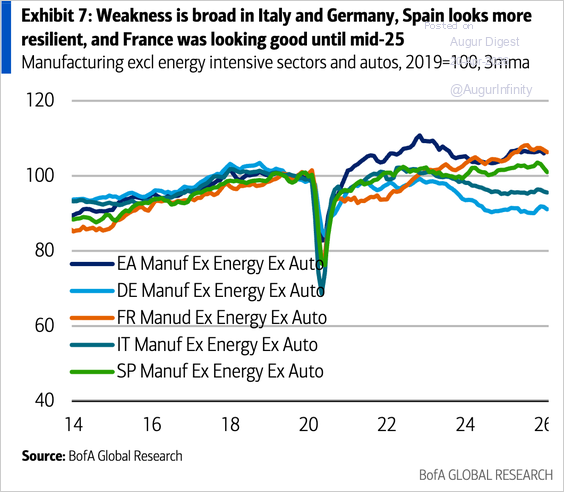
– Even after excluding the energy and auto sectors, manufacturing output is still weak in Germany and Italy, but has been more resilient elsewhere.
Source: BofA Global Research
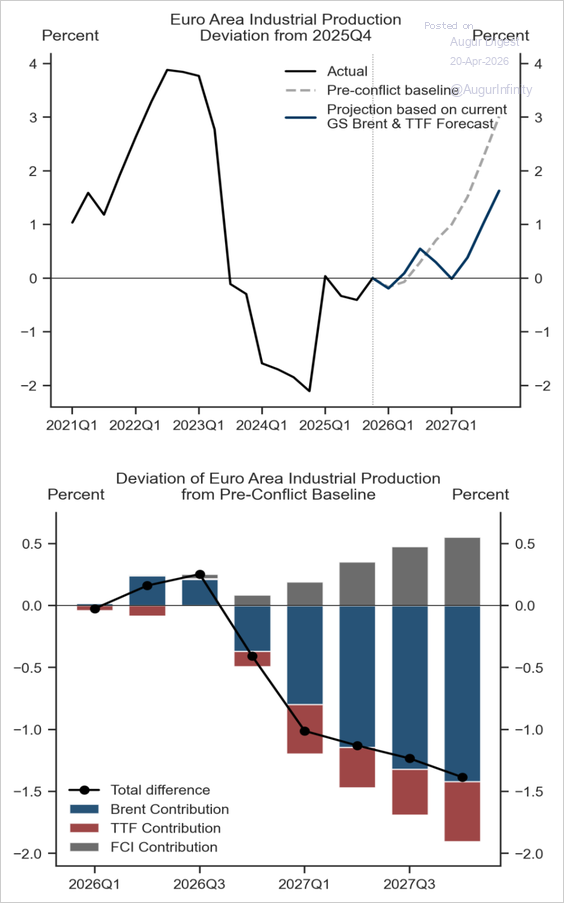
• Goldman Sachs expects the current energy shock to lower euro area industrial production by 1.5% by Q4 2027.
Source: Goldman Sachs
Europe
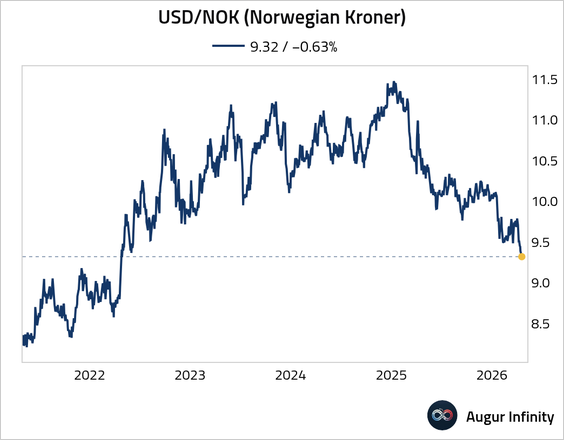
1. The Norwegian krone has rallied to the strongest level against the USD since April 2022.

Subscribe to read the rest.
Become a subscriber of Augur Digest Premium to see all 44 charts today.
Upgrade