
The United States
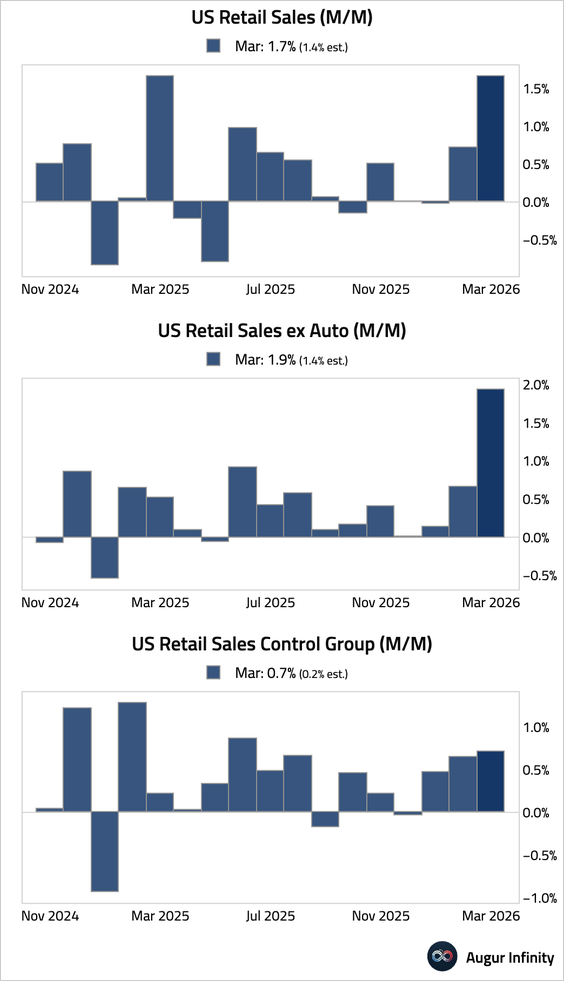
1. Nominal retail sales jumped by 1.7% month over month, topping expectations. The key “control group”—a direct input for GDP—also posted a solid gain of 0.7%.
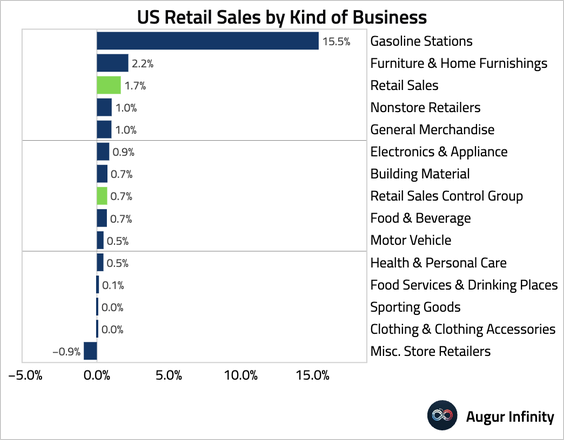
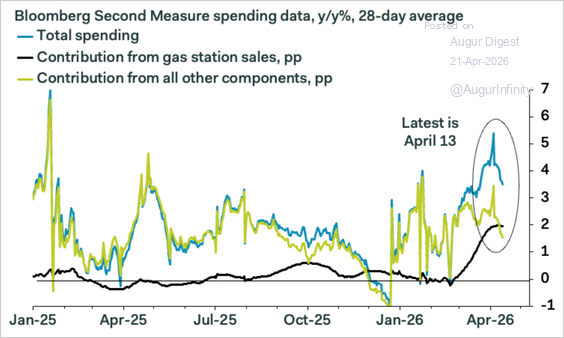
• The headline strength was driven by a surge in gasoline sales, as well as other temporary factors, including unusually warm weather and larger tax refunds.
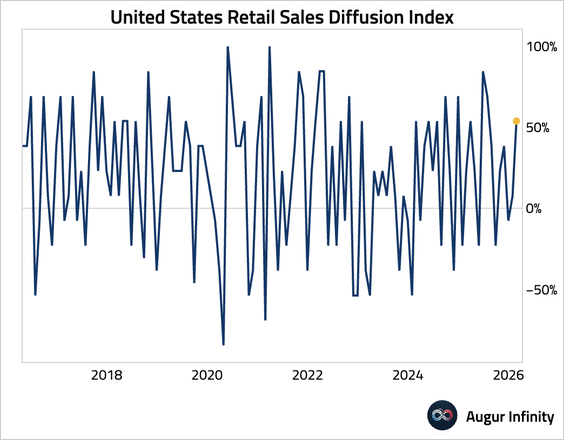
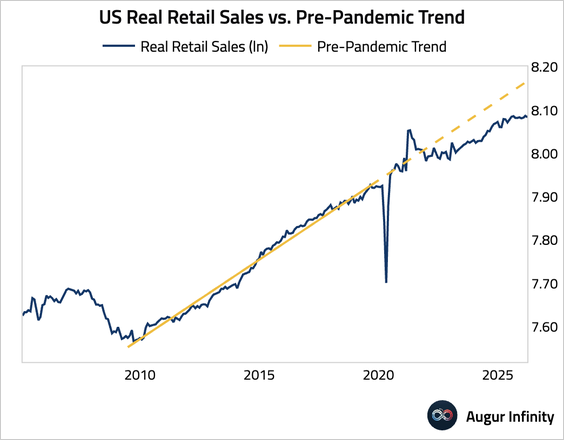
• After adjusting for price increases, real retail sales contracted and remained well below the pre-pandemic trend.
• More timely data for April indicates that consumer spending is already slowing sharply, <a href="https://thedailyshot.com/2026/04/20/us-consumer-spending-is-losing-momentum/">suggesting significant consumer strain ahead</a>.
Source: Pantheon Macroeconomics
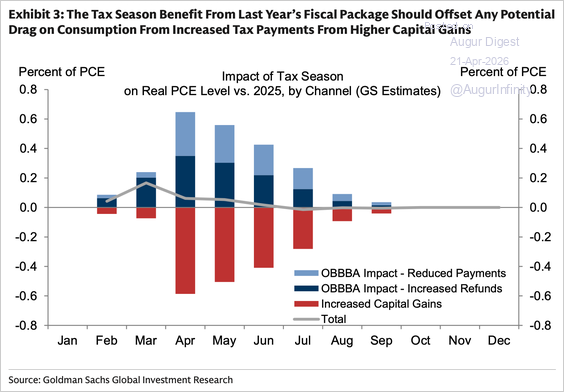
2. According to Goldman Sachs, higher tax refunds from last year’s fiscal package are largely offset by increased tax payments—particularly from capital gains—leaving net tax liabilities broadly unchanged and providing only a limited boost to consumer spending.
Source: Goldman Sachs
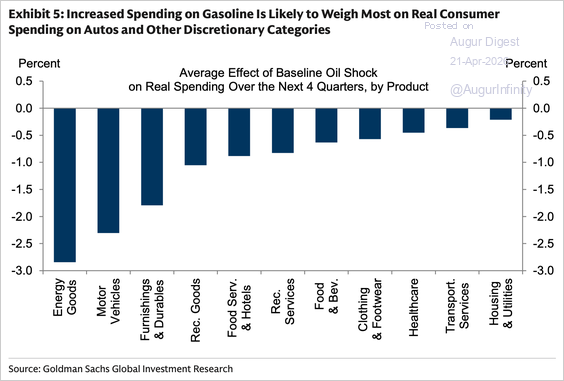
• The surge in gasoline prices is likely to create a roughly $140 billion annualized drag on household incomes that is expected to weigh disproportionately on lower-income consumers and dampen discretionary spending.
Source: Goldman Sachs
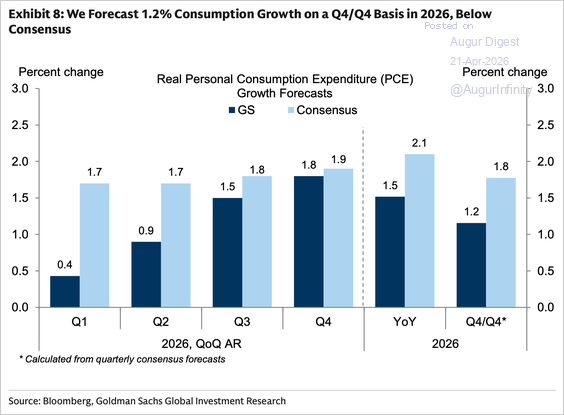
• Goldman expects below-consensus consumption growth in 2026 (around 1.2% on a Q4-over-Q4 basis).
Source: Goldman Sachs
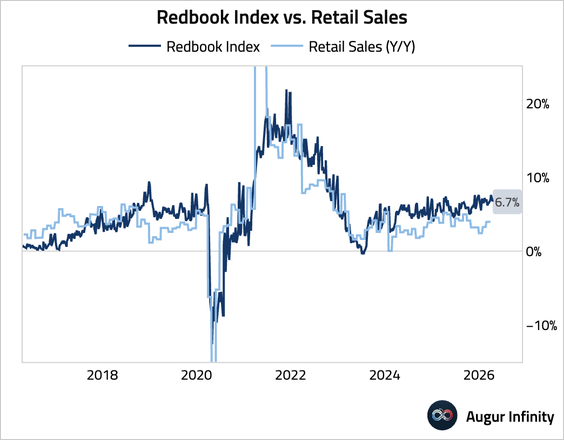
3. The Redbook index of same-store sales growth eased.
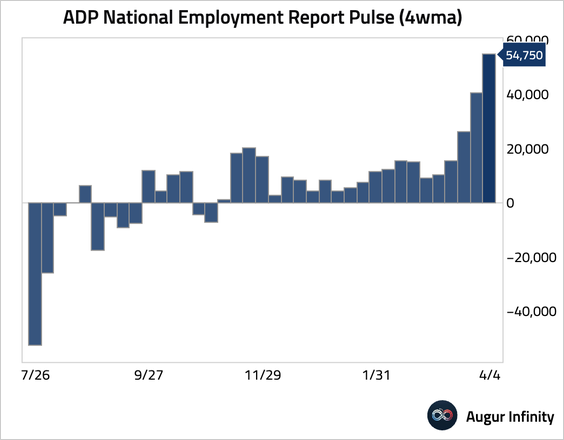
4. According to ADP, private-sector job gains accelerated further to an average of 54,750 per week during the four weeks ending April 4.
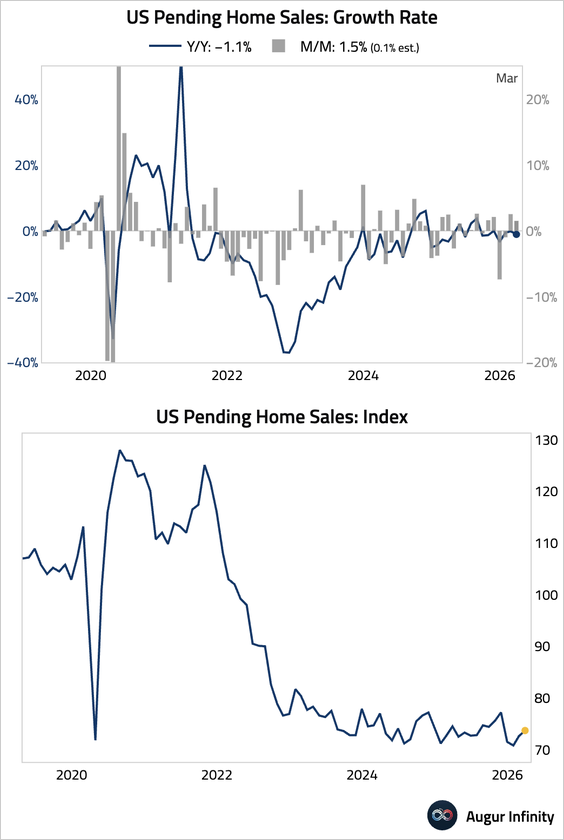
5. Pending home sales rebounded after weather-related weakness, but higher mortgage rates, weak consumer confidence, and persistent affordability constraints suggest limited upside.
6. The Atlanta Fed’s GDPNow model is now tracking Q1 GDP at 1.2%.
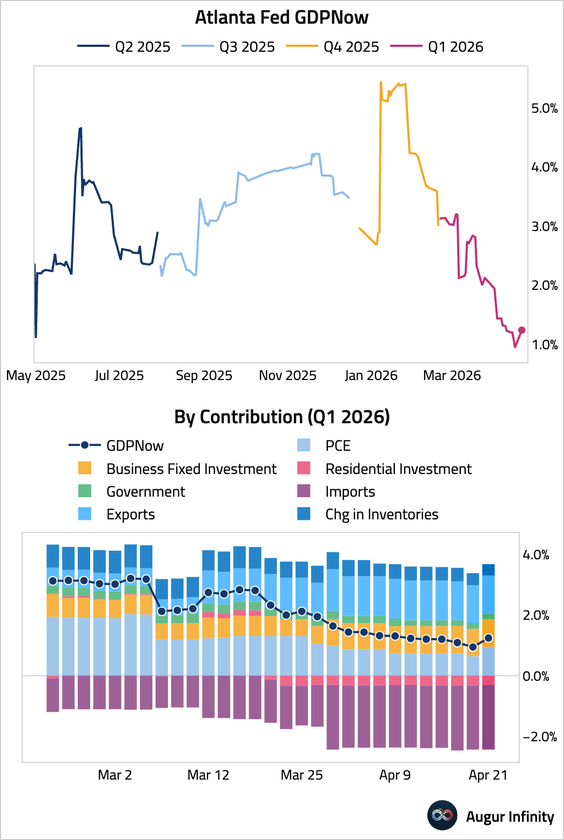
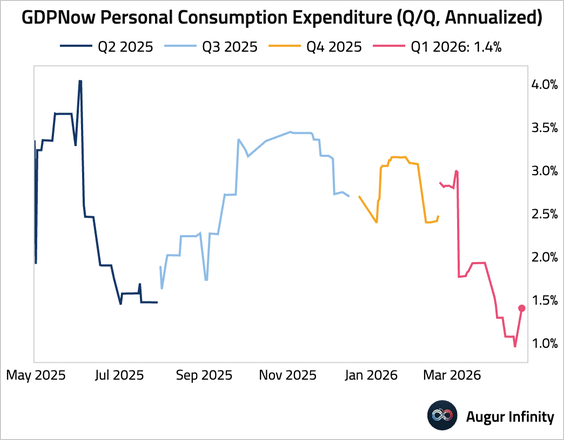
• Personal consumption expenditures growth for Q1 was revised up to 1.4%, still lower than the average of the current expansion.
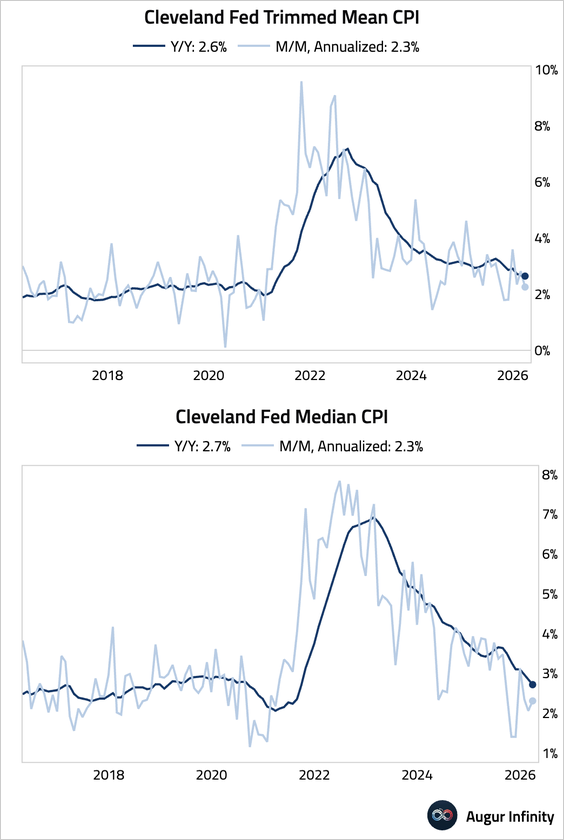
7. The Fed chair nominee, Kevin Warsh, noted during his testimony that he prefers “underlying” inflation gauges, such as “trimmed average” and “median” inflation. Here are the Cleveland Fed’s comparable measures.

Source: @economics Read full article
The United Kingdom
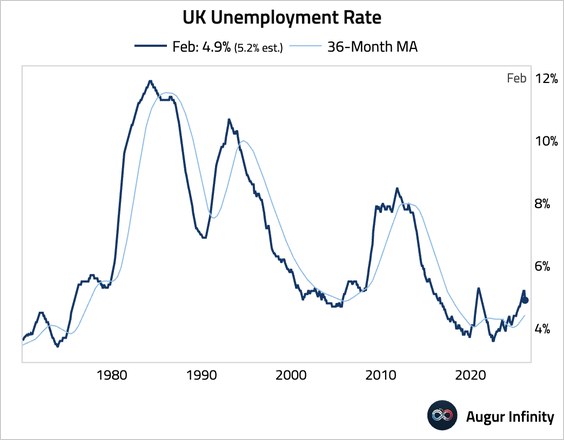
The unemployment rate unexpectedly fell to 4.9% for the three months through February, well below the 5.2% consensus. The lower-than-expected figure coincided with rising inactivity, as more people exited the labor force—driven in part by fewer students seeking work alongside their studies, according to the Office for National Statistics.
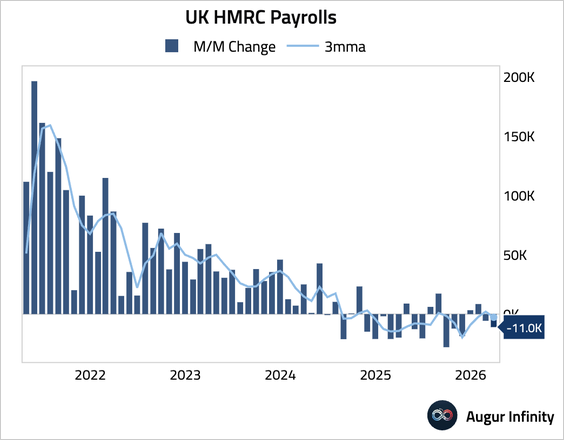
– Payrolls continued to contract in March, suggesting some labor market weakening after the Iran conflict began.
– The number of Britons claiming unemployment benefits rose more than expected in March.

Subscribe to read the rest.
Become a subscriber of Augur Digest Premium to see all 86 charts today.
Upgrade