
The United States
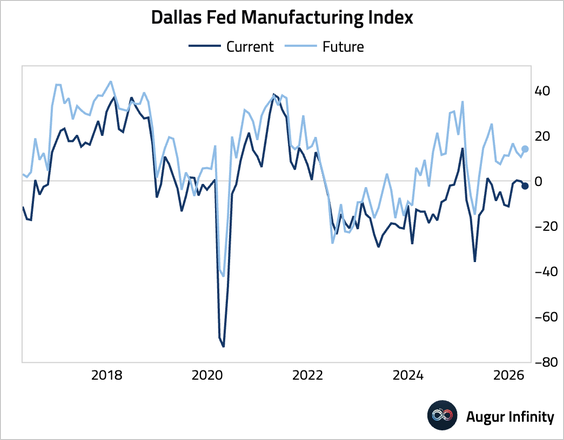
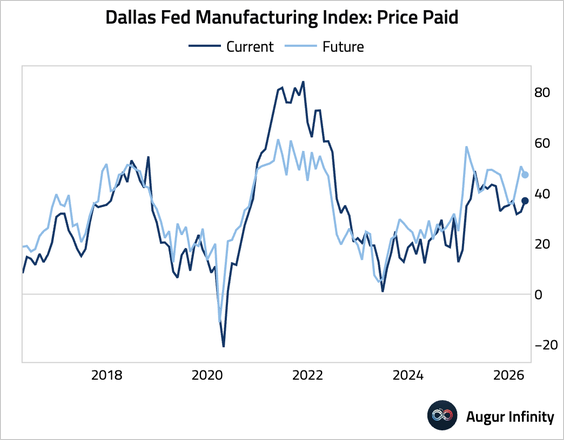
1. The Dallas Fed manufacturing survey shows that perceptions of general business conditions were mixed, with current conditions falling slightly while future expectations improved.
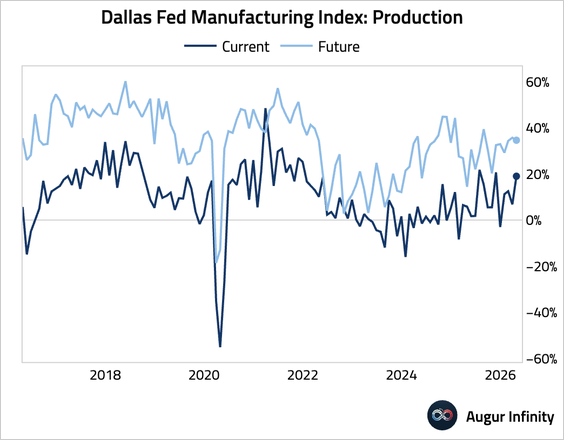
• Production (solid expansion):
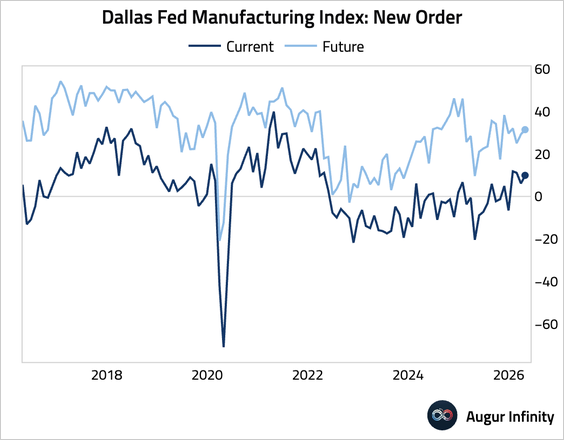
• New orders (improved):
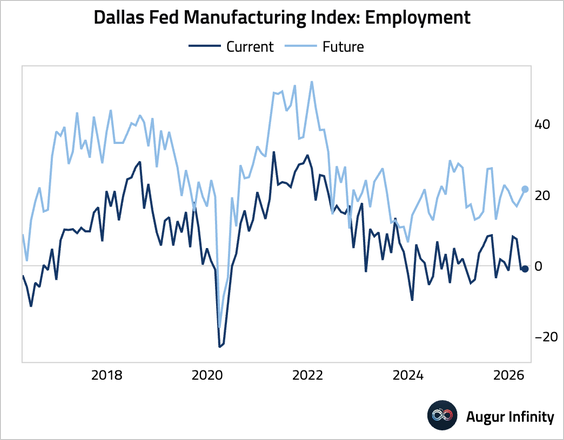
• Employment (roughly flat):
• Price pressure (ticked up, but expectations eased):
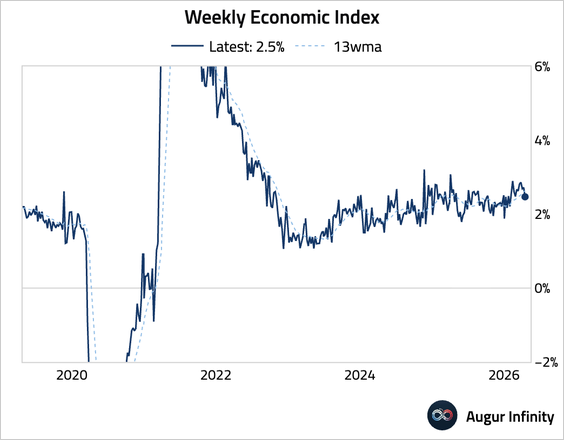
2. The US Weekly Economic Index softened, but remained above potential growth (about 2%).
3. US home price appreciation (HPA) slowed to 1.2% year over year in March, and inflation-adjusted HPA remained negative.
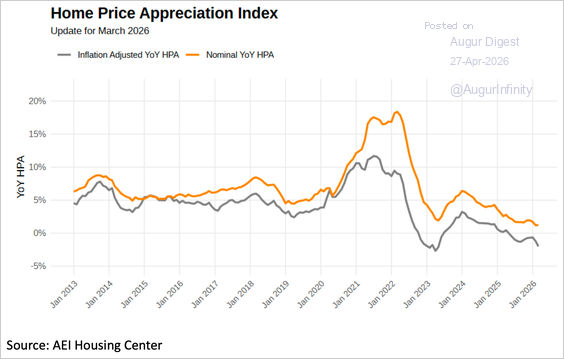
Source: AEI Housing Center
4. Goldman expects December headline and core PCE inflation to be 3.4% and 2.6%, respectively.
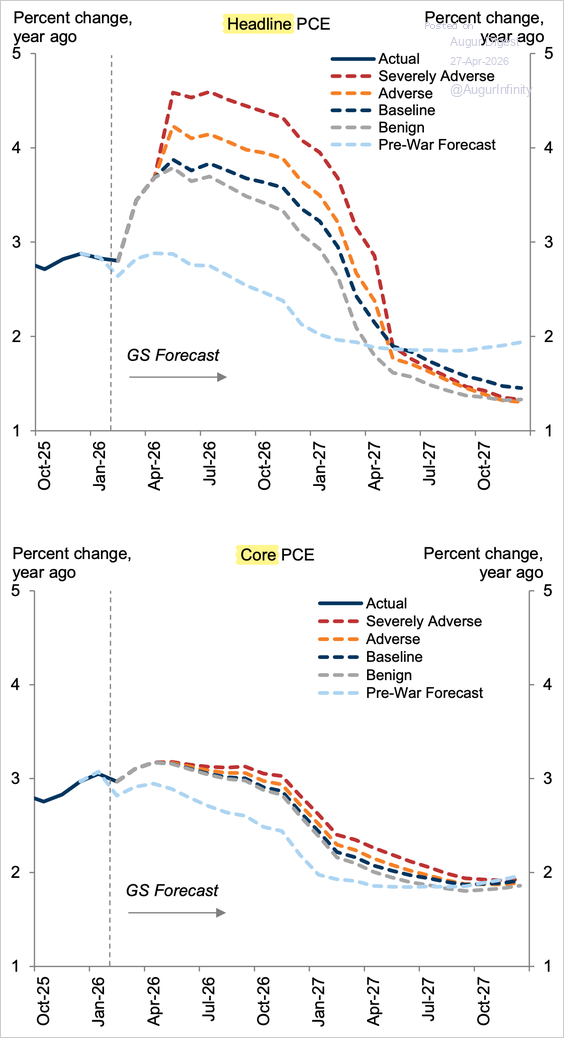
Source: Goldman Sachs
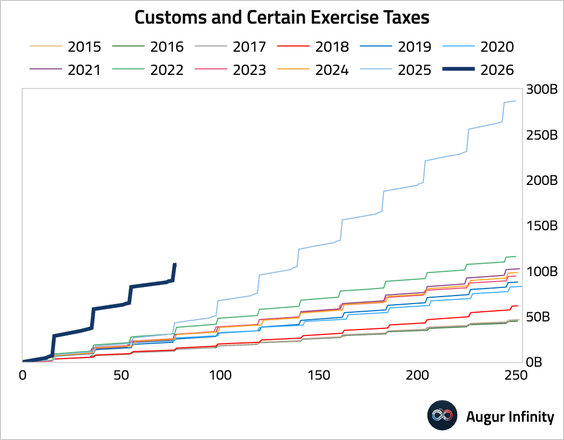
5. Tariff revenue continues to run at very high levels.
The United Kingdom
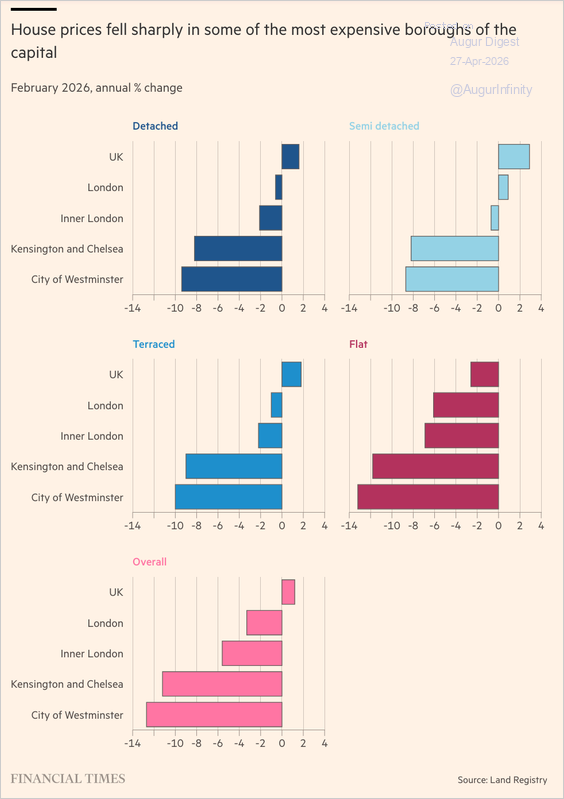
House prices are falling in the London area.
Source: @financialtimes
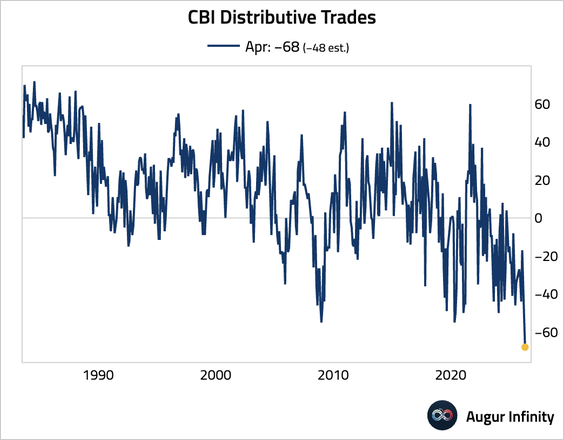
1. The CBI’s distributive trades survey slumped to an all-time low, signaling weak retail conditions amid fragile consumer demand and rising cost pressures.
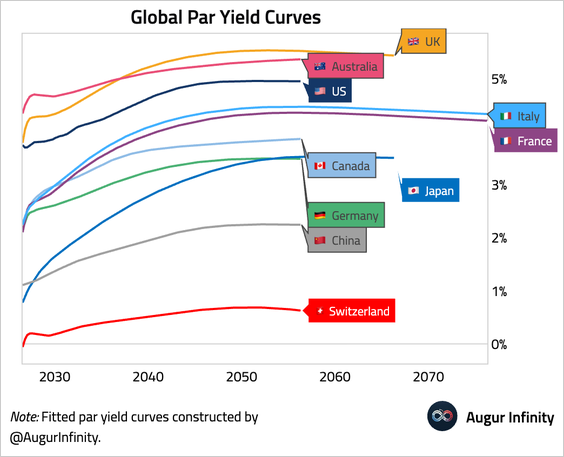
2. The 30-year Gilt yield is trading at the highest level since May 1998.
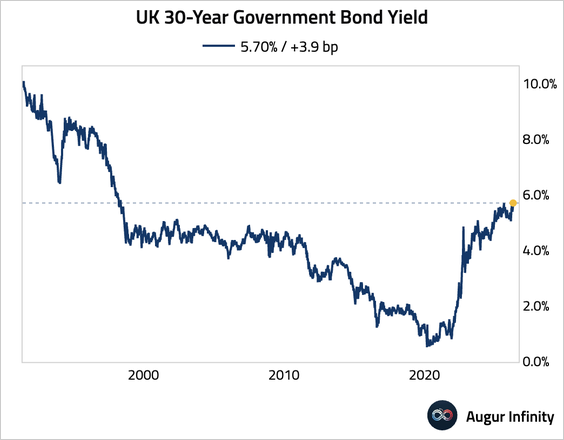
• UK’s intermediate- and long-term yields are higher than those of other major economies.
Euro Area
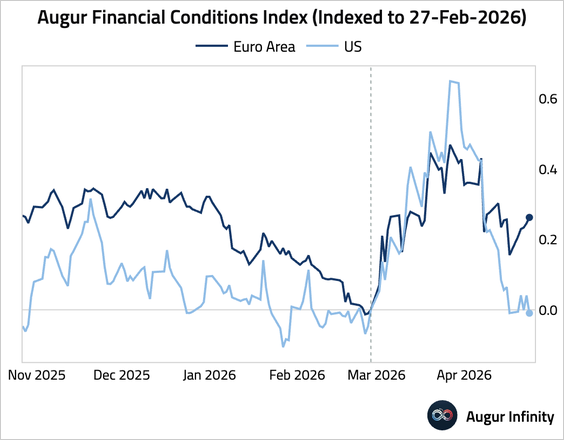
1. Since the start of the Iran conflict, euro area financial conditions have tightened. In contrast, the US financial conditions have completed a round-trip and are now roughly unchanged.
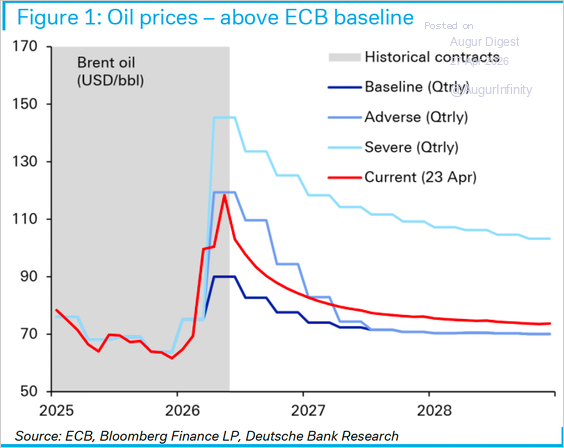
2. Oil prices remain above the ECB’s baseline.
Source: Deutsche Bank Research
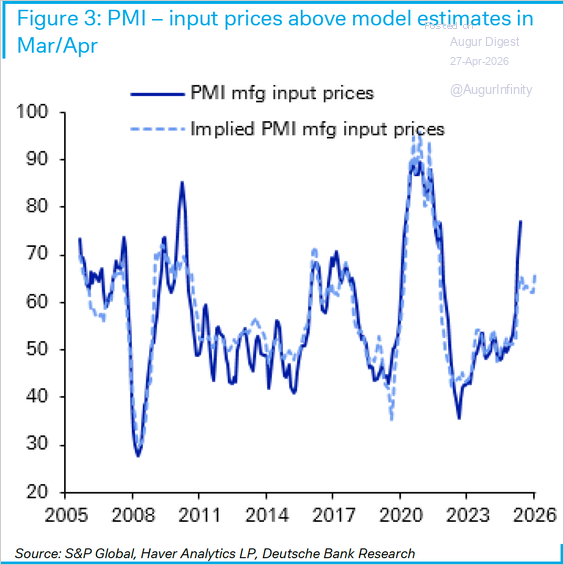
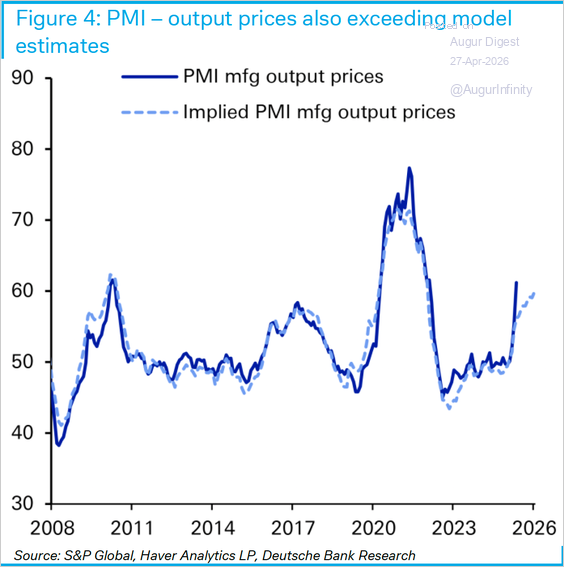
3. Increases in PMI manufacturing prices exceeded Deutsche Bank’s model-based expectations.
Source: Deutsche Bank Research
– The pass-through from input costs to output prices in March was lower than in 2022 but still above normal levels.
Source: Deutsche Bank Research
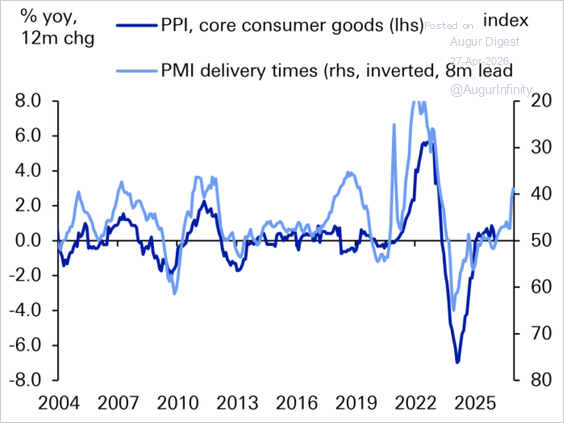
• The rise in PMI delivery times also signals inflationary pressures.
Source: Deutsche Bank Research
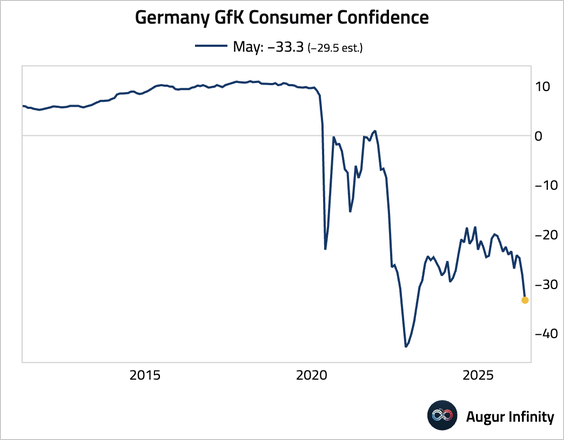
• The GfK consumer confidence plunged to its lowest level since February 2023, pointing to a significant retrenchment in consumer spending ahead.
• S&P downgraded Belgium to AA−, citing widening deficits and weak fiscal consolidation that are expected to push debt to 109% of GDP by 2029, underscoring mounting concerns over the country’s fiscal trajectory.

Subscribe to read the rest.
Become a subscriber of Augur Digest Premium to see all 78 charts today.
Upgrade