
The United States
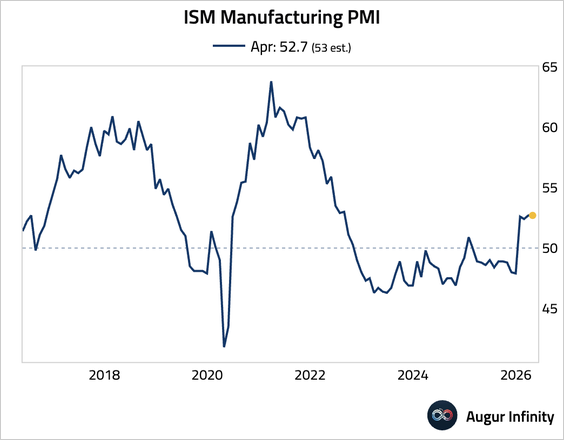
1. The ISM manufacturing PMI held steady at 52.7.

Source: @economics Read full article
• New orders edged up, …
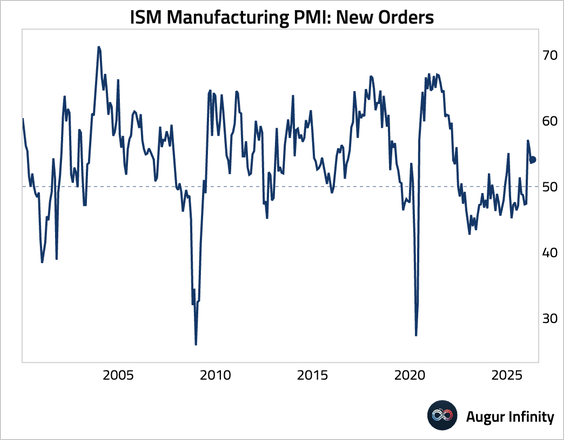
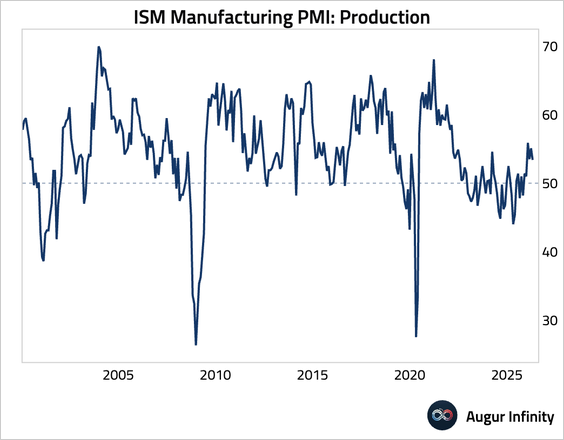
… while output moderated.
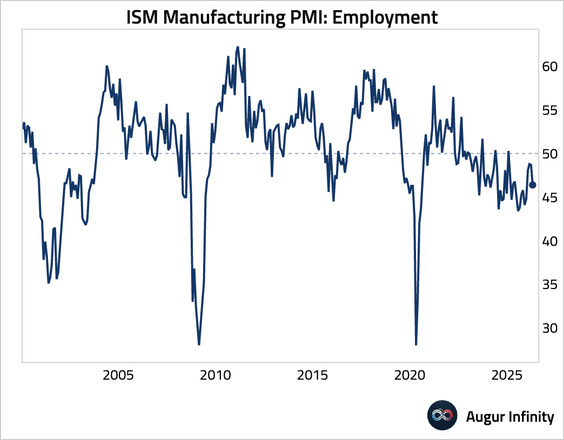
• Employment fell further into contraction.
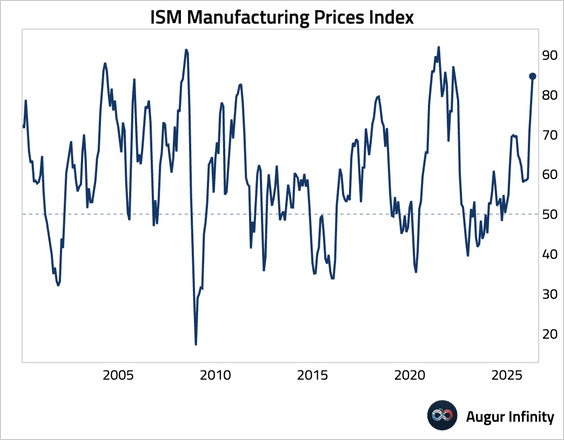
• The price index surged to the highest level since early 2022, pointing to significant pipeline inflation.
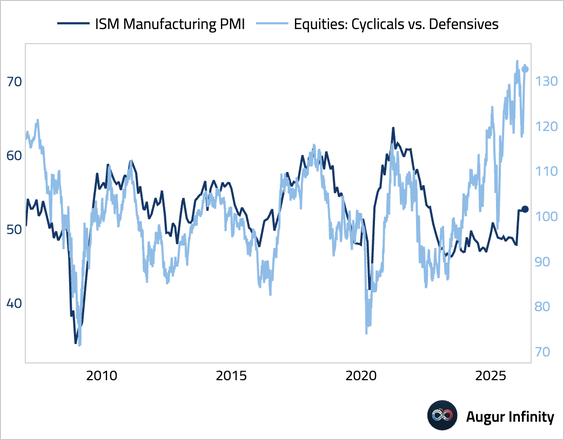
• The gap between PMI and the ratio of cyclical versus defensive equities remains large.
– The price action of the SOX (PHLX Semiconductor Sector Index) also implies a much higher ISM reading.
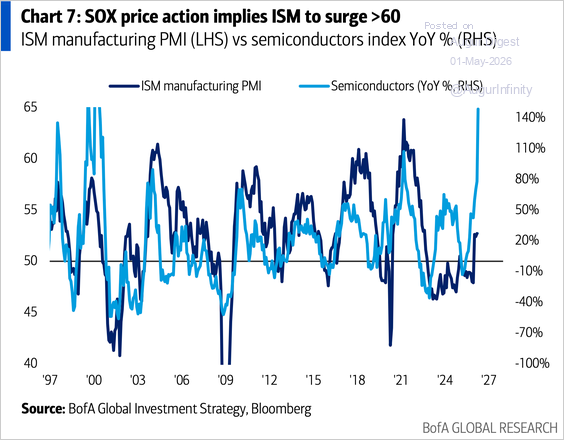
Source: BofA Global Research
2. The S&P Global manufacturing PMI was revised higher.
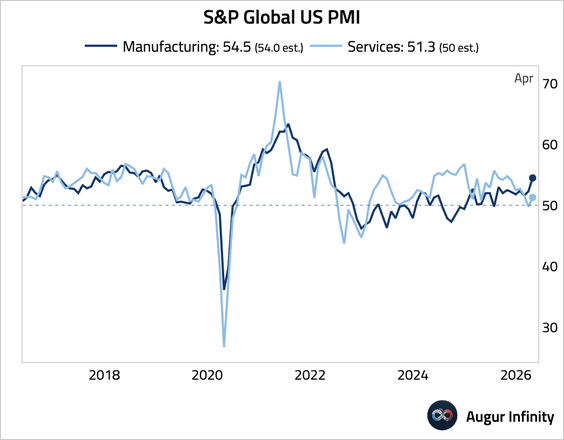
Source: S&P Global PMI
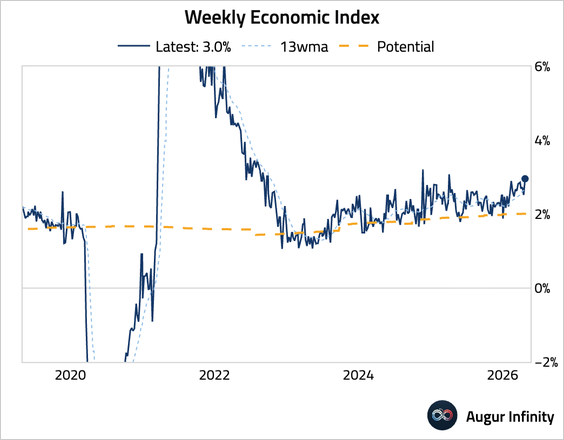
3. The US Weekly Economic Index jumped.
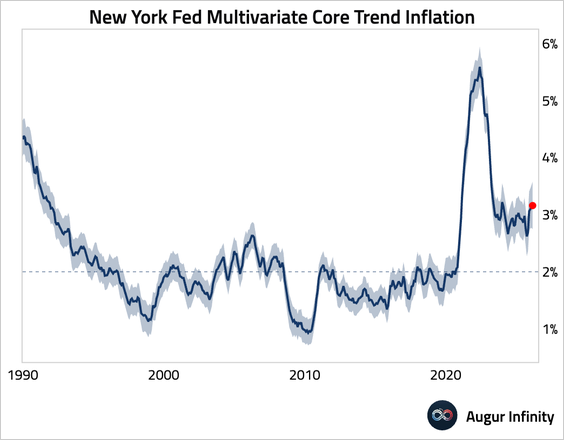
4. The New York Fed’s multivariate core trend inflation rose.
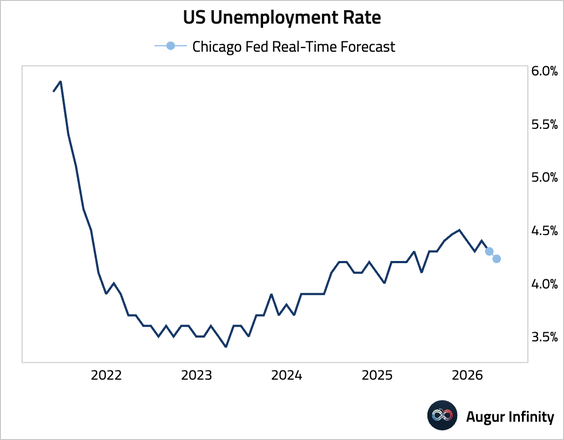
5. The Chicago Fed real-time unemployment rate forecast for April is 4.23%, down slightly from BLS’s reported 4.26% for March.
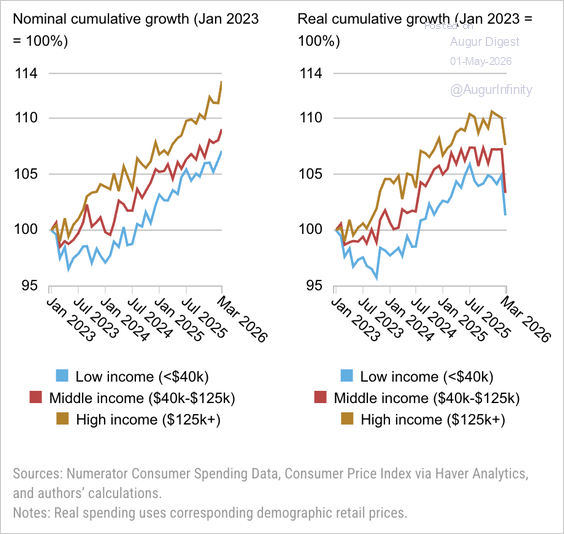
6. Retail spending growth since 2023 has been increasingly K-shaped, with high-income households driving gains.
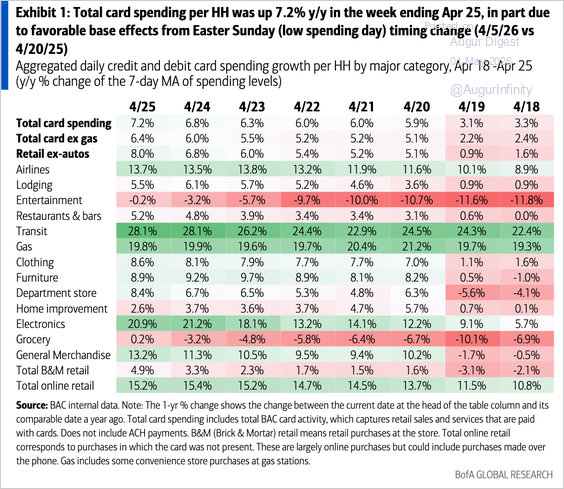
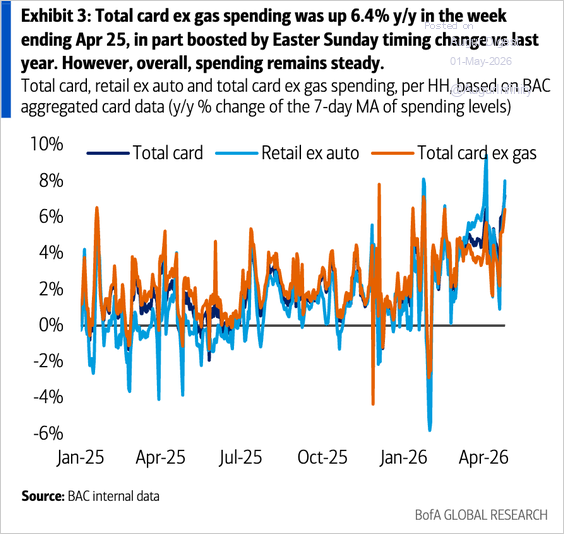
7. Bank of America’s data show card spending per household rose 7.2% year over year in the week ending April 25. Spending excluding gas was up 6.4%, in part due to favorable base effects from the Easter Sunday timing change.
Source: BofA Global Research
• Here’s a time series view.
Source: BofA Global Research
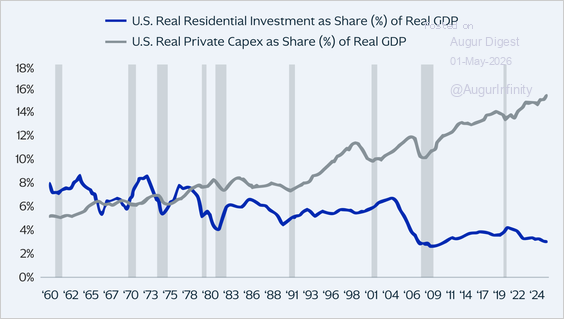
8. The share of private capex in GDP has risen.
Source: KKR
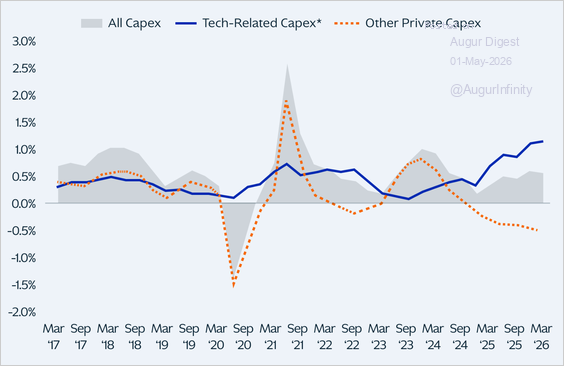
• However, there are significant divergences within capital expenditures. While tech-related capex is surging, other private capex has slumped.
Source: KKR
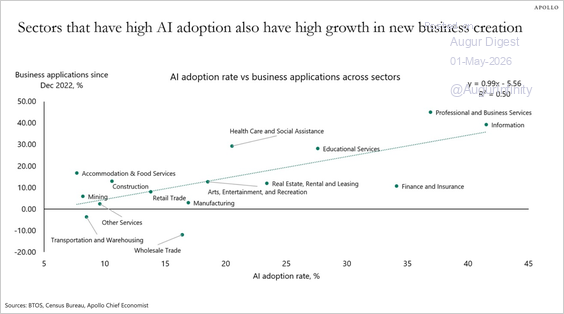
9. Sectors with the highest AI adoption rates have also seen the strongest growth in new business applications since 2022.
Source: Torsten Slok, Apollo
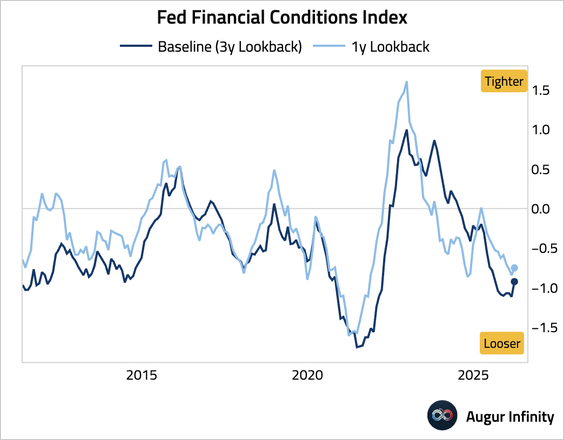
10. According to the Fed’s FCI-G Index, financial conditions tightened in March.
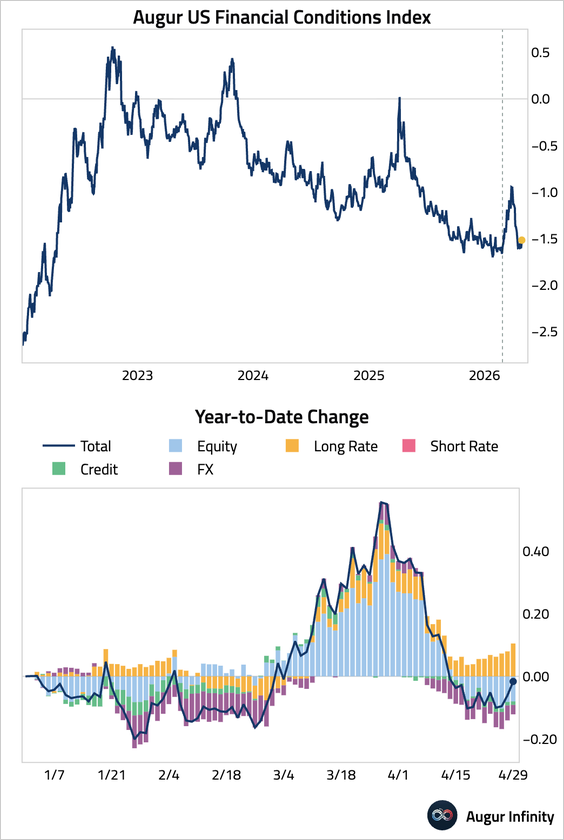
• Our in-house measure, however, has eased back in April.
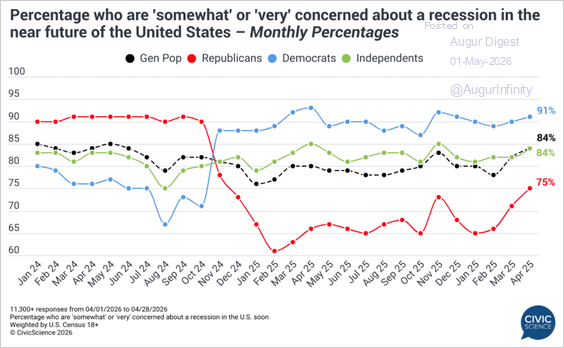
11. Recession fears have surged to their highest level since mid-2024, according to a CivicScience survey.
Source: CivicScience Read full article
Canada
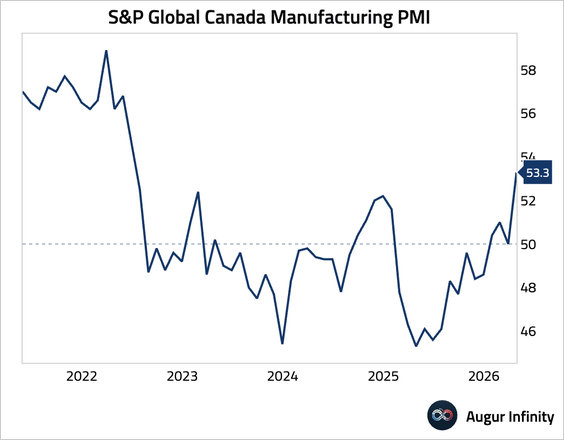
1. Canada’s manufacturing PMI rose to 53.3 in April—its highest level since mid-2022. The increase was driven by a surge in output and new orders, largely fueled by precautionary stockpiling amid Middle East–related supply disruptions. These disruptions also pushed input costs and delivery delays sharply higher.
Source: S&P Global PMI
The United Kingdom
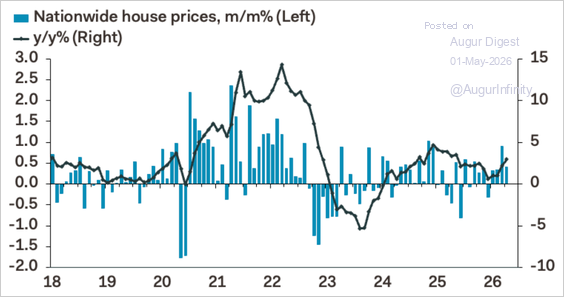
1. House prices rose in April, signaling resilience in the housing market.
Source: Pantheon Macroeconomics
2. Household credit creation was strong and topped expectations.

Subscribe to read the rest.
Become a subscriber of Augur Digest Premium to see all 55 charts today.
Upgrade