
The United States
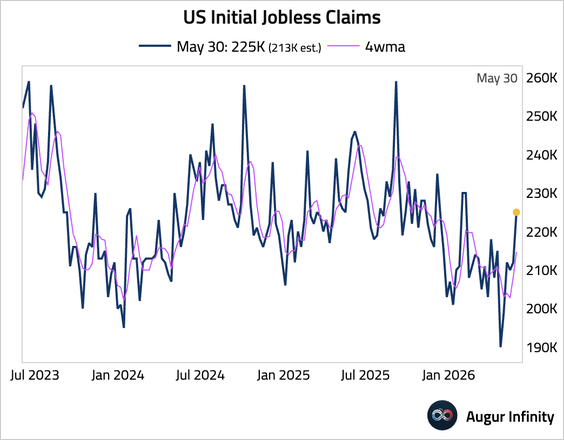
1. Initial jobless claims increased to 225,000, above consensus estimates.
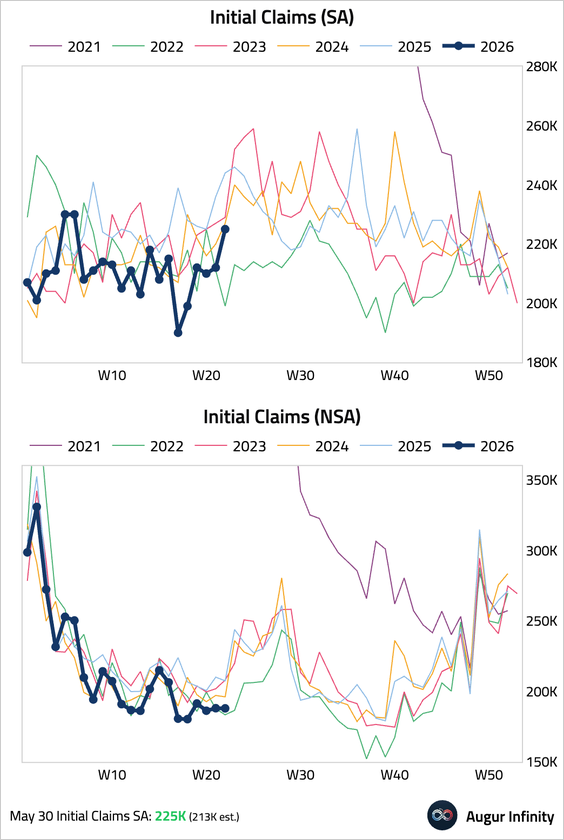
– The four-week moving average rose for a second week, though the overall level remained low.
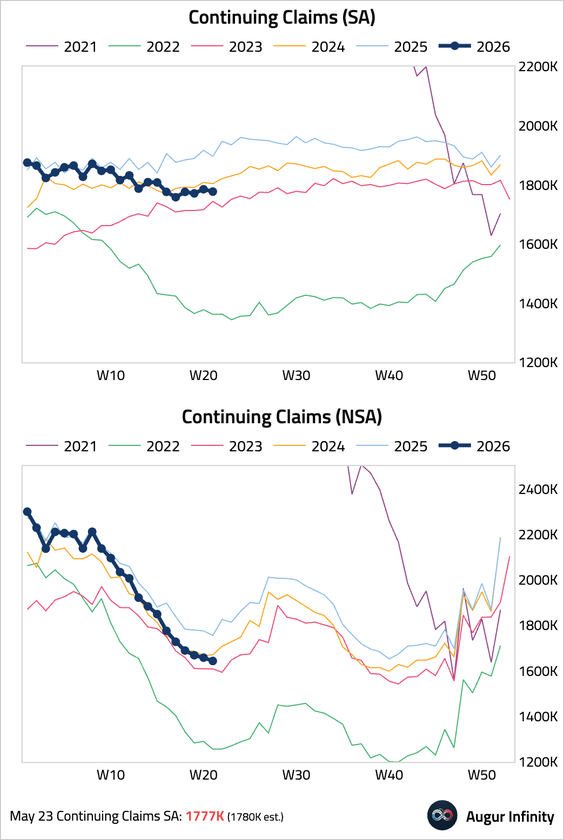
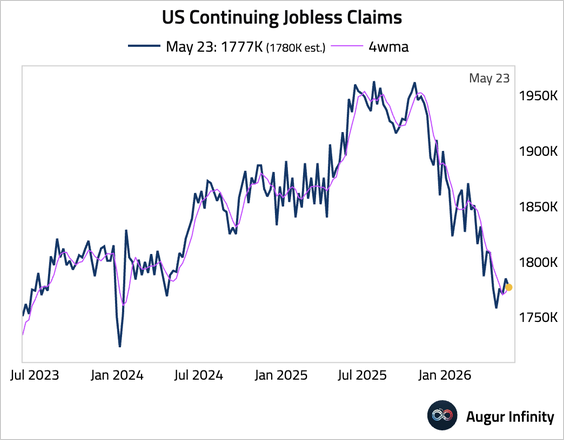
• Continuing claims edged down, suggesting that despite some weekly volatility in new claims, laid-off workers continue to find new employment relatively quickly.
– The four-week moving average remained subdued.
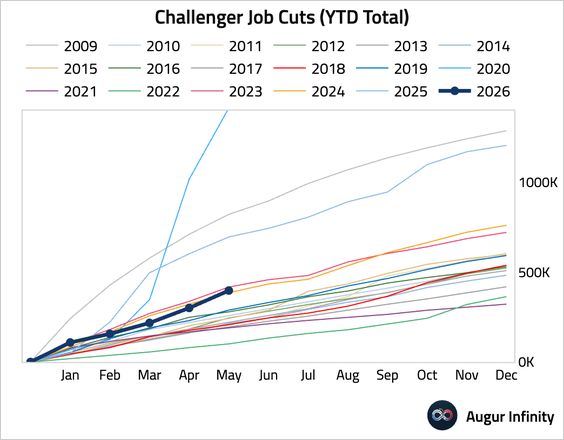
2. Announced job cuts rose in May, with technology firms announcing the most cuts in nearly two years.
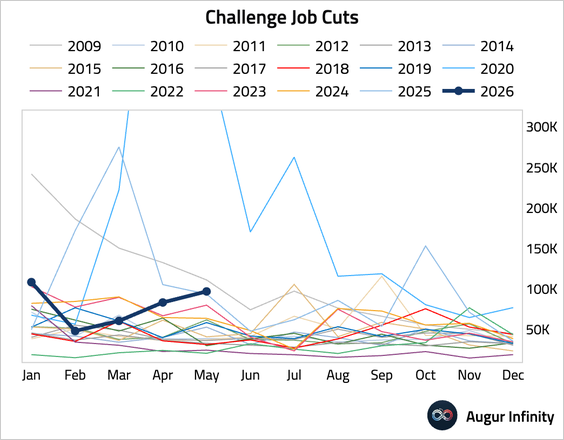
• Total job cut announcements were down over the past five months versus the same period a year earlier.
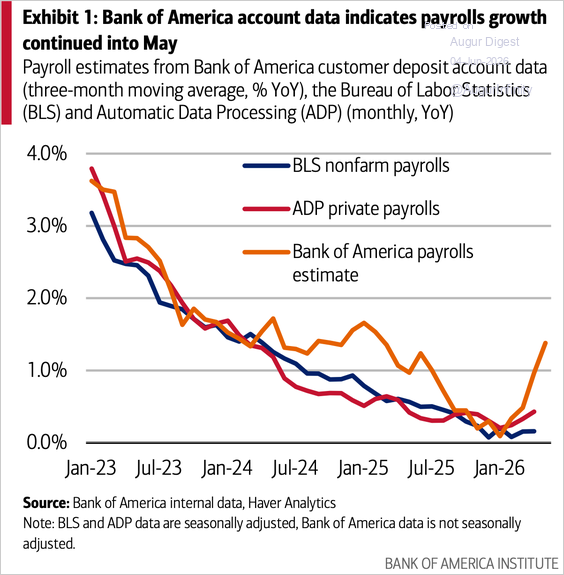
3. Bank of America’s internal data show payrolls grew briskly in May.
Source: Bank of America Institute Read full article
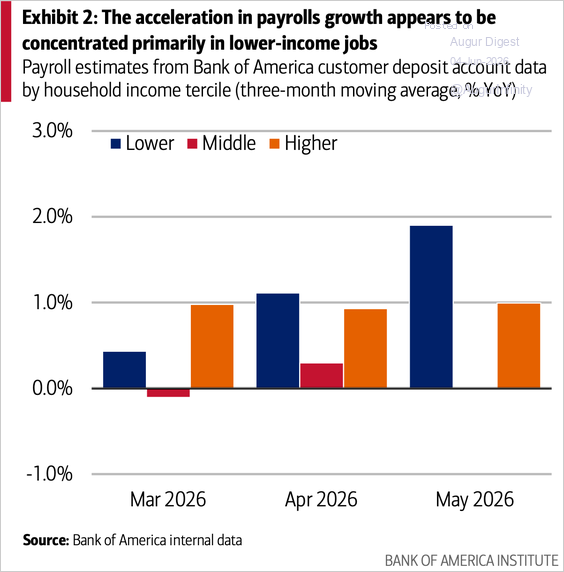
• The acceleration in jobs growth appears to be concentrated in lower-income roles.
Source: Bank of America Institute Read full article
4. Revelio Labs’s nonfarm employment surged by 123,700 in May, with job gains in both government and private sectors.
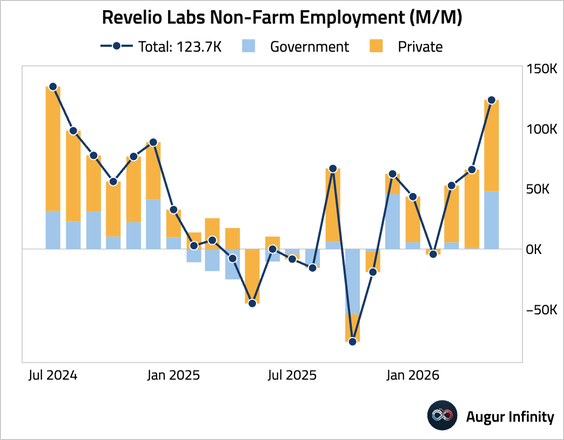
Source: Revelio Labs
– Here’s a look at monthly changes in employment by sector.
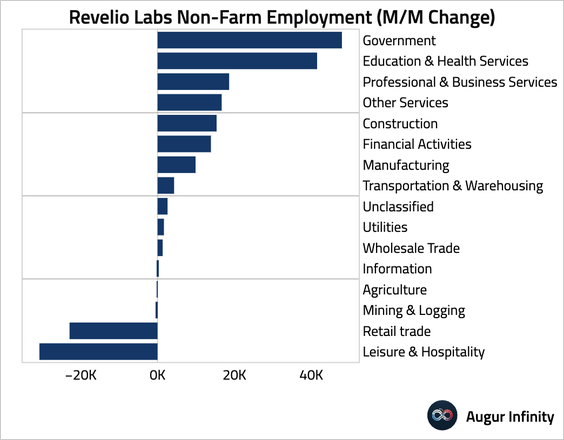
Source: Revelio Labs
– Revelio’s estimates show some upward momentum in the labor market, consistent with Bank of America’s data above and the <a href="https://augurinfinity.com/tds?date=20260604" target="_blank">ADP report</a>.

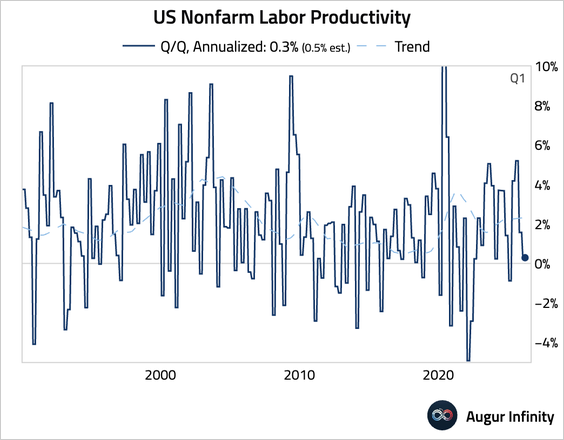
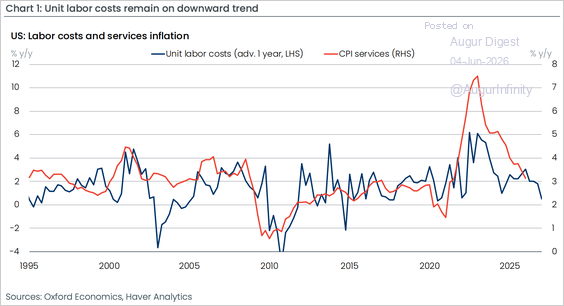
5. The Q1 nonfarm productivity was revised sharply lower by 0.5 percentage points to 0.3%.
• Unit labor costs were also revised down by 0.5 percentage points to 1.8%.
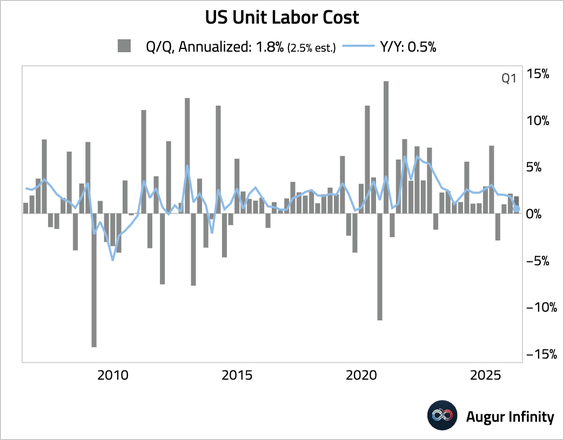
– With unit labor costs growing at the lowest year-over-year pace in five years, the labor market is unlikely to be a source of inflationary pressure this year.
Source: Oxford Economics
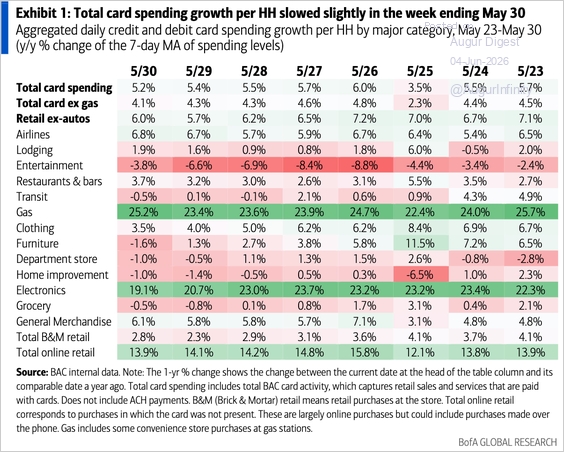
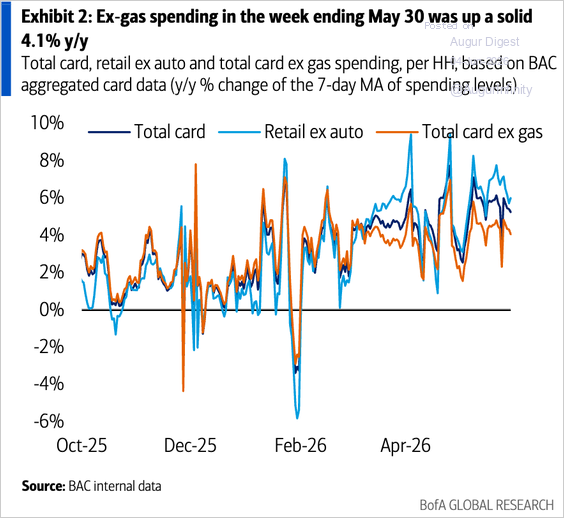
6. Bank of America’s total card spending per household rose 5.2% year over year in the week ending May 30th.
Source: BofA Global Research
• Here is a time series view.
Source: BofA Global Research
7. Financial conditions are easier than before the Iran conflict began.
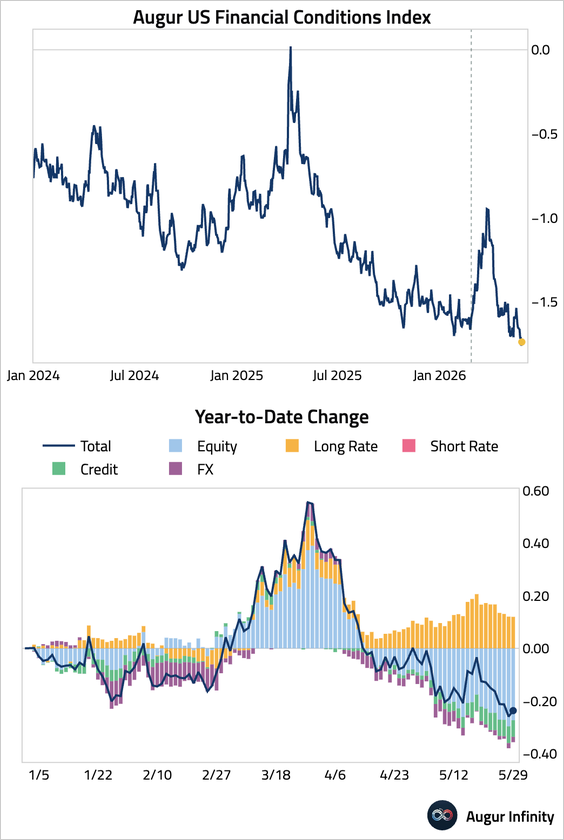
8. Real short rate in the US is now slightly below trend.

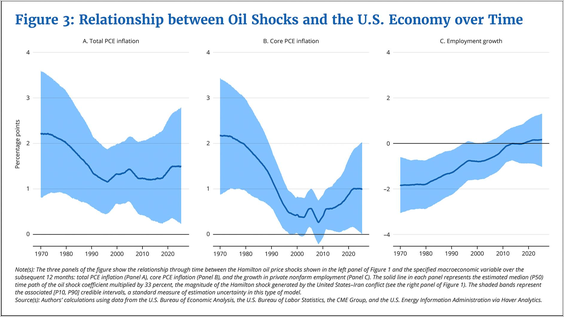
9. A Boston Fed study finds that while a 33% oil price shock would still lift PCE inflation by about 1.5 percentage points over the following year, the US economy is far less vulnerable to employment losses than in the 1970s because lower oil dependence and increased domestic production—particularly in oil-producing states—help offset the shock’s labor market impact.
Source: Federal Reserve Bank of Boston Read full article
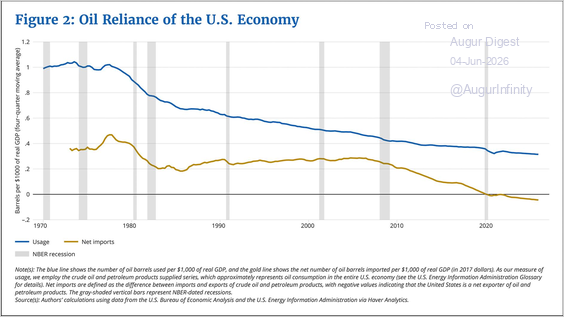
• This chart shows the trends in usage and net imports since the 1970s.
Source: Federal Reserve Bank of Boston Read full article
The United Kingdom
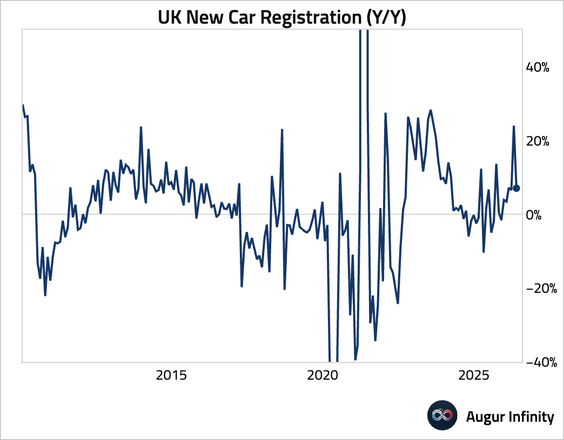
1. New car sales moderated year over year but remained solid, suggesting household spending remains resilient despite higher energy prices and borrowing costs.
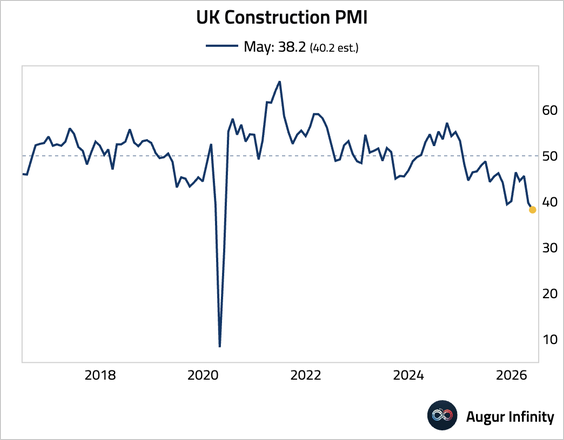
2. Construction activity contracted at the fastest pace since the pandemic, as housing and commercial activities weakened sharply.
Source: S&P Global PMI
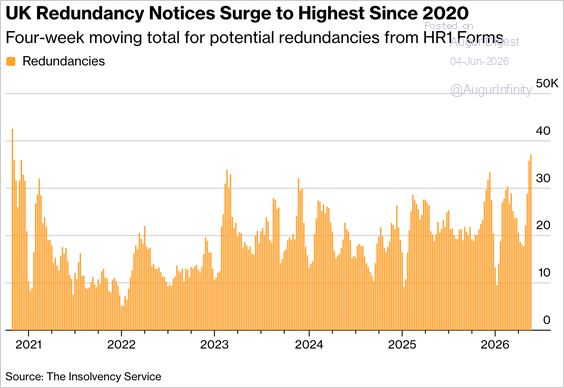
3. Potential redundancy notices rose to the highest level since late 2020, signaling a deteriorating labor market.
Source: @economics Read full article
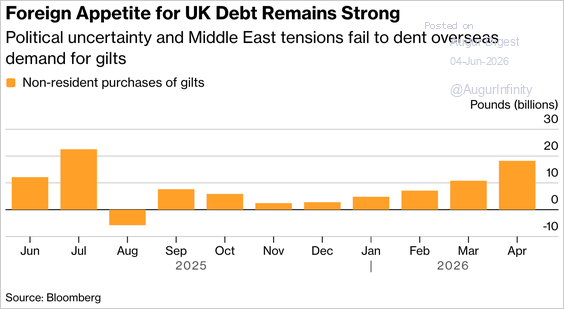
4. Foreign demand for UK government bonds remained resilient, with overseas investors purchasing gilts for an eighth consecutive month, …
Source: @markets Read full article
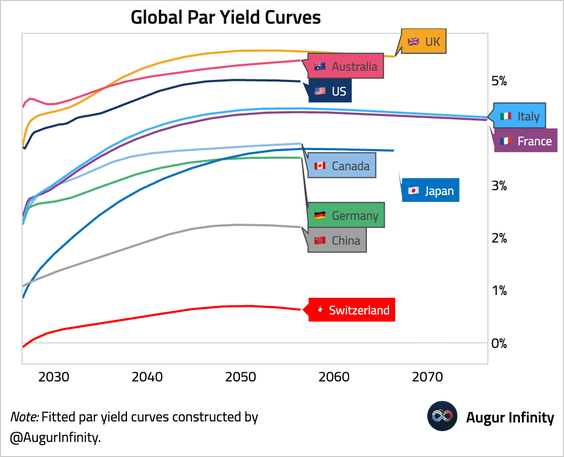
… as the highest yields among major developed markets outweighed concerns over political uncertainty and inflation.
Euro Area
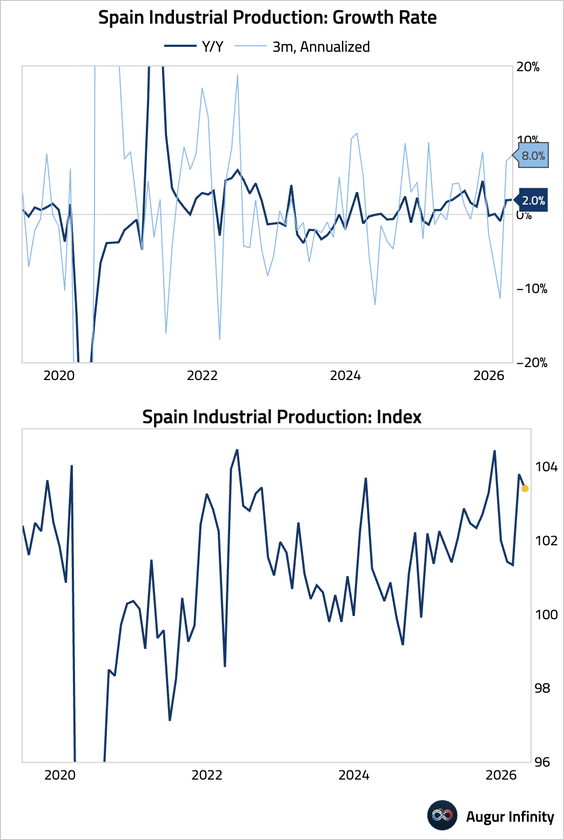
1. Spanish industrial output eased.
2. Euro area retail sales fell more than expected in April, driven by a sharp drop in fuel sales while core retail categories remained resilient.

Subscribe to read the rest.
Become a subscriber of Augur Digest Premium to see all 90 charts today.
Upgrade