
Global Developments
1. The United States and Iran agreed to end the four-month conflict, with a formal signing set for June 19 and provisions including reopening the Strait of Hormuz, lifting the US naval blockade, and potential sanctions relief contingent on nuclear commitments.

Source: CNBC Read full article
2. Oil prices fell sharply.
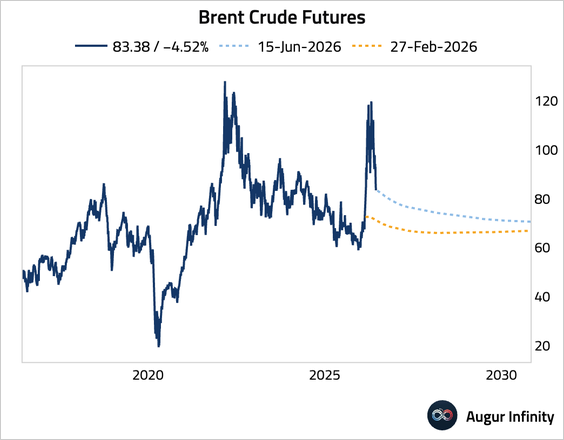
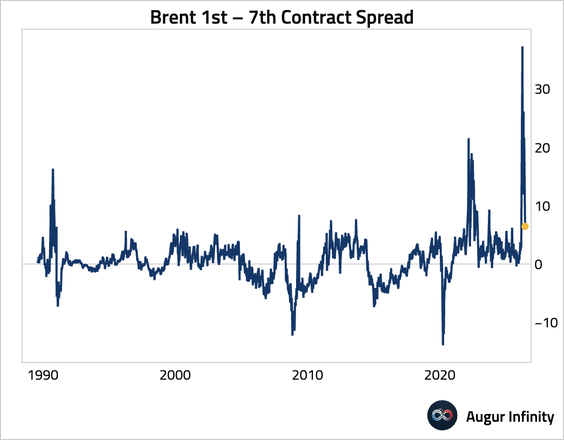
– The backwardation in the forward curve eased.
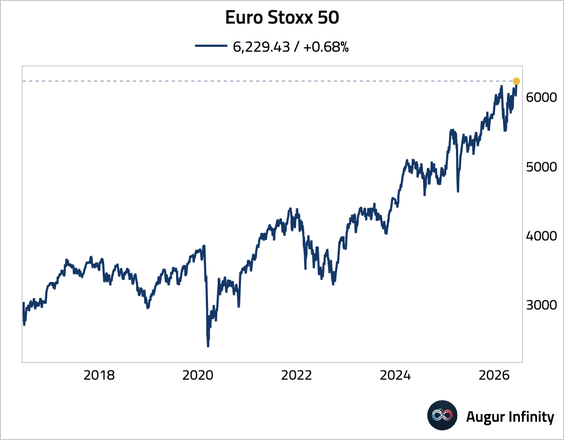
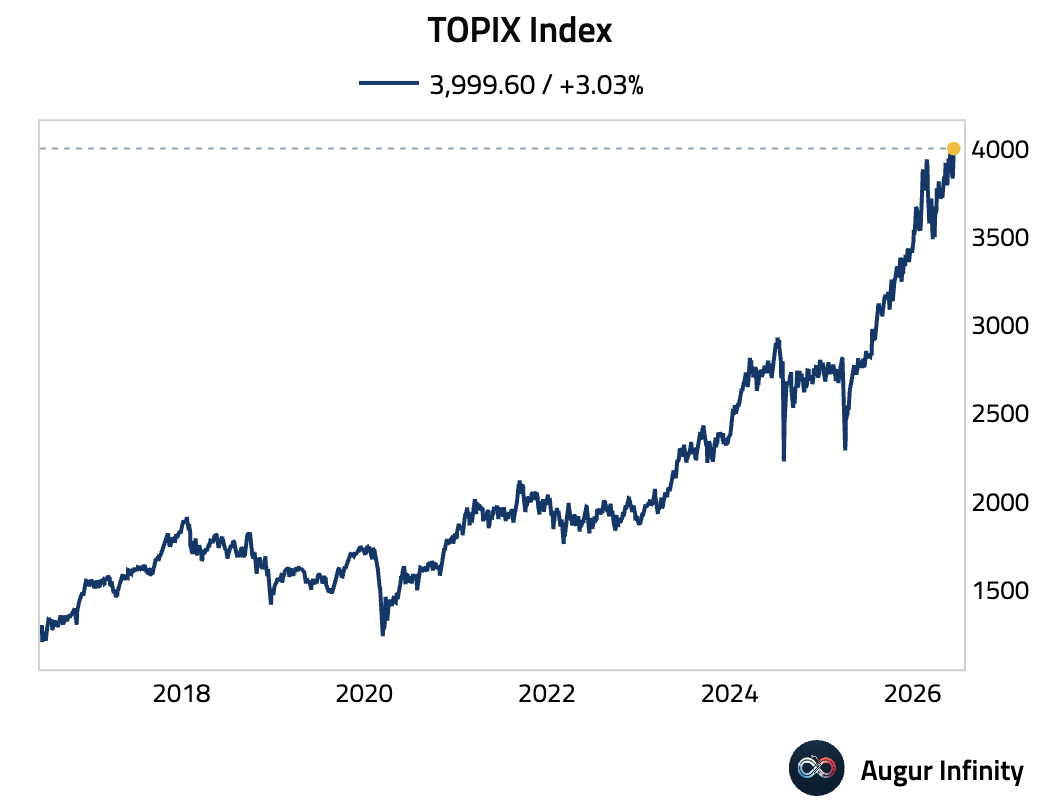
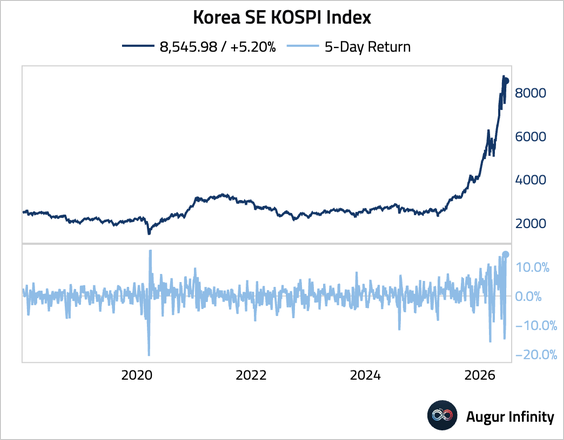
• Global equities are rallying.
– Euro Stoxx 50:
– Topix:
– Kospi:
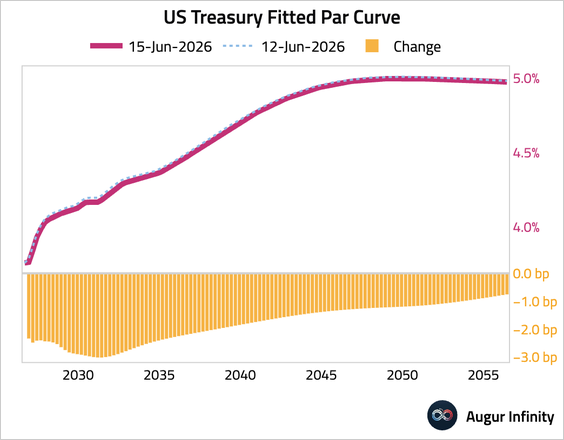
• Treasury yields are tumbling across the curve.
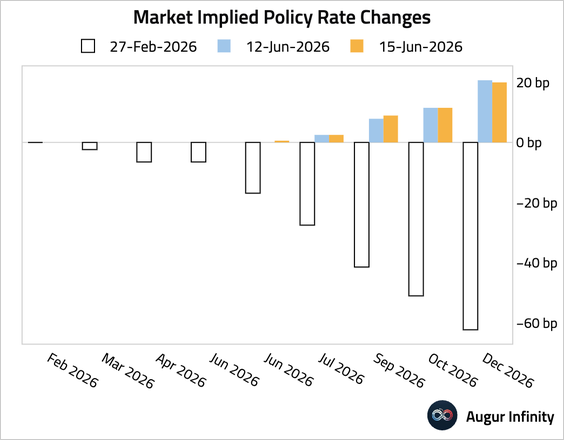
– Traders trimmed rate hike expectations.
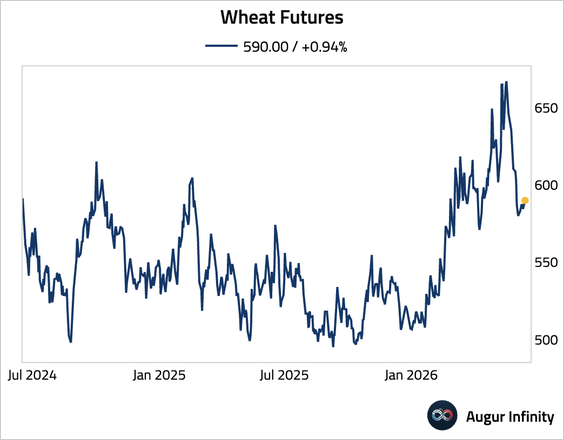
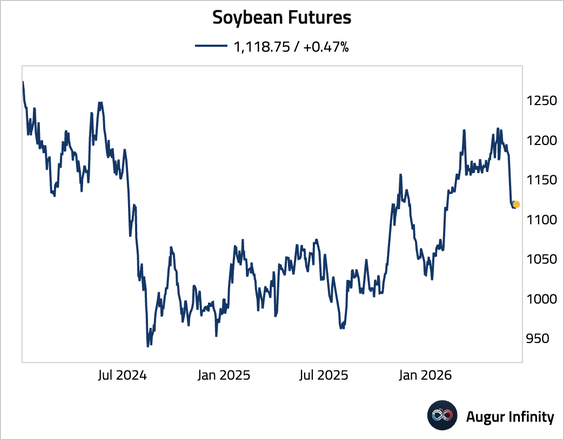
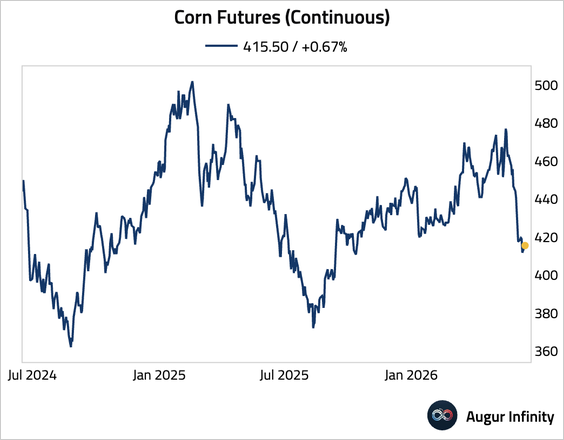
• Crop prices fell.
– Wheat:
– Soybean:
– Corn:
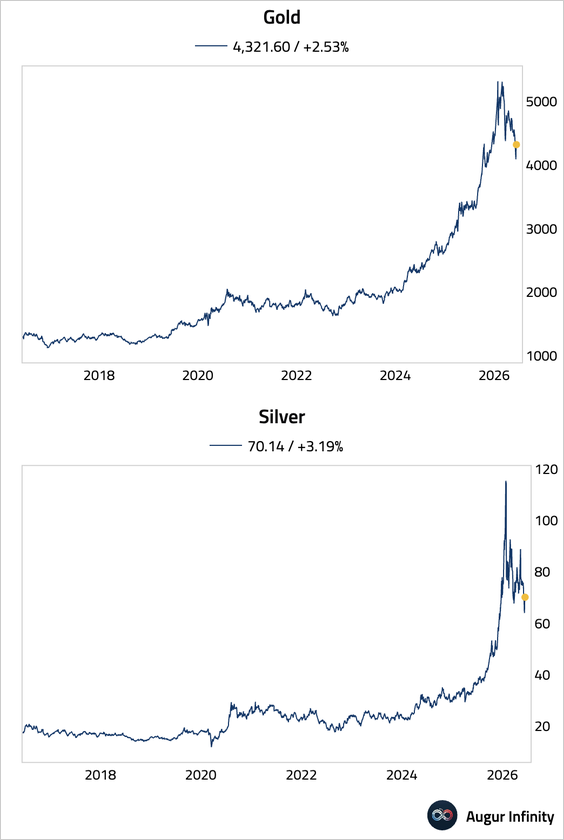
• Precious metals popped.
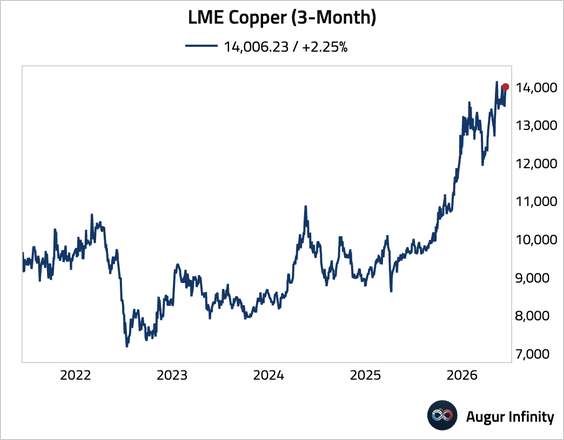
• Industrial metals also benefited.
The United States
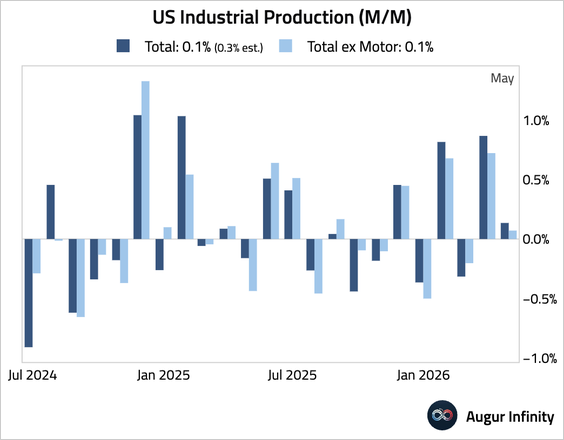
1. Industrial production rose by a meager 0.1%, below consensus. The slowdown suggests that a recent surge in activity—driven by firms building inventories amid fears of a disruption in the Strait of Hormuz—has peaked.
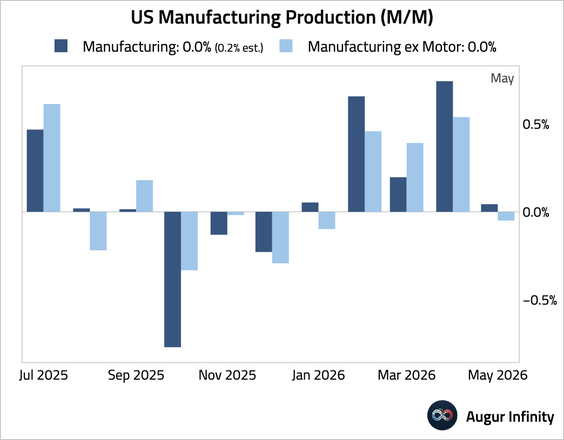
• Manufacturing output stalled, with strength in durable goods, data center–related industries, and defense production offset by weakness in nondurable manufacturing.
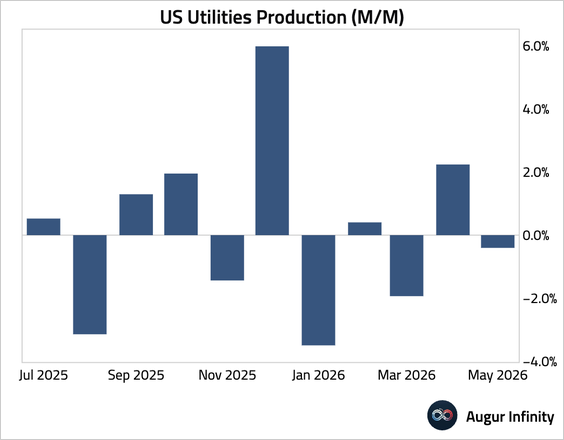
– Utilities production fell month over month.
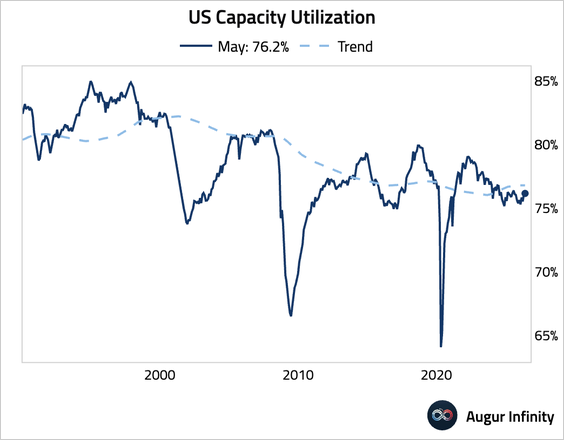
• Capacity utilization inched up.
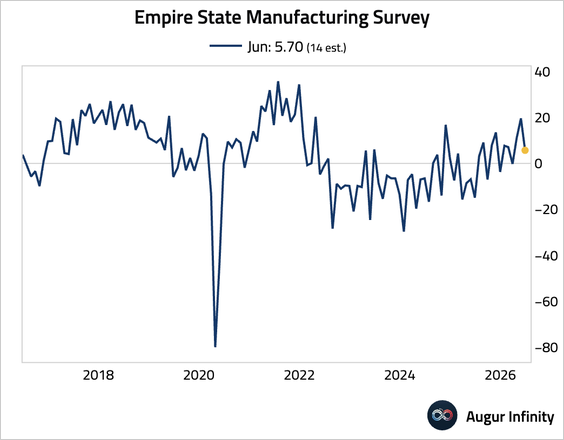
2. The New York Fed’s Empire State Manufacturing Index fell sharply, missing the consensus forecast, …
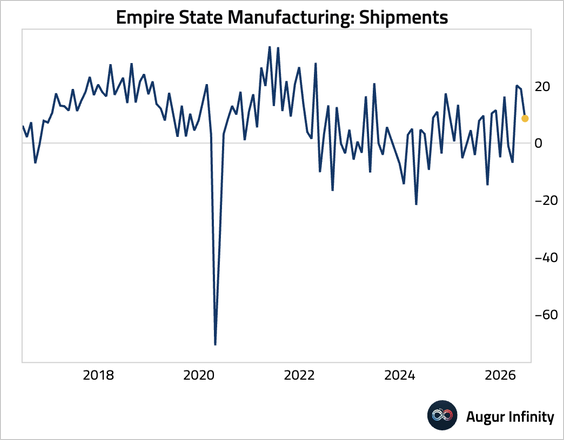
… driven by a decline in shipments …
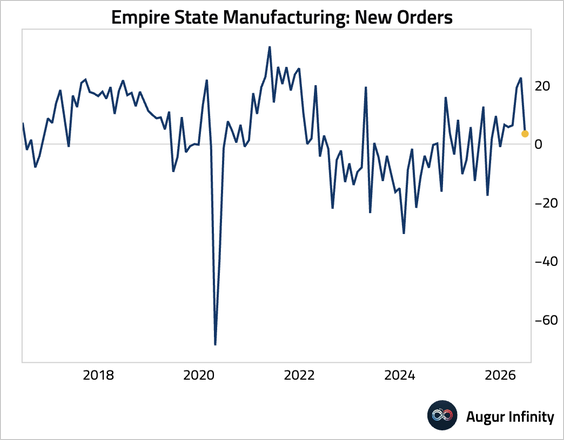
… and a plunge in new orders.
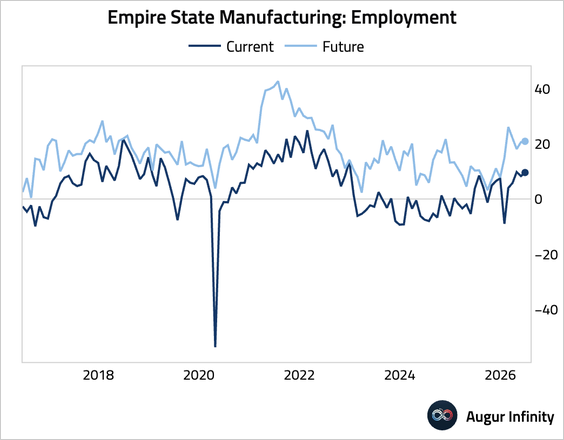
• Employment edged up.
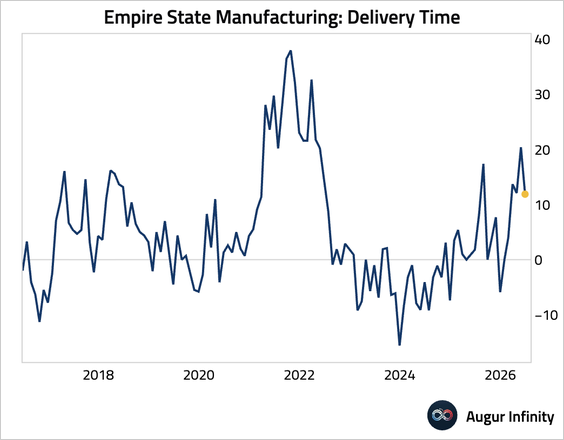
• Delivery times shortened, indicating easing supply chain pressures.
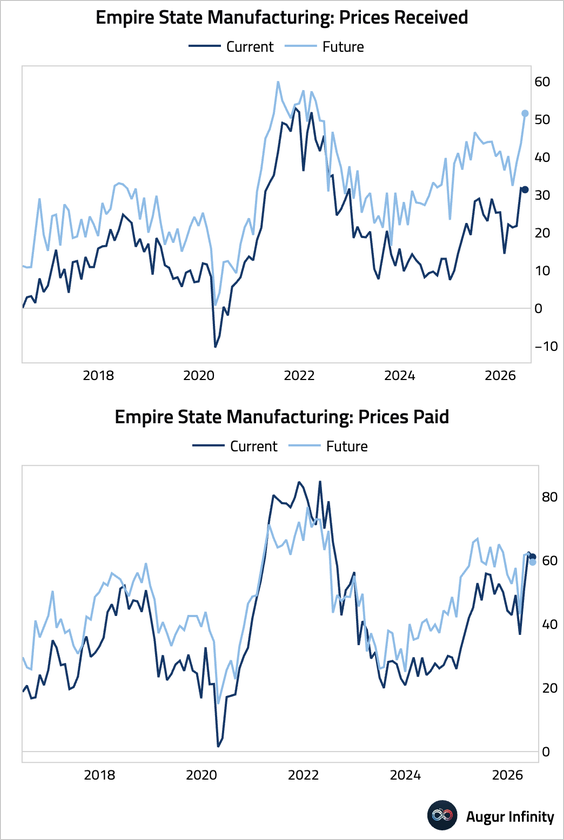
• Price pressures remained elevated, while expectations for prices received jumped sharply.
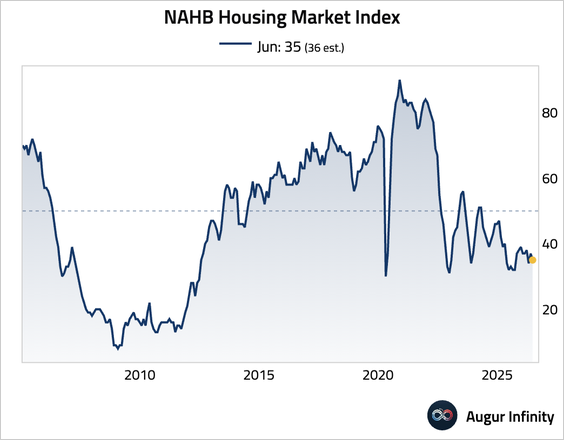
3. Homebuilder sentiment weakened in June, as elevated mortgage rates, rising material costs, and affordability constraints continue to weigh on demand.
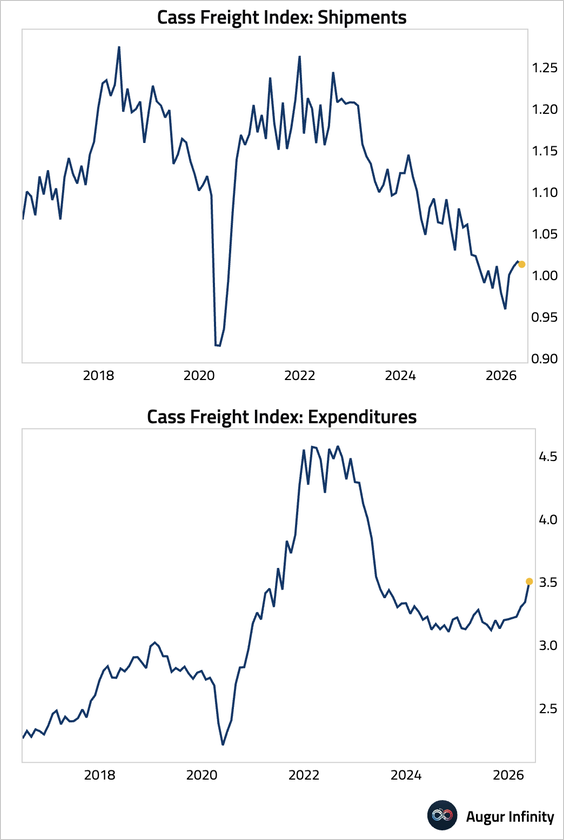
4. Freight volumes were stable in May, while tightening capacity continues to push freight expenditures and truckload rates higher.
Canada
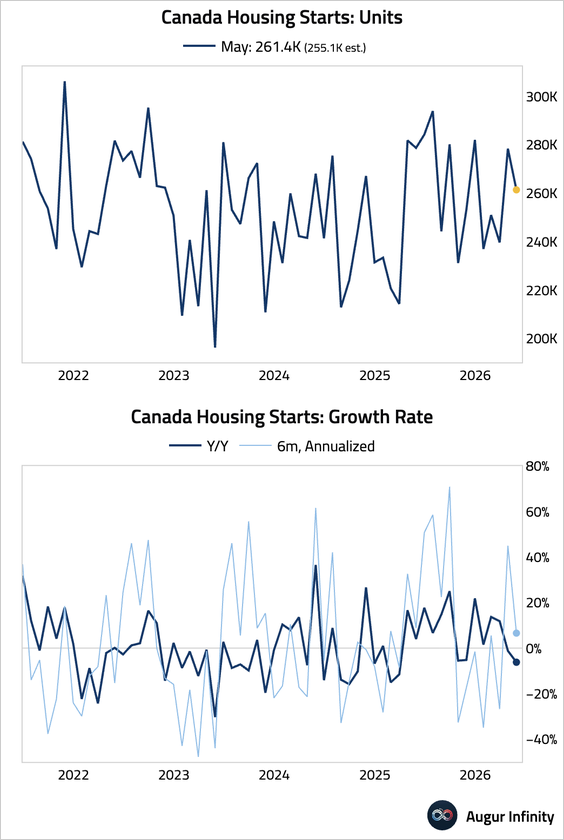
1. Canadian housing starts slowed in May but came in above consensus estimates.
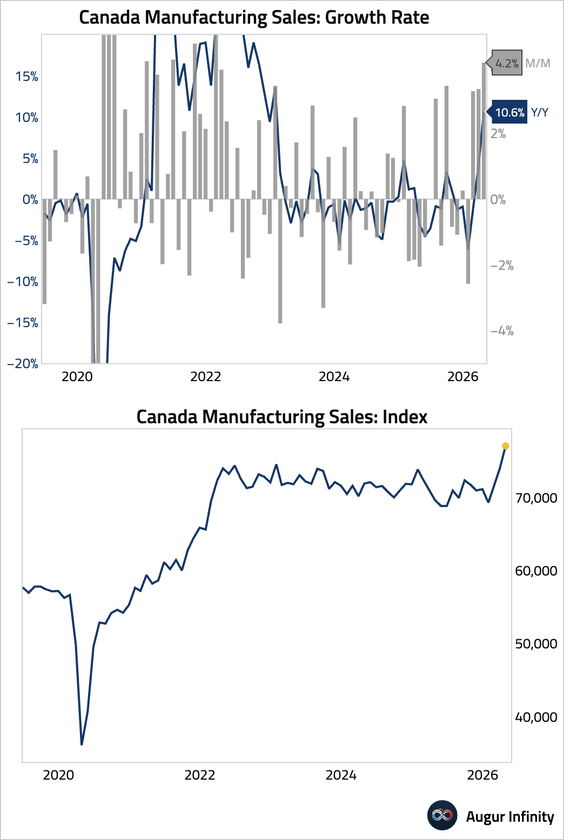
2. Manufacturing sales were revised down from 4.6% to 4.2%, still the strongest growth in over four years.
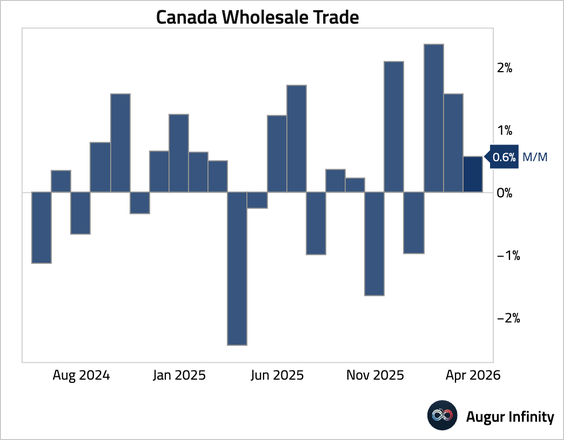
3. Wholesale sales growth for April was revised sharply higher from 0.1% to 0.6%.
Euro Area
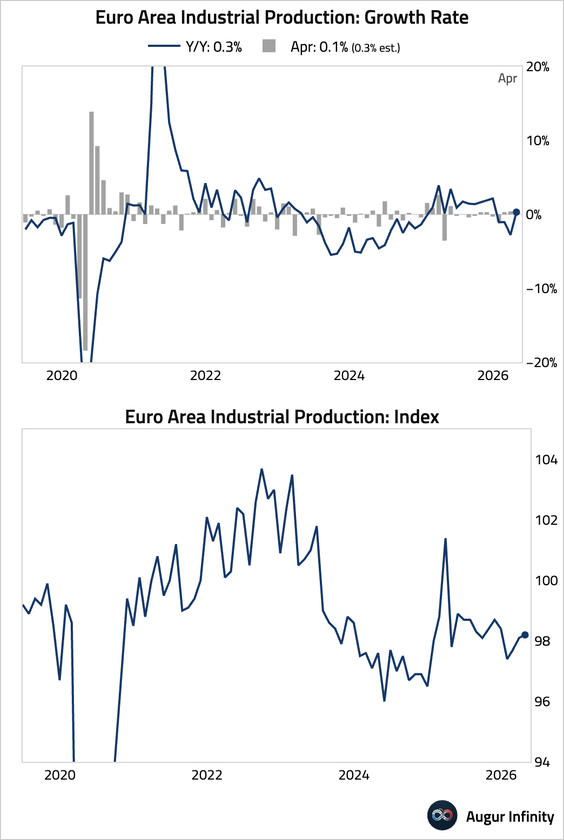
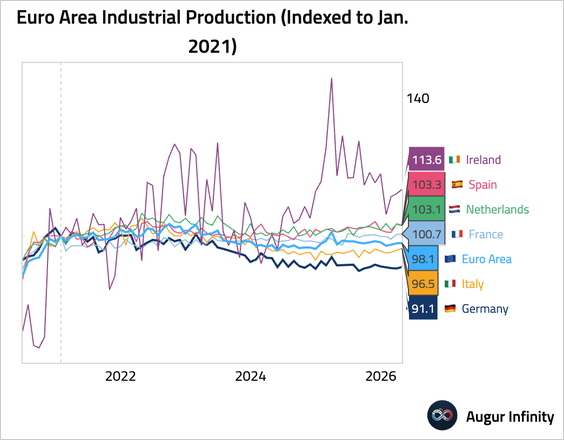
1. Euro area industrial production rose by just 0.1% month over month, below consensus expectations. Improvements in the intermediate and consumer goods sectors were partly offset by a decline in capital goods and electricity output.
– Here’s a look at trends in industrial output by country.
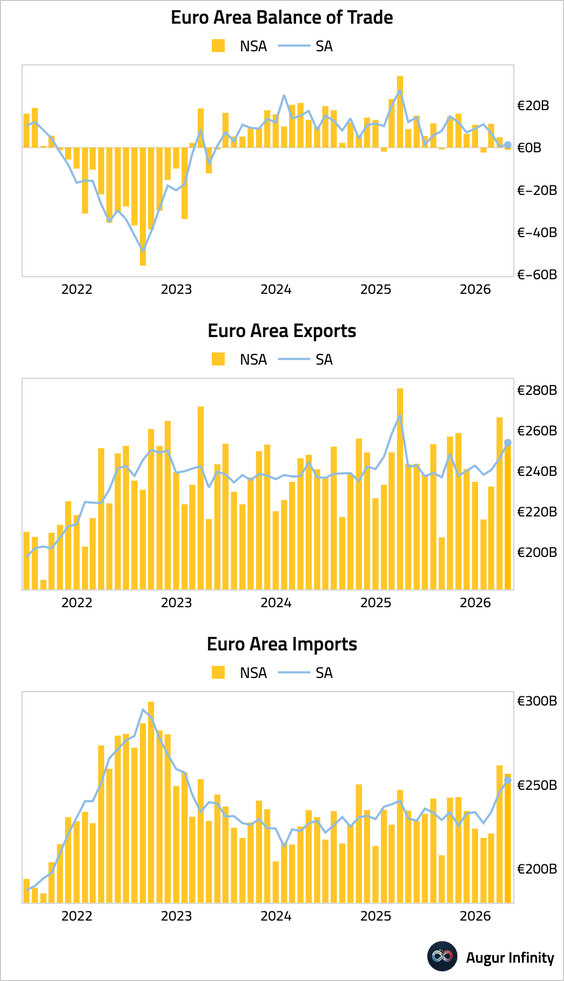
• The goods trade balance was stable on a seasonally-adjusted basis.
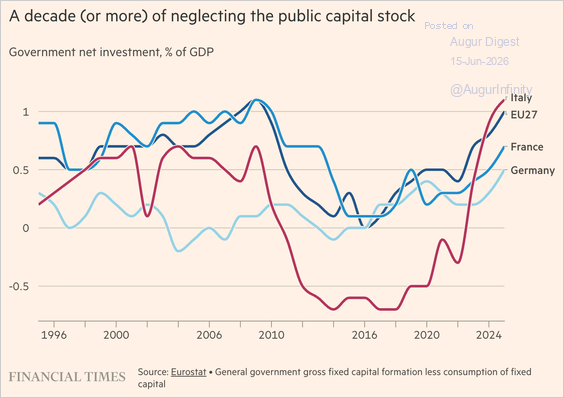
2. Government net investment across Europe declined sharply during the 2010s after the global financial crisis, leaving a decade of underinvestment in public capital that is now reversing as governments increase infrastructure spending.
Source: @financialtimes Read full article
The Netherlands' trade surplus narrowed in April.

Subscribe to read the rest.
Become a subscriber of Augur Digest Premium to see all 77 charts today.
Upgrade