
The United States
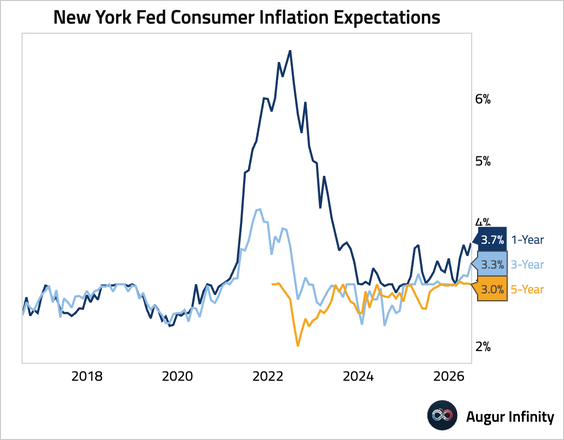
1. According to the New York Fed’s Survey of Consumer Expectations, inflation expectations rose at the one- and three-year horizons to multiyear highs, while five-year expectations remained stable.
– Market-based inflation expectations have eased significantly.
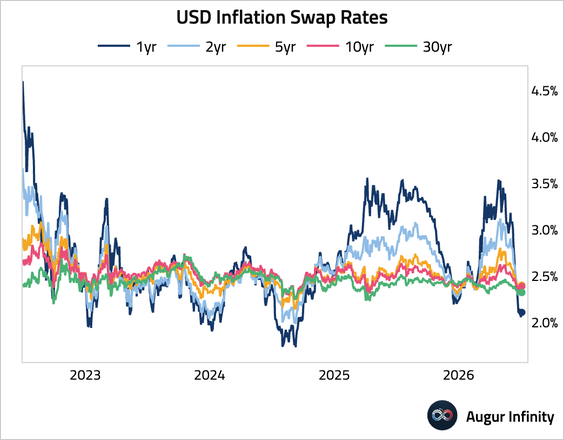
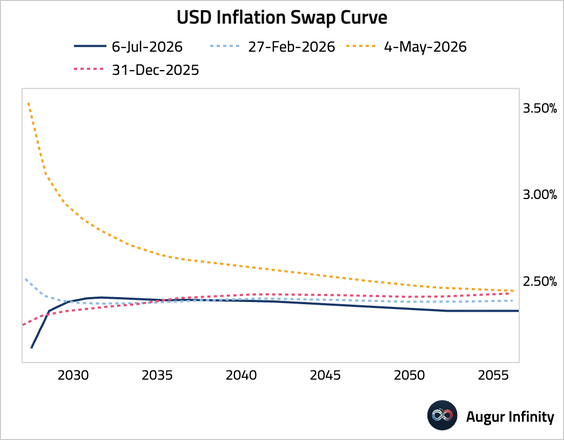
– This chart shows the evolution of the USD inflation swap curve this year.
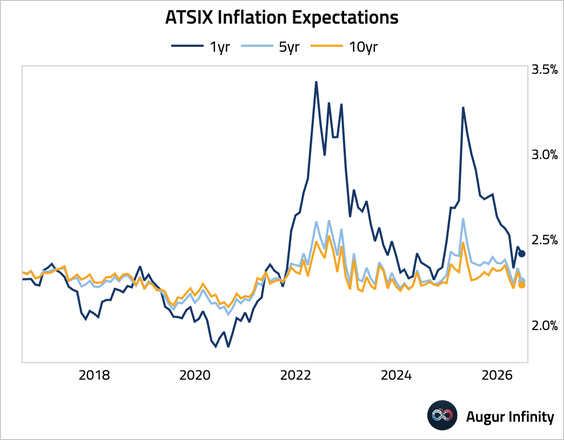
– Below, we also show estimates from the Aruoba Term Structure of Inflation Expectations, which combine information from market interest rates and surveys of economists and consumers.
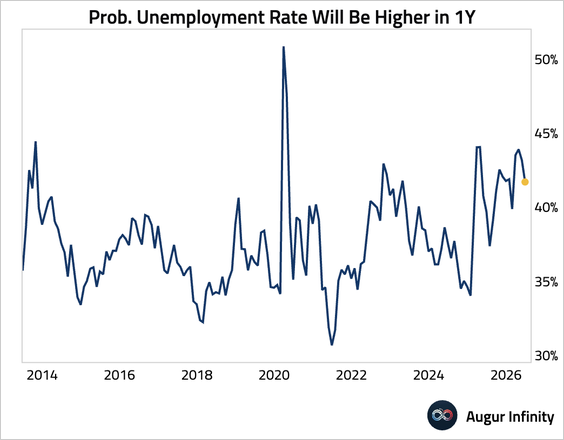
• Labor market sentiment improved, with expectations for a higher unemployment rate falling.
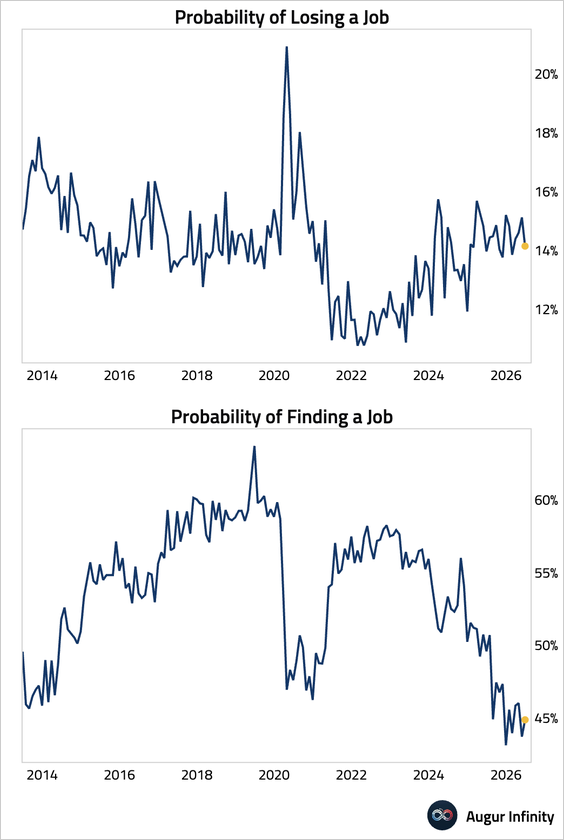
– Perceived job security improved, while confidence in finding new employment edged up.
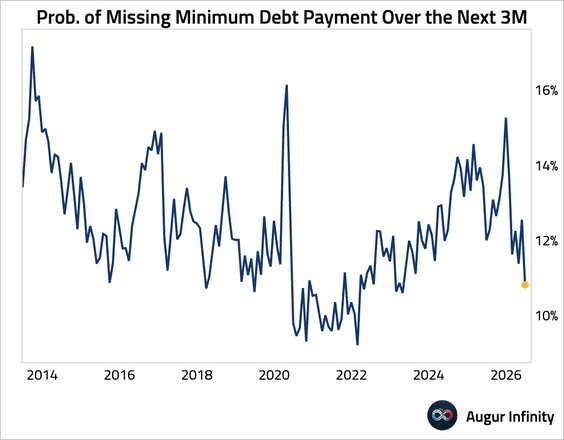
• The perceived likelihood of missing a minimum debt payment fell to multiyear lows.
2. The trade deficit widened substantially in May, driven by a decrease in exports and an increase in imports.
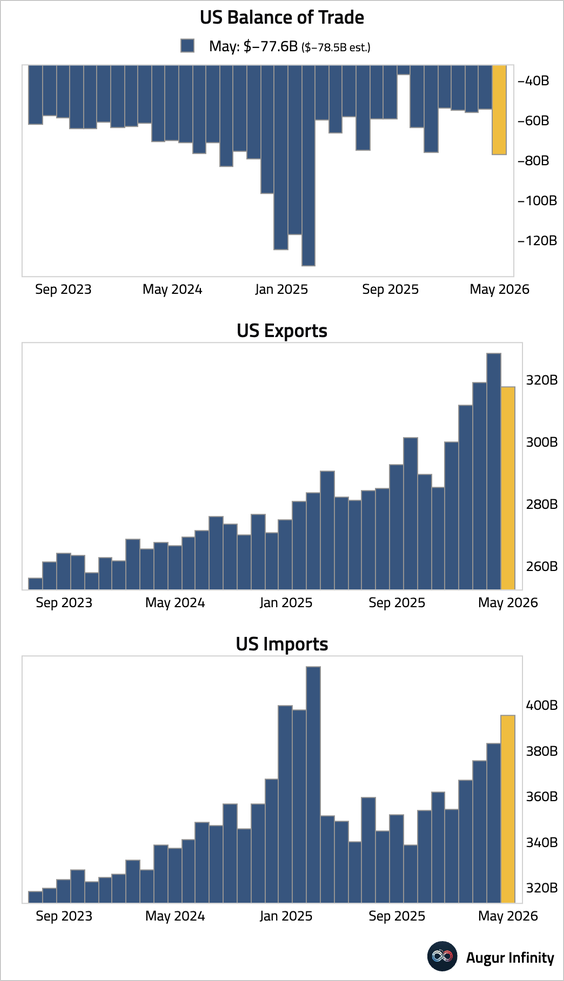
• Excluding volatile gold flows and the recent increase in oil exports, the underlying trade balance is even worse, suggesting persistent weakness in the external sector.
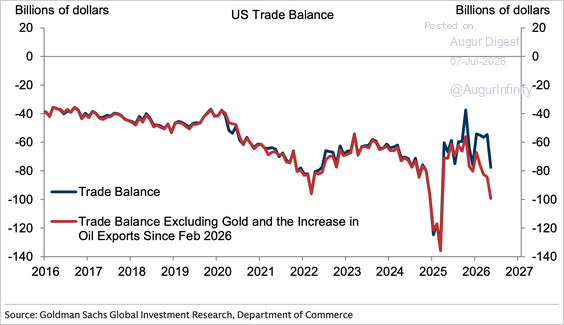
Source: Goldman Sachs
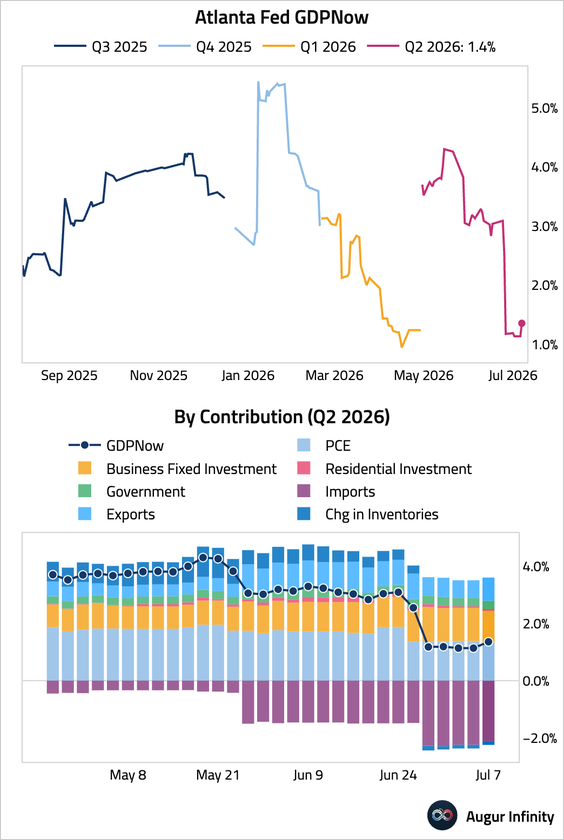
3. The Atlanta Fed’s GDPNow model is now tracking Q2 GDP at 1.4%, up from 1.2% on July 1.
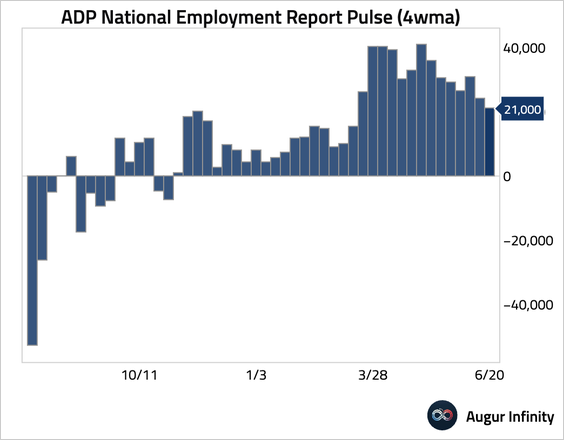
4. Private payroll growth cooled in the four weeks ending on June 20, according to ADP’s high-frequency gauge.
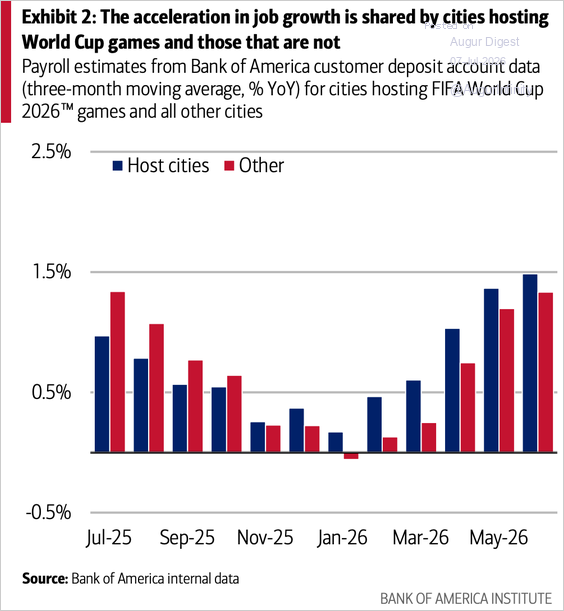
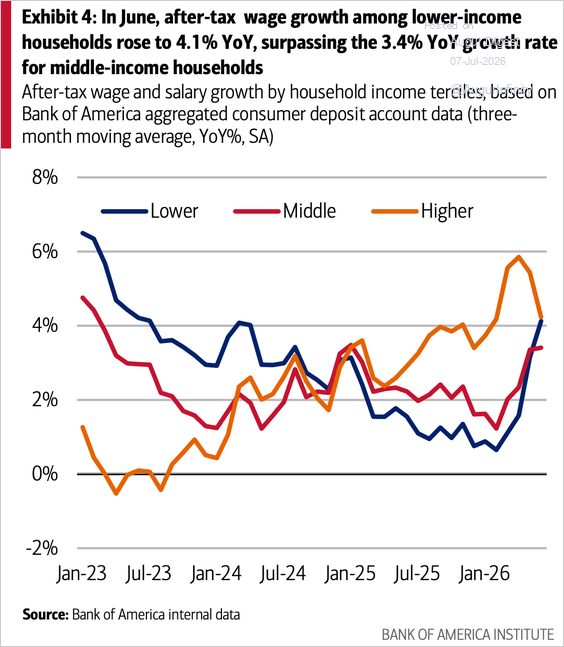
• By contrast, Bank of America’s deposit account data indicate US labor market momentum strengthened in June.
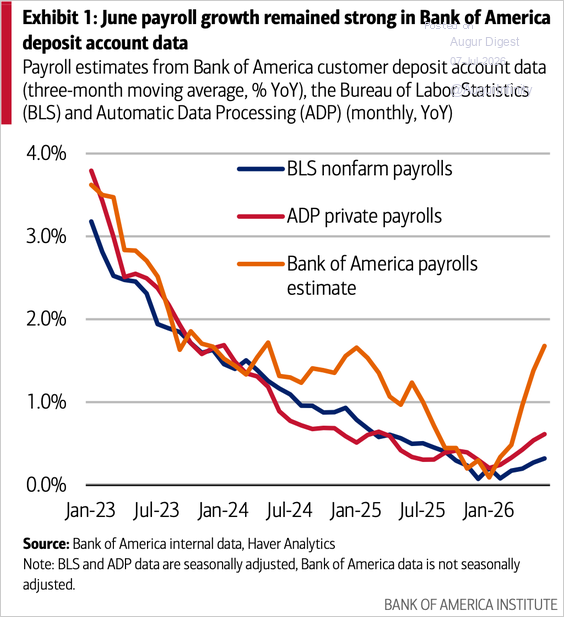
Source: Bank of America Institute Read full article
• The acceleration in job growth is shared by cities hosting World Cup games and those that are not.
Source: Bank of America Institute Read full article
• After-tax wage growth among lower-income households rose to 4.1% year over year, surpassing the 3.4% growth rate for middle-income households.
Source: Bank of America Institute Read full article
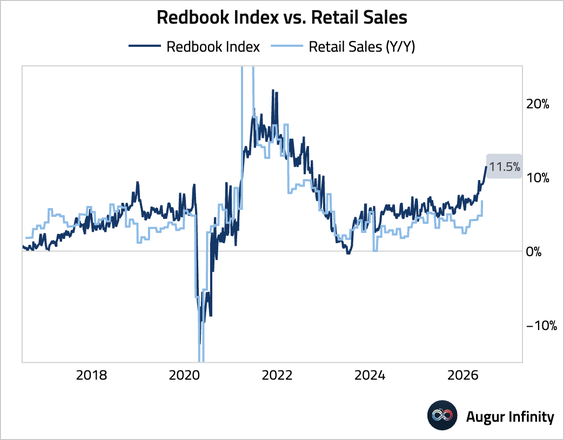
5. Year-over-year growth in same-store retail sales accelerated to the fastest pace since October 2022.
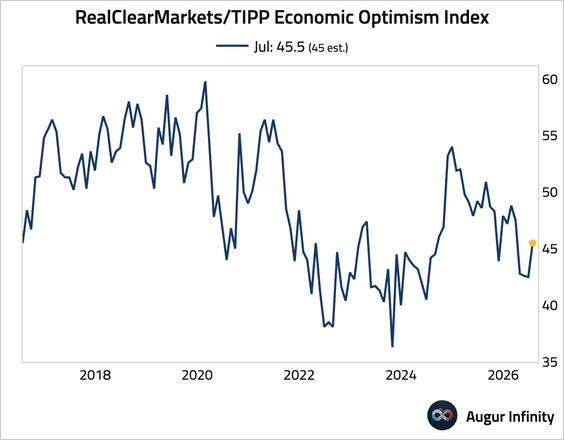
6. The TIPP Economic Optimism Index rebounded but remained in pessimistic territory.
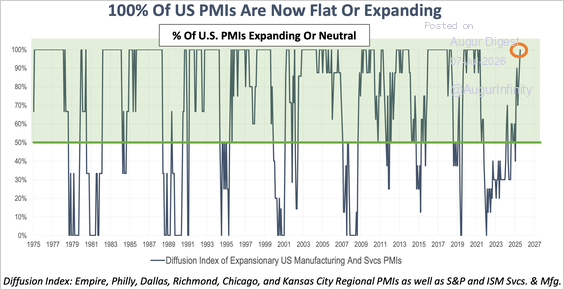
7. Every US PMI indicator is now flat or in expansion mode.
Source: Piper Sandler
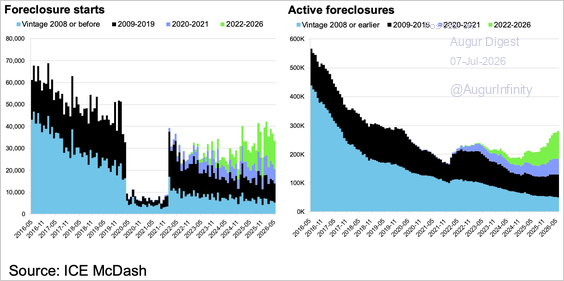
8. Although foreclosure starts fell to their lowest level since November 2025, active foreclosure inventory climbed 34% year over year to a six-year high, with recent-vintage mortgages accounting for a growing share of distressed loans.
Source: ICE Read full article
• Younger homebuyers relied more on family gifts and borrowed funds for down payments, while older buyers drew more on home-sale equity. (Note that the bars in each category add up to much less than 100%—the missing pieces are personal savings.)

Subscribe to read the rest.
Become a subscriber of Augur Digest Premium to see all 80 charts today.
Upgrade