
The United States
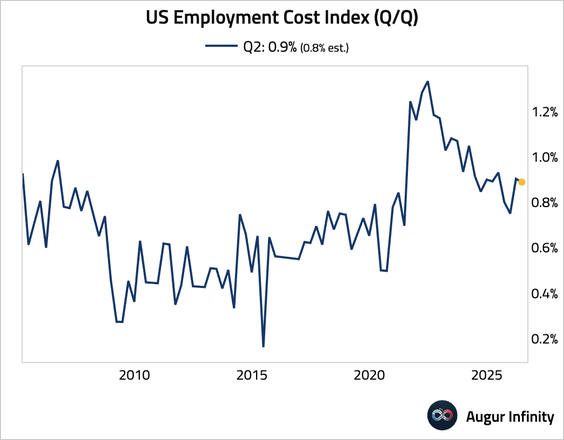
1. The Employment Cost Index rose a tad more than expected, driven by sustained strength in benefits costs, while private wage growth ex-incentives softened slightly.
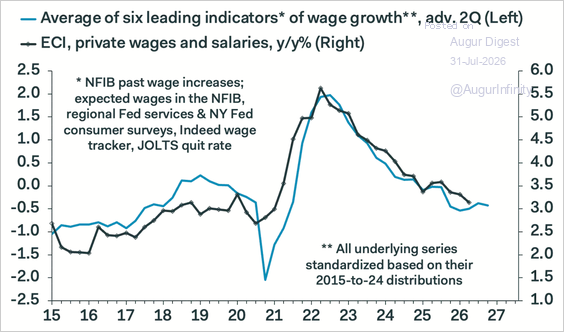
• Leading indicators point to wage growth holding steady or slowing slightly over the next quarter or two.
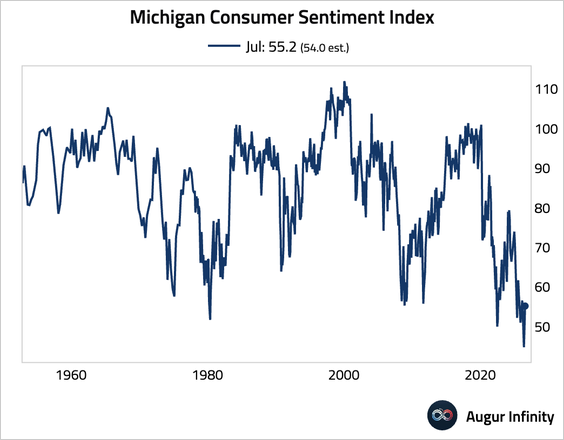
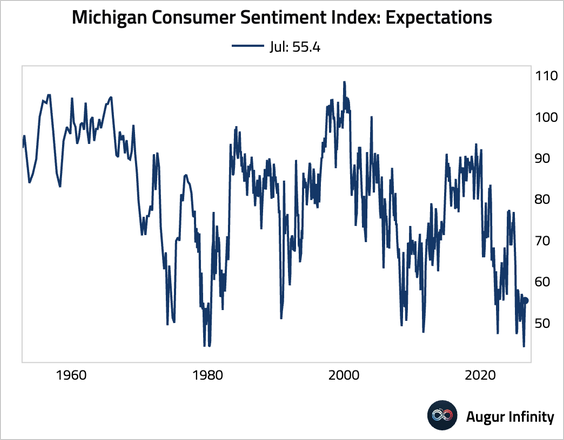
2. The University of Michigan consumer sentiment index was revised up from 54 to 55.2, a five-month high.
– Both the current conditions index …
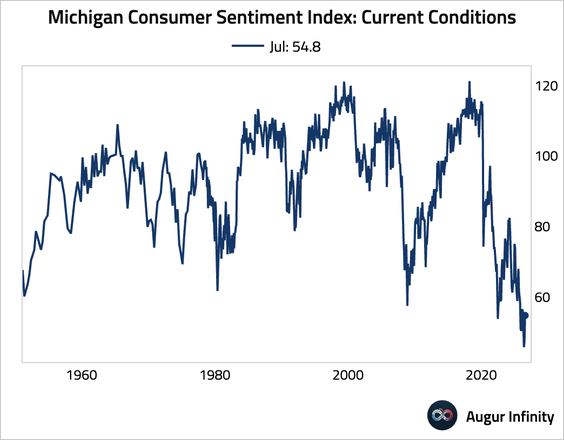
… and the expectations component were revised higher.
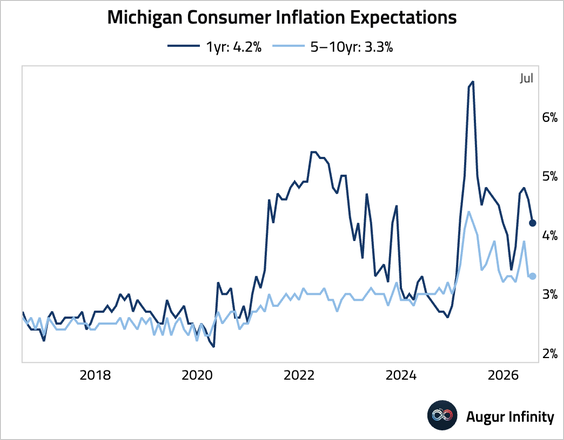
• Consumers’ median inflation expectations were unrevised.
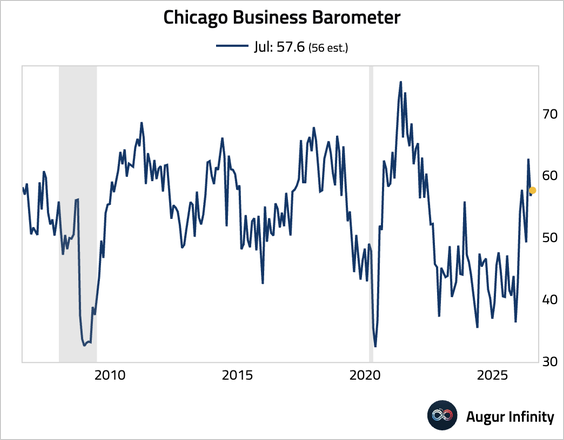
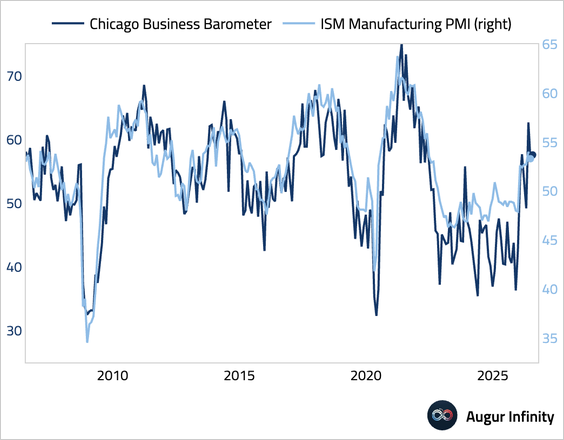
3. The Chicago PMI edged up.
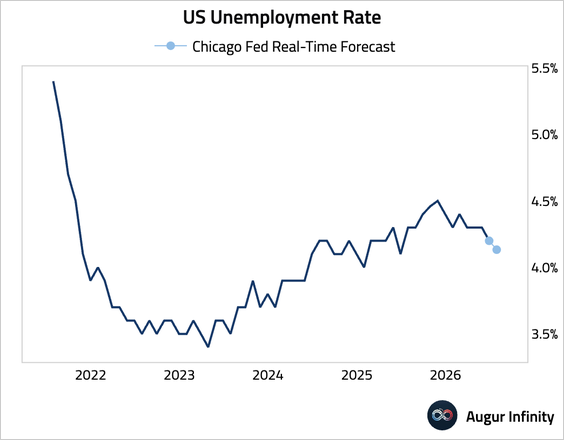
4. The Chicago Fed forecasts that the unemployment rate edged down from 4.19% to 4.13% in July.
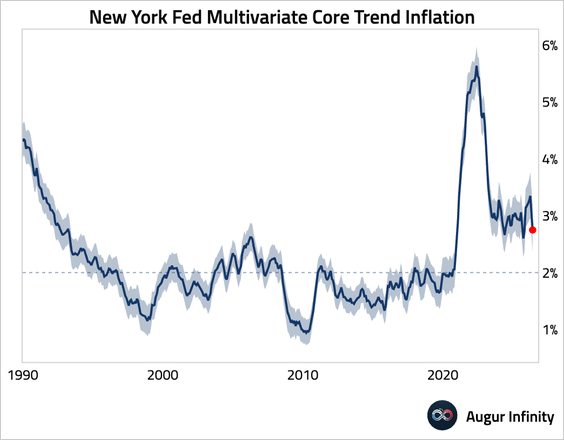
5. The New York Fed’s multivariate core trend inflation measure decelerated in June.
6. Three Fed dissenters urged near-term rate hikes to prevent persistent inflation from becoming entrenched.

Source: @economics Read full article
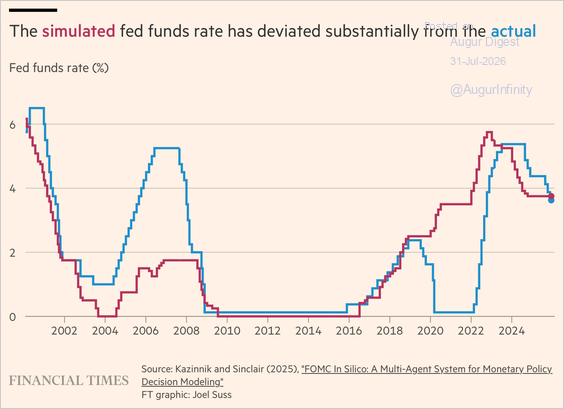
• Researchers Sophia Kazinnik and Tara Sinclar built a multi-agent LLM framework to simulate the FOMC decision process, with each agent representing an FOMC member receiving real-time macroeconomic data. The chart below shows the simulated and actual Fed funds rate. For July, the Financial Times also ran a simulation, with AI personas unanimously predicting a 25-basis-point Fed rate increase, citing persistent above-target inflation and de-anchored expectations.
Source: @financialtimes Read full article
7. According to the Fed’s FCI-G Index, financial conditions tightened in June.

Subscribe to read the rest.
Become a subscriber of Augur Digest Premium to see all 97 charts today.
Upgrade