
The United States
1. Let’s begin with some updates on high-frequency data.
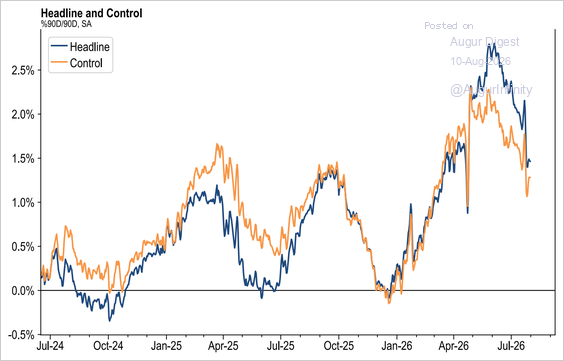
• Consumer card spending growth has moderated on a three-month-over-three-month basis, based on J.P. Morgan’s internal data.
Source: J.P. Morgan Research
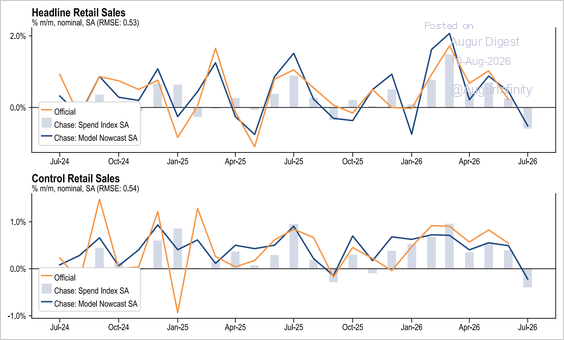
– The implied month-over-month growth rates have turned negative.
Source: J.P. Morgan Research
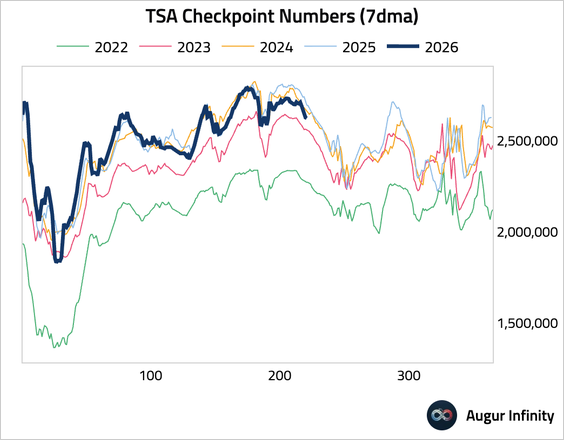
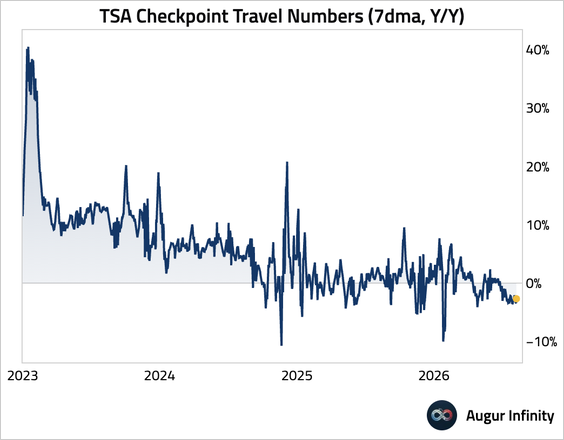
– The summer travel season this year has been disappointing, …
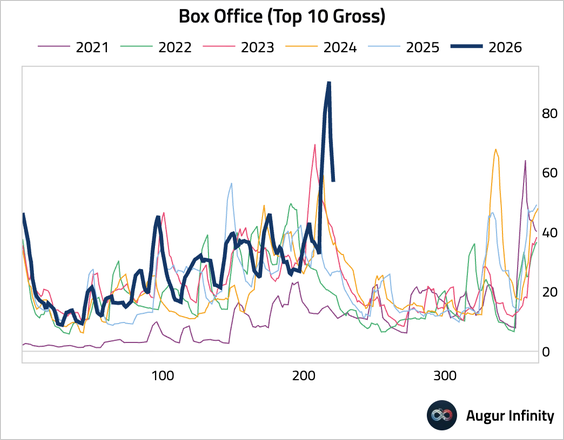
… but the new Spider-Man movie delivered a major boost to the overall box office sales.
• Goldman’s social media sentiment, ending on July 31, remains positive, much stronger than survey-based consumer sentiment.
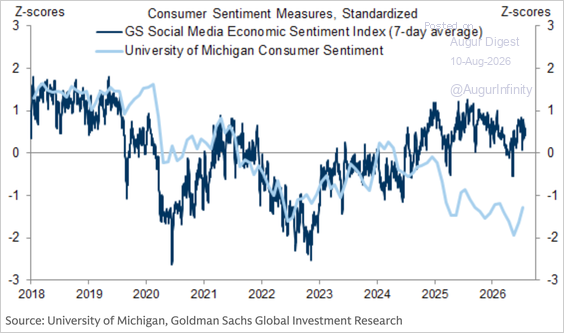
Source: Goldman Sachs
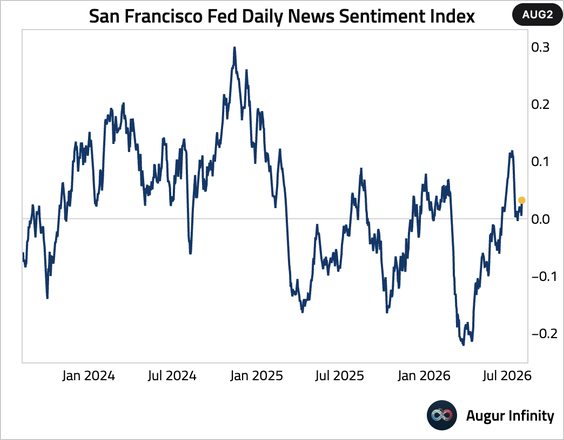
– Daily news sentiment is roughly neutral.
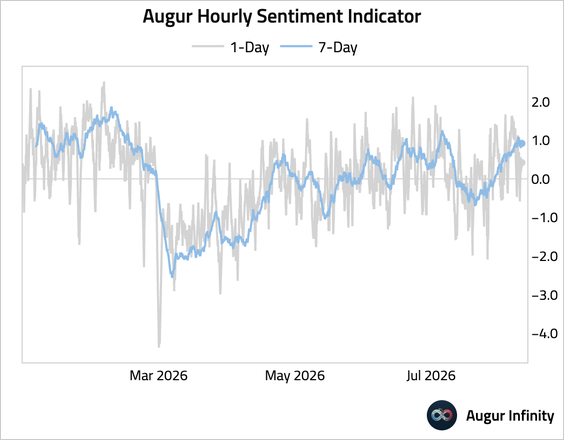
– Our hourly sentiment indicator has improved recently.
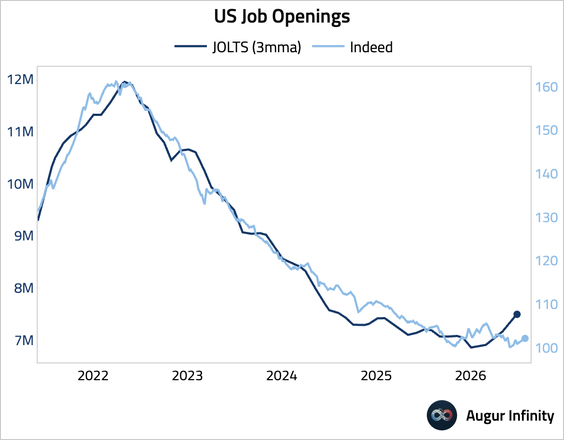
• Job postings compiled by Indeed appear stable, but not as strong as the official JOLTS data implies.
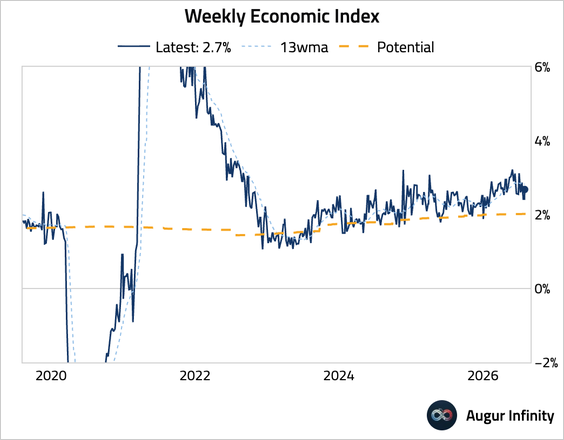
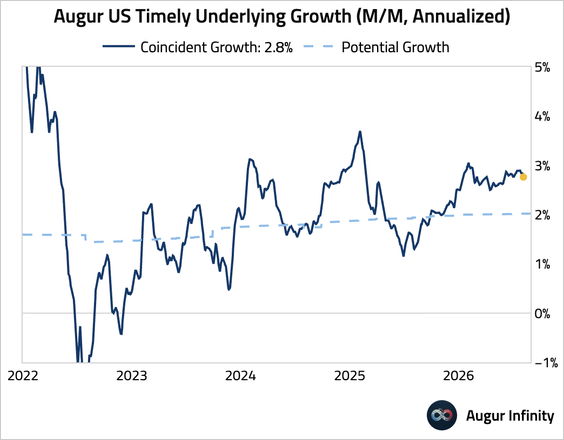
• Zooming out, overall economic activity remains strong.
– Weekly Economic Index:
– Our timely underlying growth estimates:
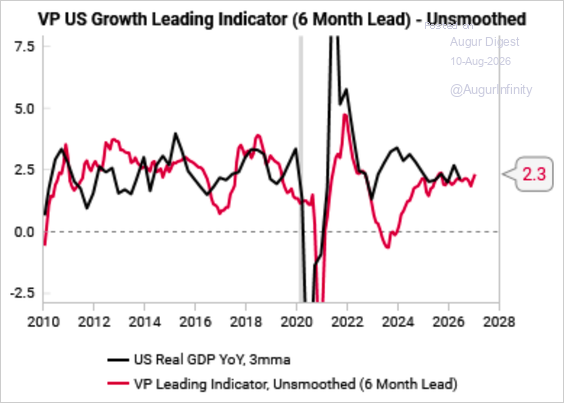
2. Variant Perception’s US growth leading indicator ticked up, pointing to a steady outlook.
Source: Variant Perception
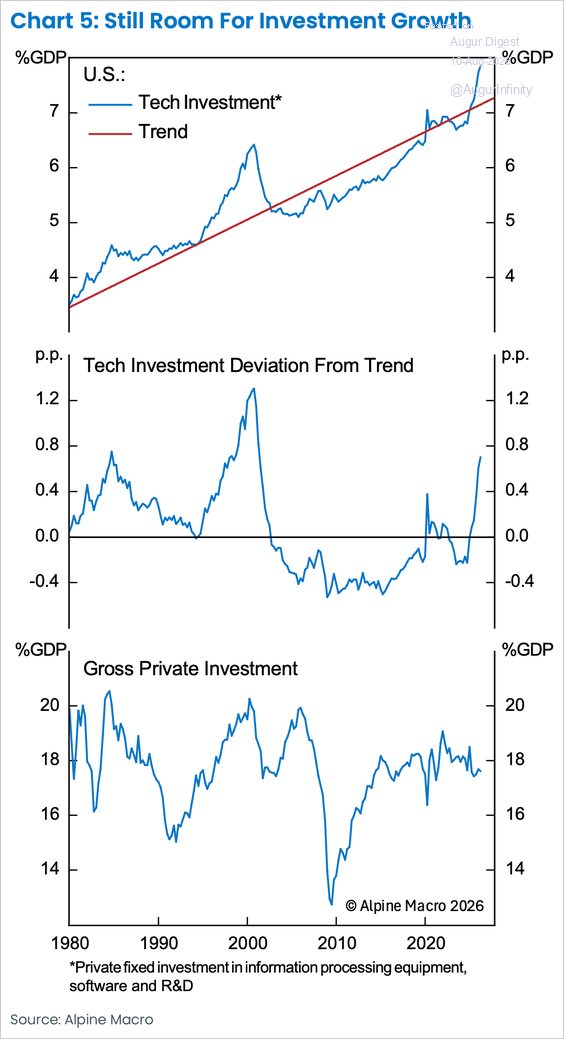
3. Technology investment has risen above its long-term trend but remains well below the excesses of prior cycles, suggesting AI-related capital spending has further room to grow.
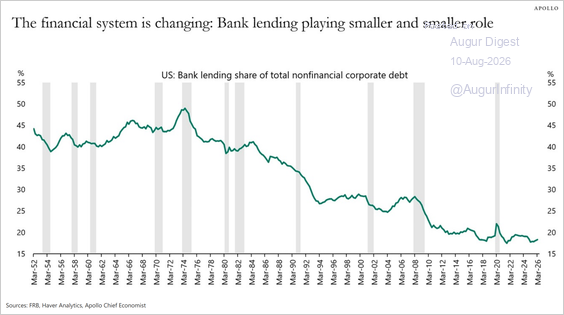
4. Banks provide less than one-fifth of nonfinancial corporate debt, down from half in the 1970s.
Source: Torsten Slok, Apollo
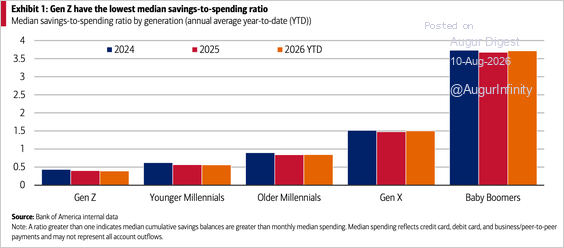
5. Gen Z, defined as those born after 1995, has the lowest median savings-to-spending ratio relative to other generations.
Source: Bank of America Institute Read full article
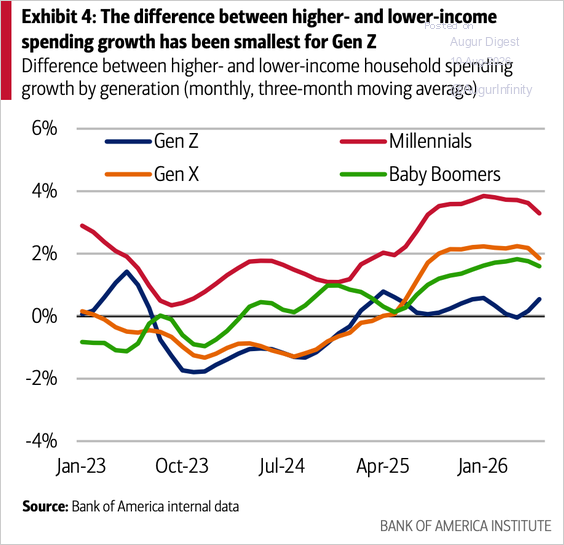
• “K-shaped” spending growth hardly exists within Gen Z. In fact, the difference between higher- and lower-income spending growth has been the lowest for Gen Z over the past year.
Source: Bank of America Institute Read full article
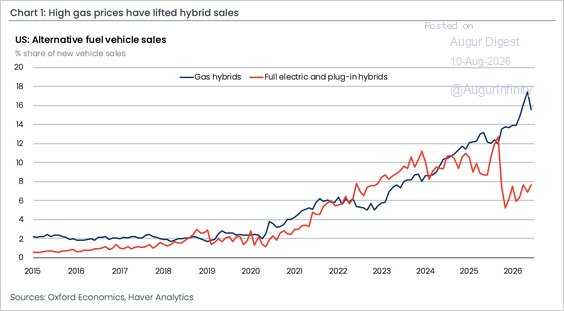
6. Higher gasoline prices have driven a sharp shift toward hybrid vehicles, lifting their share of new US vehicle sales to a record high, while the expiration of federal tax credits has pushed electric vehicle sales well below 2025 levels.
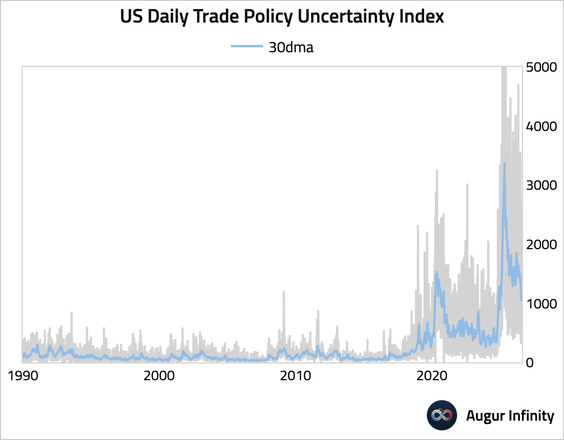
7. Trade policy uncertainty has receded but remains elevated relative to history.
Euro Area
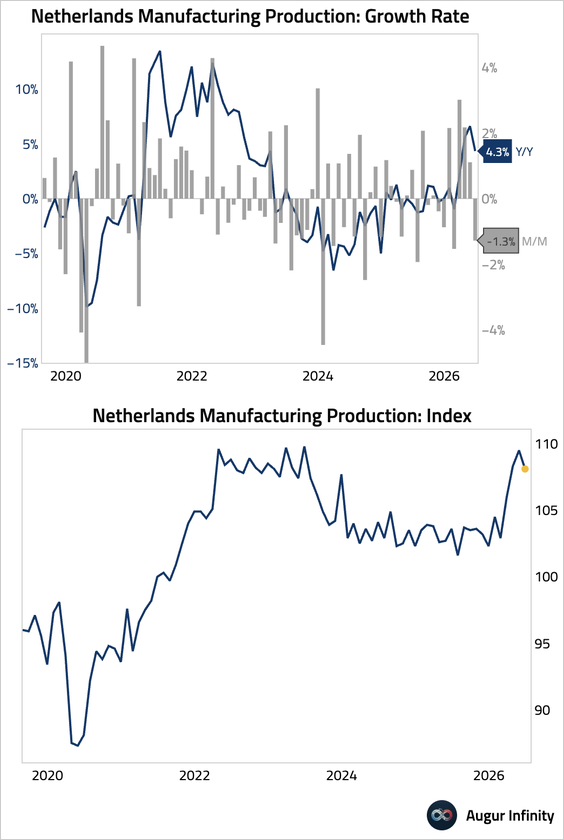
1. Dutch manufacturing production fell.
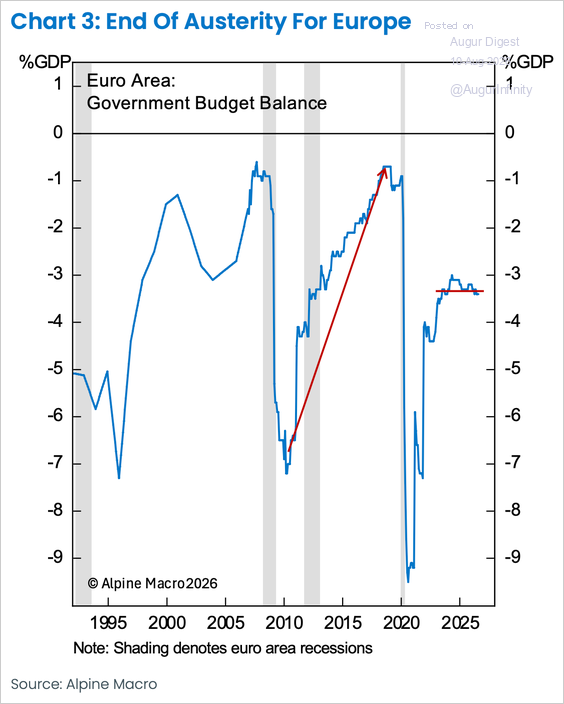
2. Euro area fiscal austerity has decisively reversed since the pandemic, with budget deficits remaining near 3% of GDP.
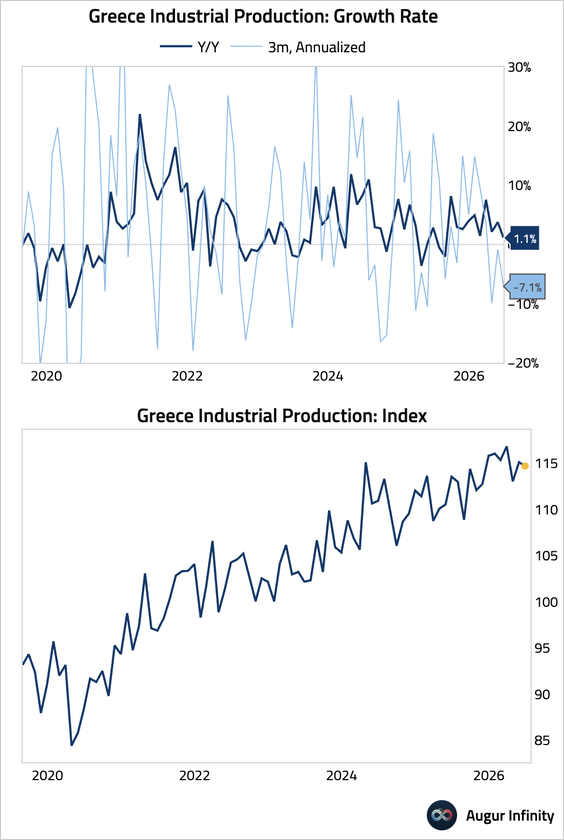
3. Greek industrial output has weakened.
4. ING warns that European investors’ dollar hedge ratios fell to 64% in June, versus roughly 73% implied by current hedging costs, leaving EUR/USD vulnerable to a sharp dollar sell-off if a US-specific shock triggers renewed hedging.
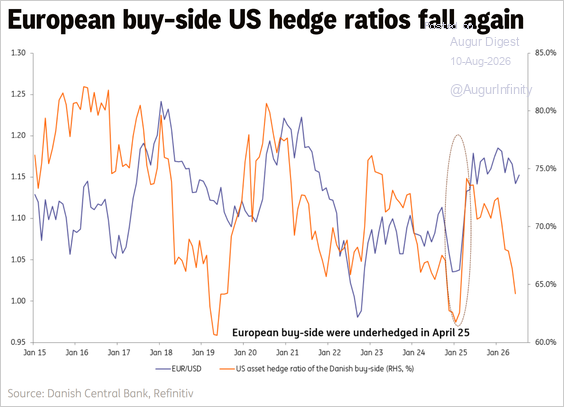
Source: ING Group
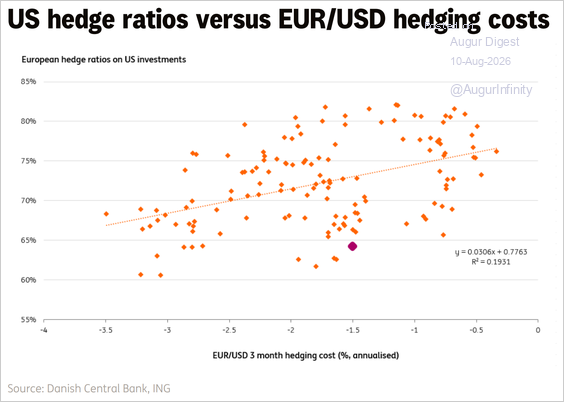
Source: ING Group
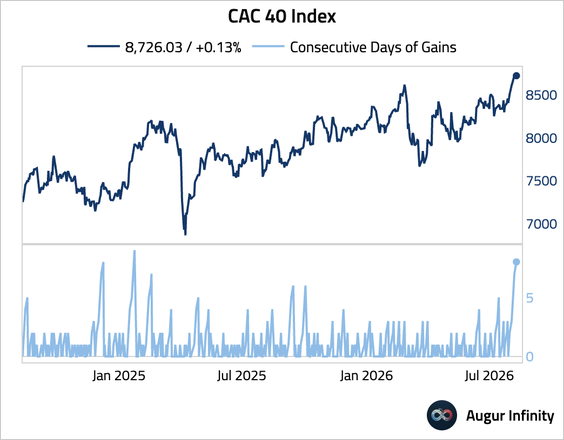
5. The CAC 40 Index has gained for eight consecutive days, the longest streak since January 2025.
Europe
1. Sweden industrial production edged down, …
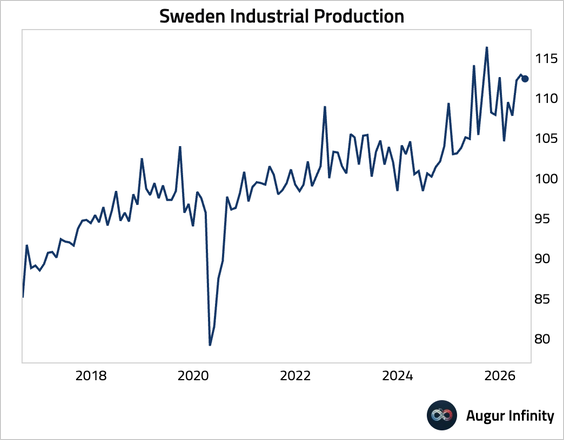
… although industrial new orders surged, driven by export demand.

Subscribe to read the rest.
Become a subscriber of Augur Digest Premium to see all 77 charts today.
Upgrade