
The United States
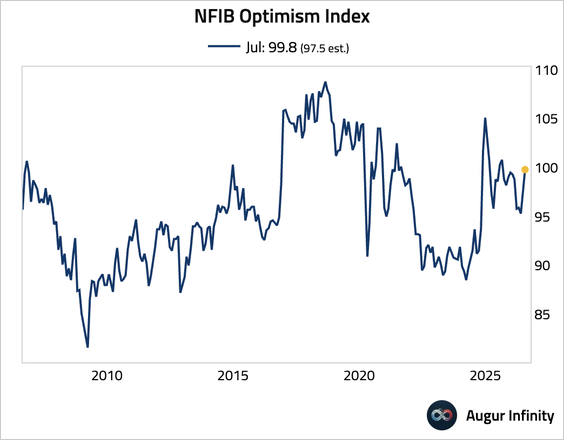
1. The NFIB Small Business Optimism Index jumped, although a response rate of around 9% calls into question the reliability of the data.
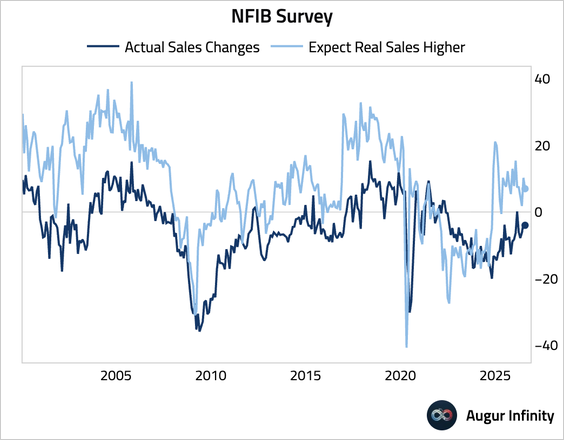
• Sales (edged down):
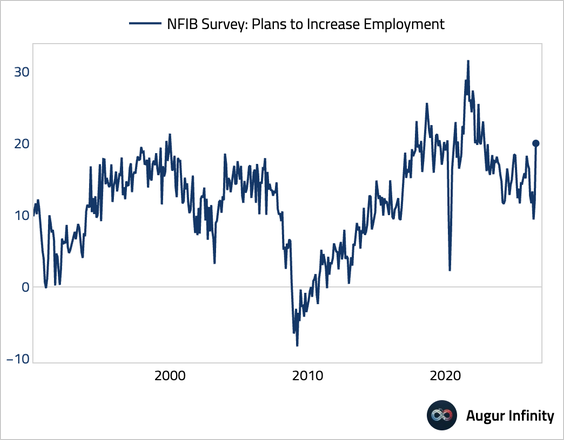
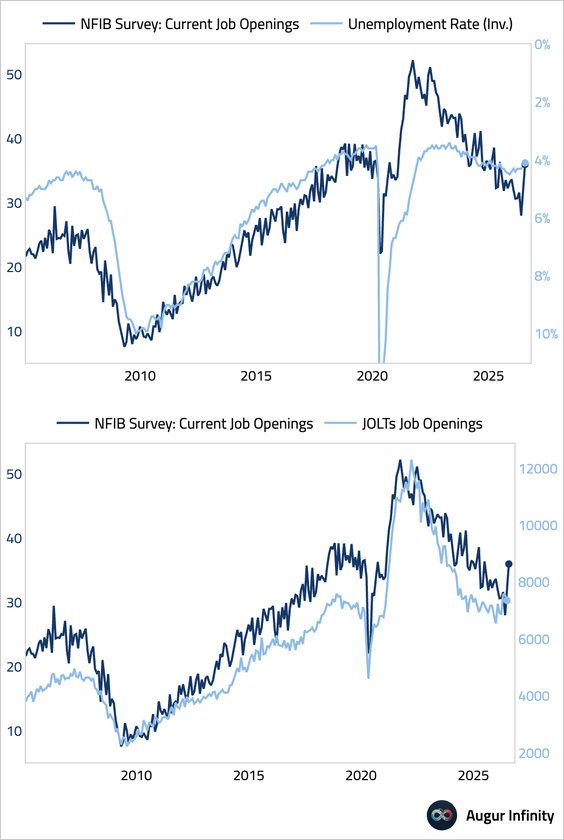
• Hiring intentions (jumped):
– Difficulty in filling openings (elevated):
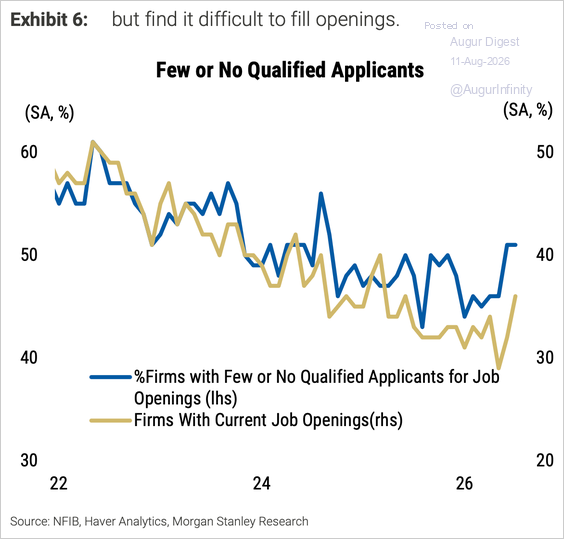
Source: Morgan Stanley Research
• Job openings (surged):
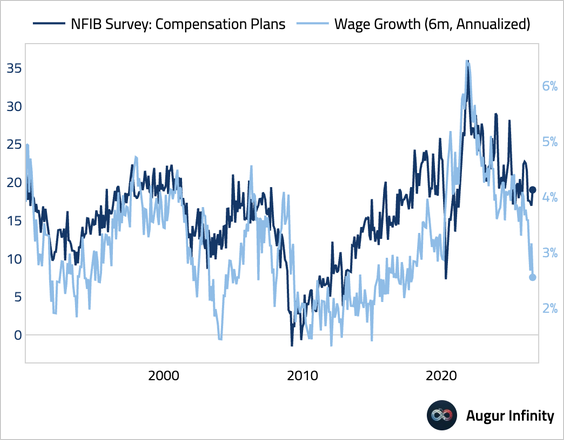
• Wage plans (ticked up):
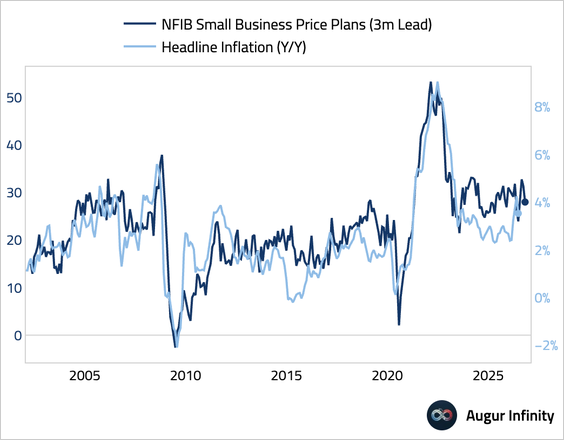
• Price plans (moderated):
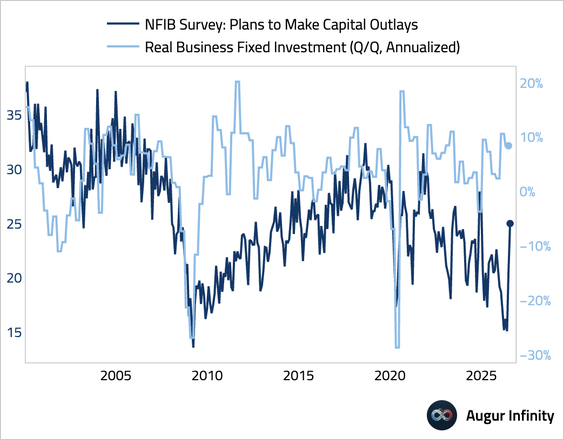
• Capex intentions (sharply higher):
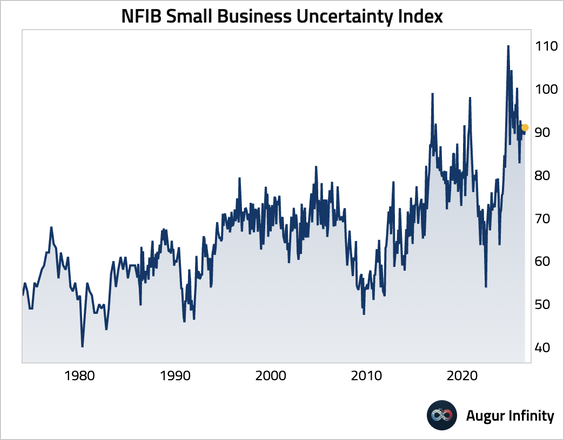
• Uncertainty (edged up):
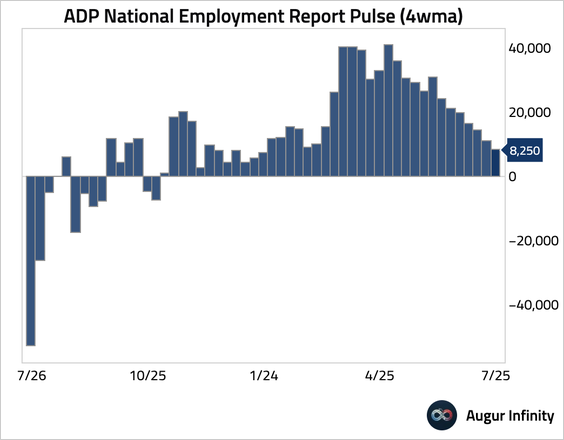
2. Private payroll gains continued to slow in the four weeks ending on July 25, according to ADP.
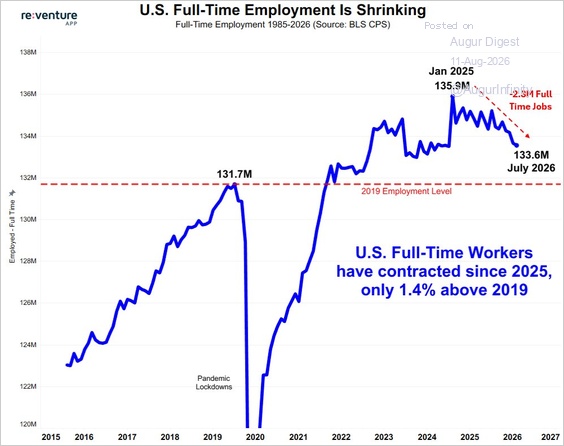
• Full-time employment has shrunk.
Source: @nickgerli1
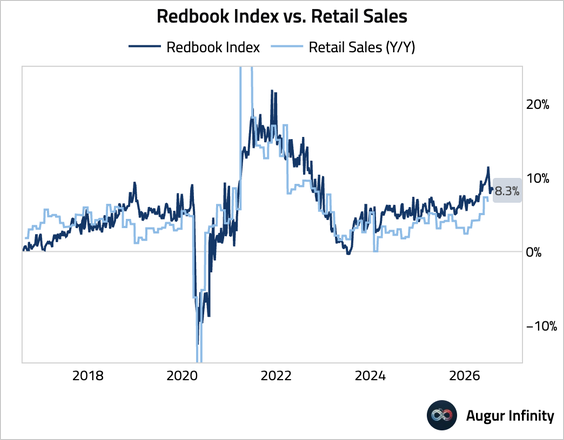
3. Same-store retail sales growth moderated slightly.
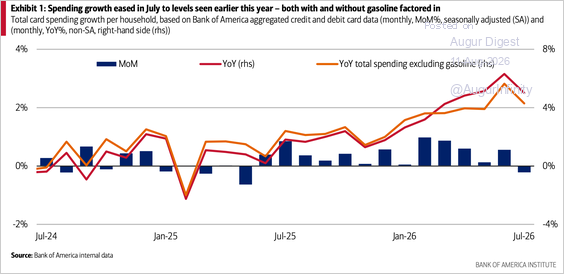
4. Consistent with <a href="https://augurinfinity.com/tds?date=20260811" target=_blank>J.P. Morgan’s estimates</a>, Bank of America’s internal data show card spending per household cooled year over year and contracted month over month. The latter largely reflects the unwinding of June’s temporary boosts from the timing of major online promotions and World Cup-related spending rather than broad weakening in consumer demand.
Source: Bank of America Institute Read full article
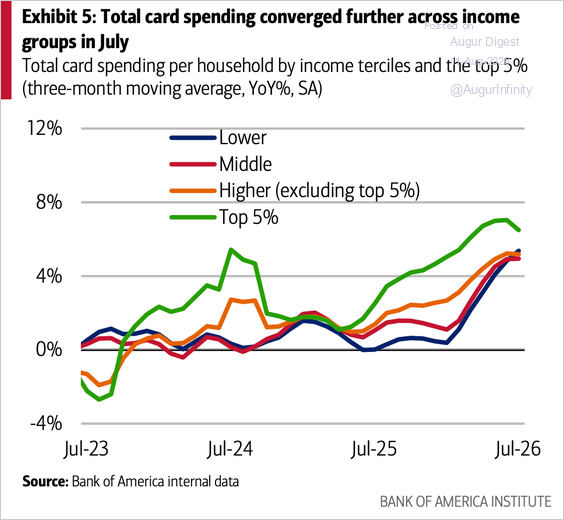
• Total card spending growth converged to roughly 5% year over year across income terciles in July, while the top 5% of earners remained an outlier, posting growth of approximately 6.5%.
Source: Bank of America Institute Read full article
• Total card spending growth converged to roughly 5% year over year across income terciles in July, while the top 5% of earners remained an outlier, posting growth of approximately 6.5%.
Source: Bank of America Institute Read full article
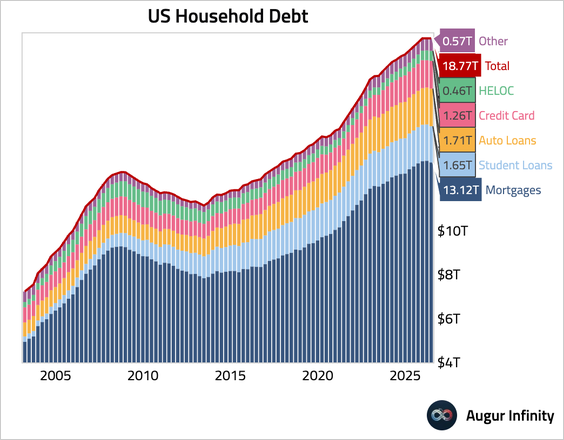
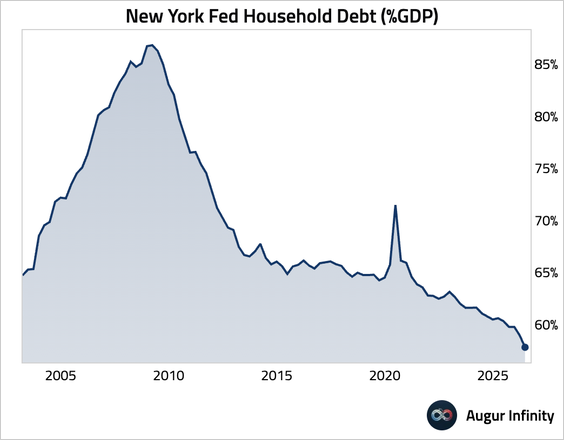
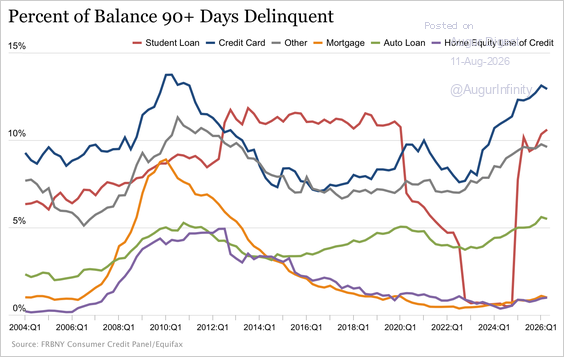
5. Household debt edged down in Q2 to $18.8 trillion as mortgage balances declined, while credit card and auto loan balances rose.
– Here’s household debt as a percentage of GDP.
• Overall delinquency rates improved slightly.
Source: Federal Reserve Bank of New York
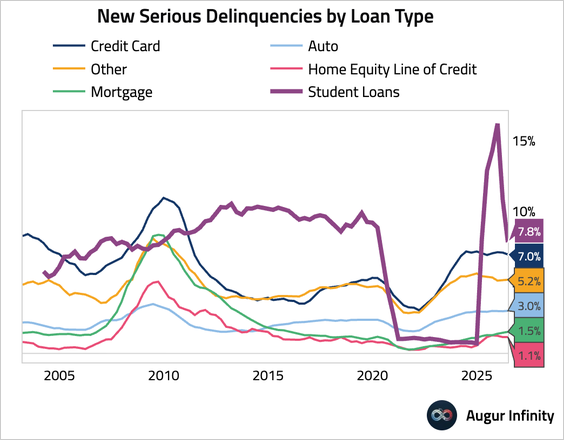
– Transitions into serious delinquency were broadly stable.
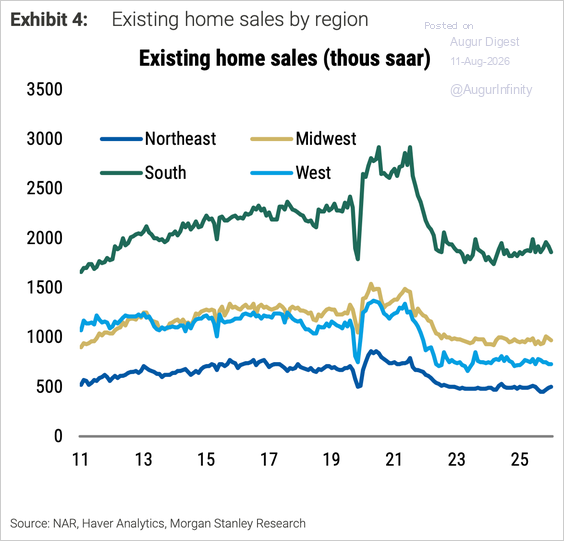
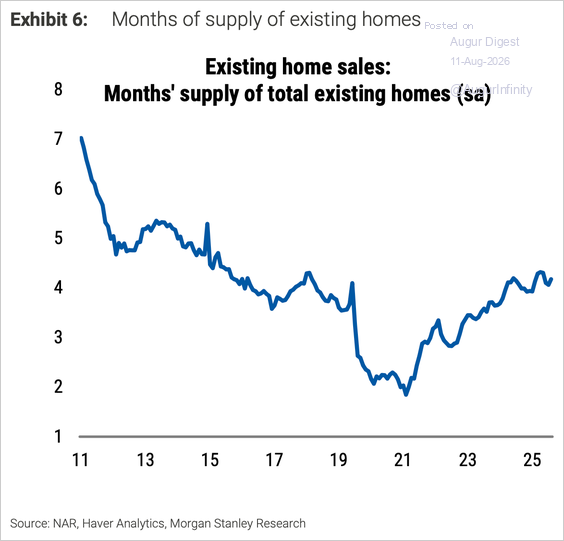
6. Existing home sales fell, remaining near three-year lows as elevated mortgage rates and weak demand dim recovery prospects.
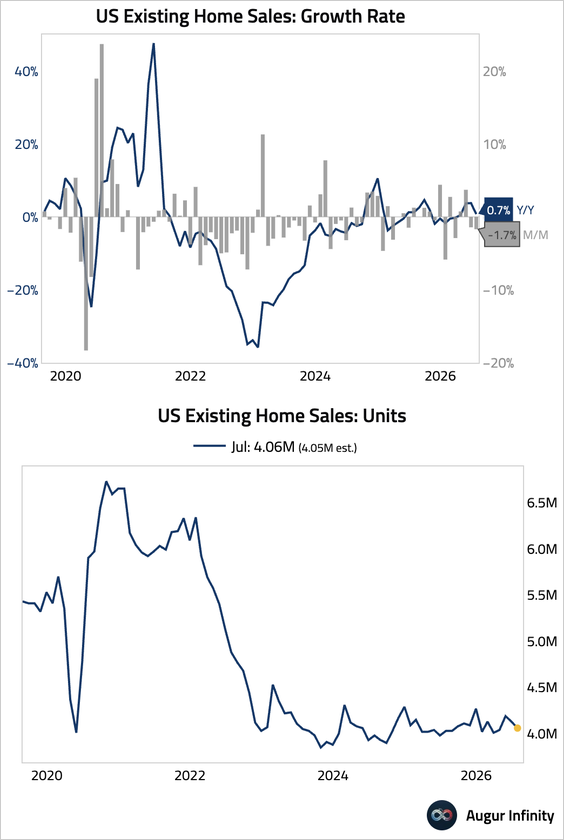
• The decline was concentrated in the South and Midwest.
Source: Morgan Stanley Research
• Months’ supply of existing homes has climbed from roughly two months in 2021 to 4.2 months in July, reflecting a substantial normalization in housing inventory even as sales remain subdued.
Source: Morgan Stanley Research
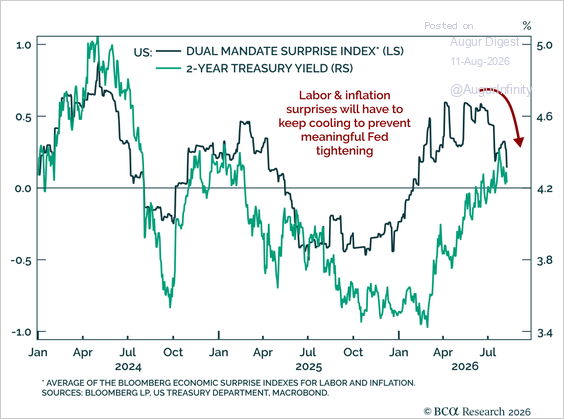
7. BCA’s Dual Mandate Surprise Index has cooled, suggesting peak Fed hawkishness is likely past, supporting front-end Treasuries and weighing on the US dollar.
Source: @felixavp, BCA Research
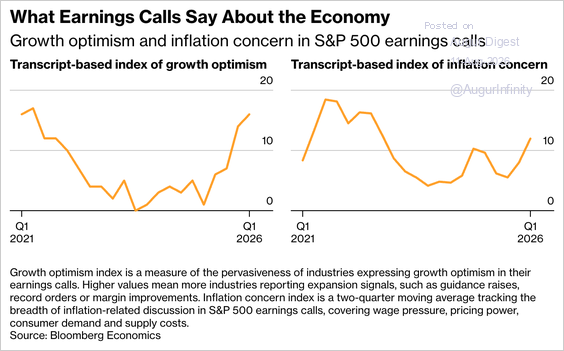
8. Bloomberg Economics’ AI analysis of S&P 500 earnings calls indicates that broad-based growth optimism remains resilient even as inflation concerns persist.
Source: @economics Read full article
9. Bloomberg’s index of US financial conditions reached its most accommodative level since 1997 last Friday.

Subscribe to read the rest.
Become a subscriber of Augur Digest Premium to see all 80 charts today.
Upgrade