
The United States
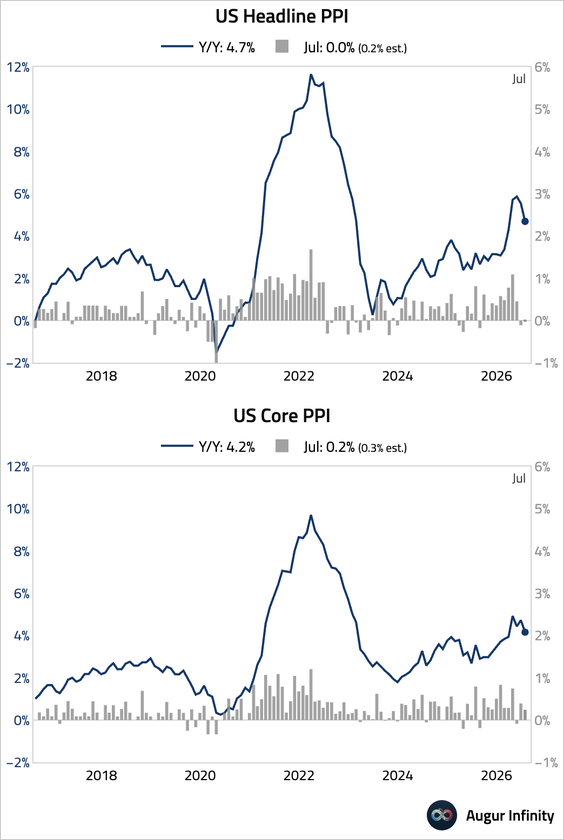
1. Headline PPI was roughly flat in July (−3 bps), driven by falling energy prices. Core PPI rose 0.2%, tamer than expected, although the June reading was revised up from 0.2% to 0.4%.
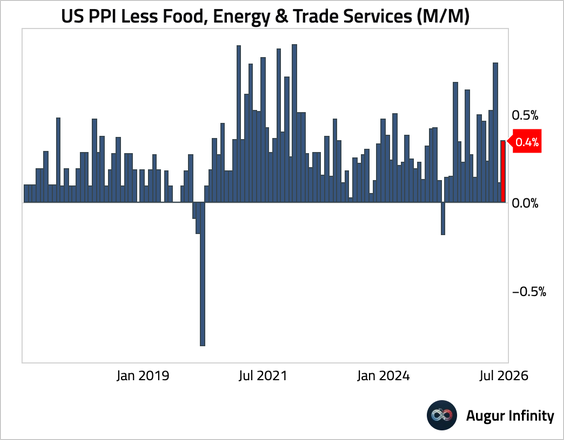
• Further excluding trade services, the core-core PPI accelerated to 0.4%, a bit higher than expected (0.3%).
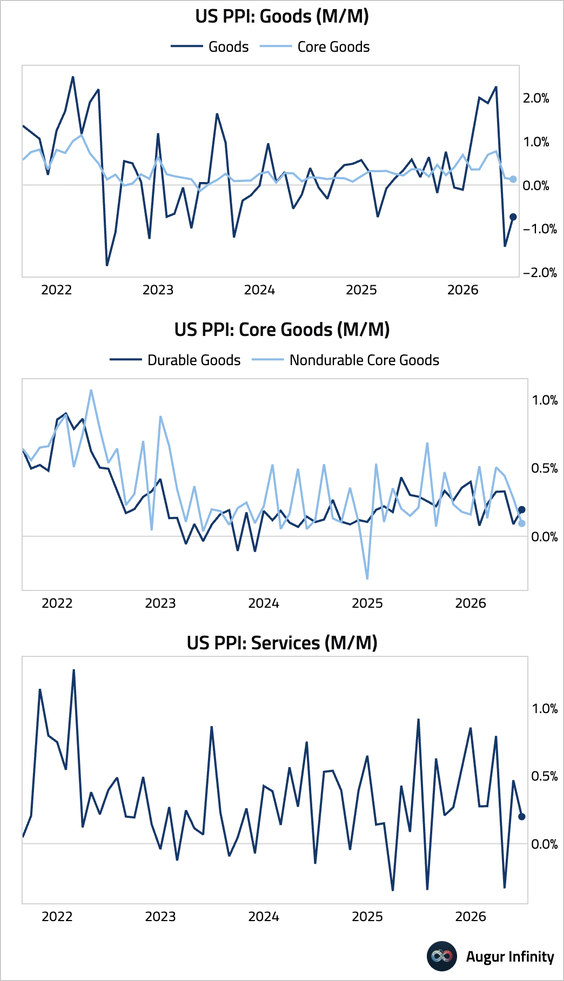
• PPI for goods continued to fall while core goods inflation was muted.
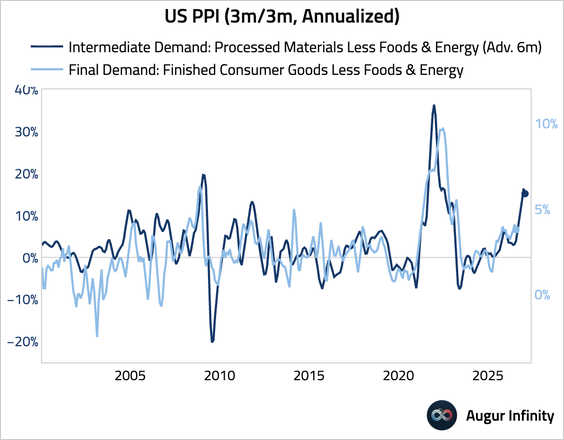
– Prices for processed intermediate goods imply faster increases in final demand prices for consumer goods in the coming months, although the pressure may have peaked.
• Falling energy prices …
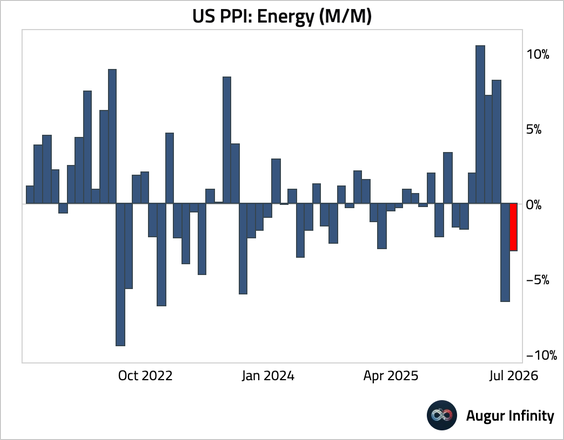
… appear to be feeding through to the transportation and warehousing component.
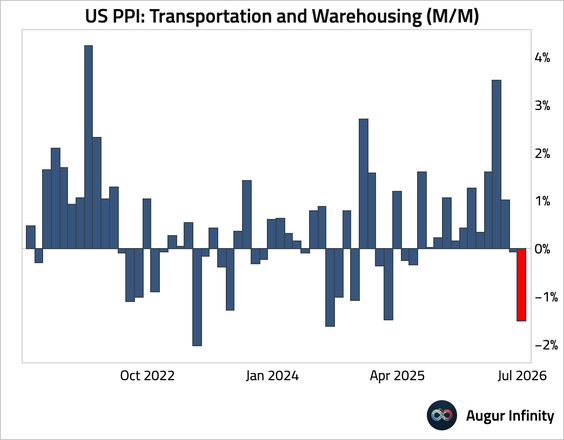
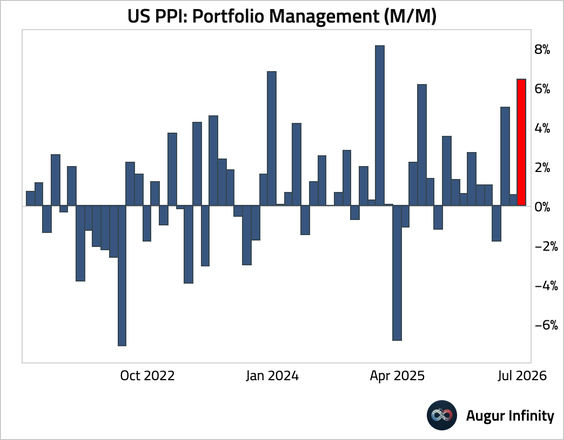
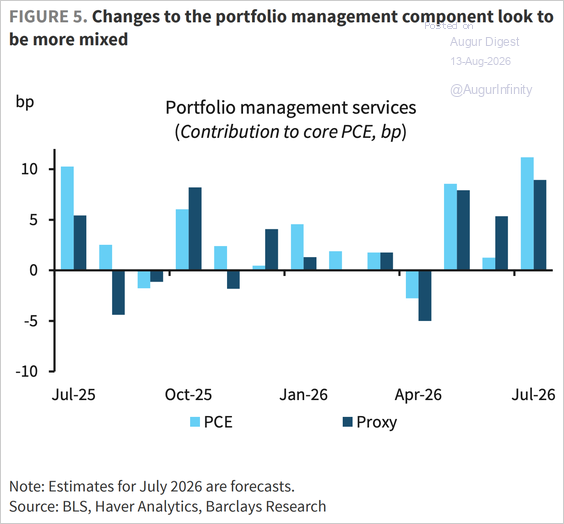
– The jump in PPI portfolio management prices will add 11 basis points to the core PCE deflator, though the boost should be temporary as the BEA revises its methodology in September (more on this below).
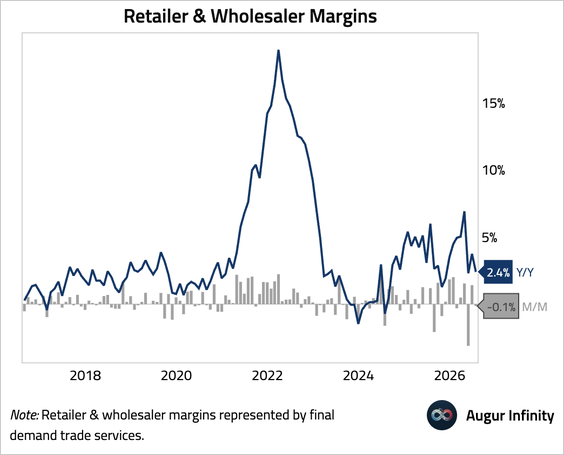
• Business markups fell slightly, suggesting distributors might be absorbing some of the energy shock instead of passing it on to consumers.
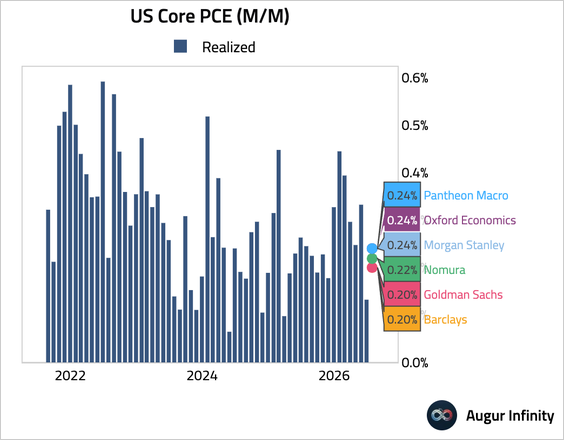
• This chart shows the July core PCE forecasts from various sources, after incorporating today’s PPI report.
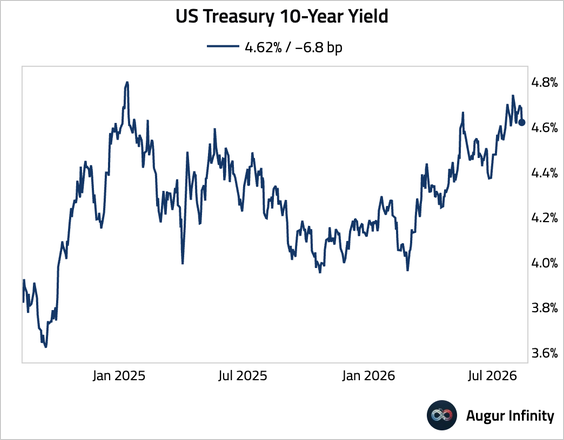
• Treasury yields fell after the report.
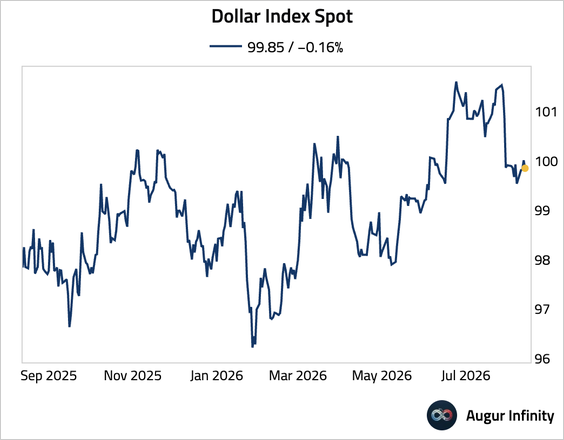
– The dollar weakened.
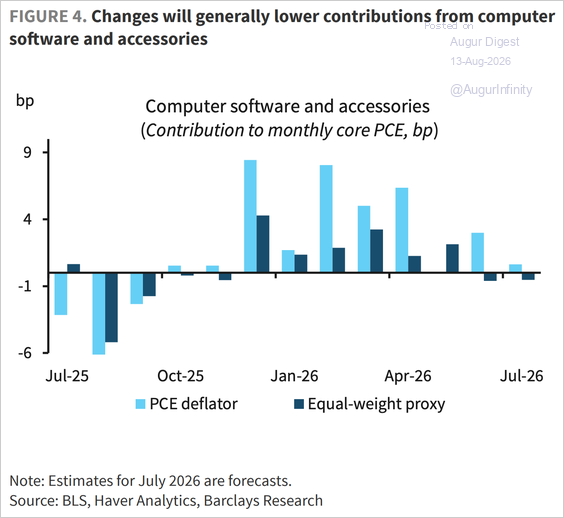
2. Barclays estimates BEA’s late-September PCE methodology changes will lower July core PCE to 0.17% month over month from 0.20%.
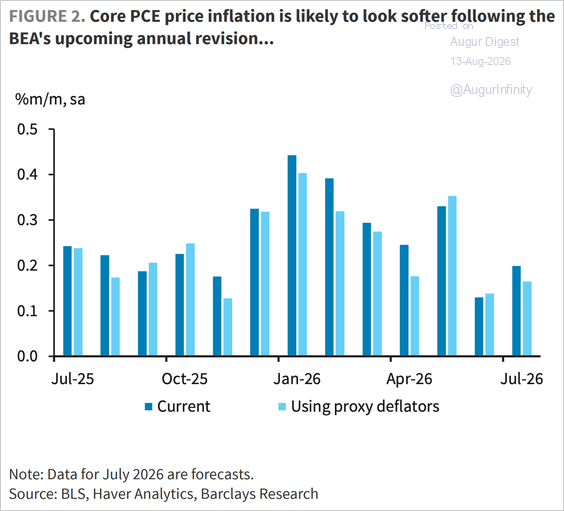
Source: Barclays Research
– Contributions from computer software and accessories:
Source: Barclays Research
– Contributions from portfolio management:
Source: Barclays Research
• Related estimates from Oxford Economics is available in <a href="https://augurinfinity.com/tds?date=20260722" target="_blank">The Daily Shot from July 22</a>.
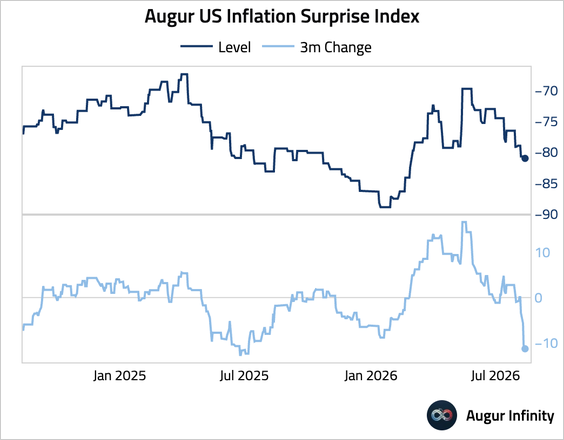
3. Our inflation surprise index has steadily declined over the past few months.
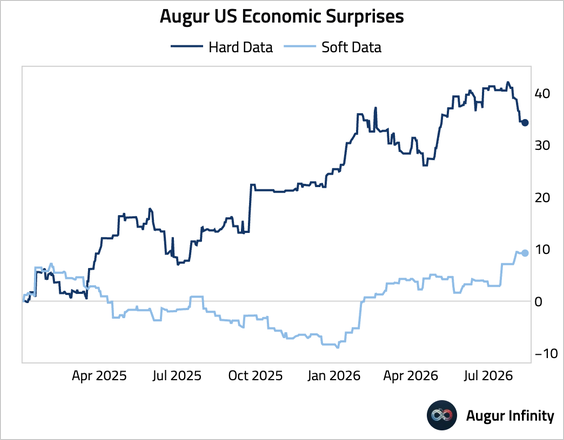
• Recently, hard activity data have surprised to the downside, while soft data (sentiment) have surprised to the upside.
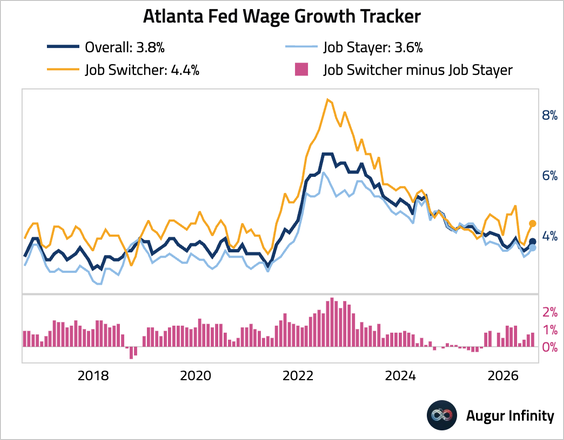
4. The Atlanta Fed’s Wage Growth Tracker edged up in July. Wage growth for job switchers rose from 4.1% to 4.4%, while wage growth for job stayers edged up from 3.4% to 3.6%.
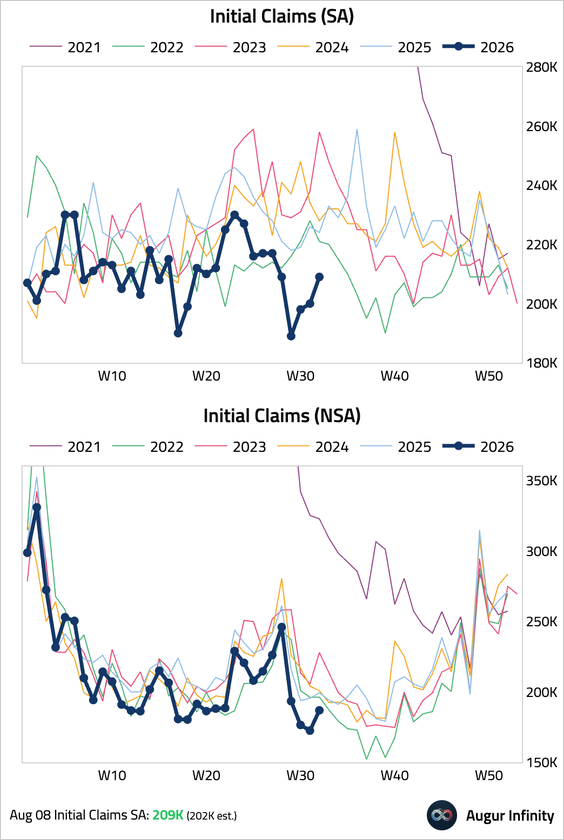
5. Initial jobless claims rose to a five-week high and exceeded consensus.
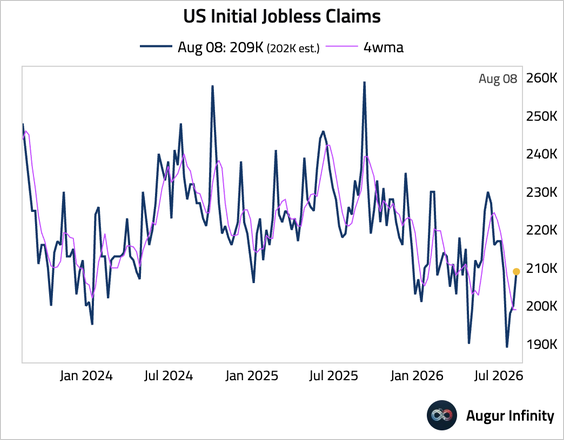
– However, the four-week moving average was stable at secularly low levels, suggesting layoffs remain limited.
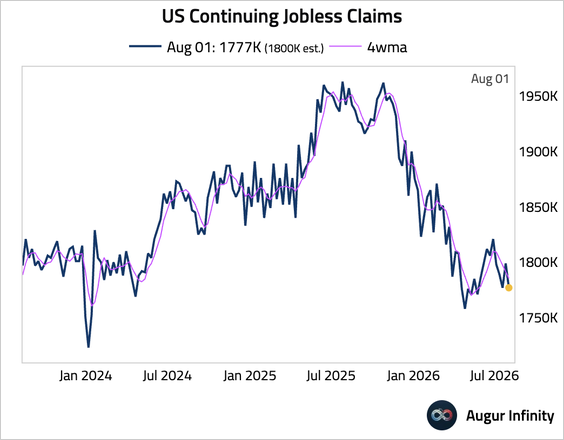
• Continuing claims edged down and remained lower than the same period last year.
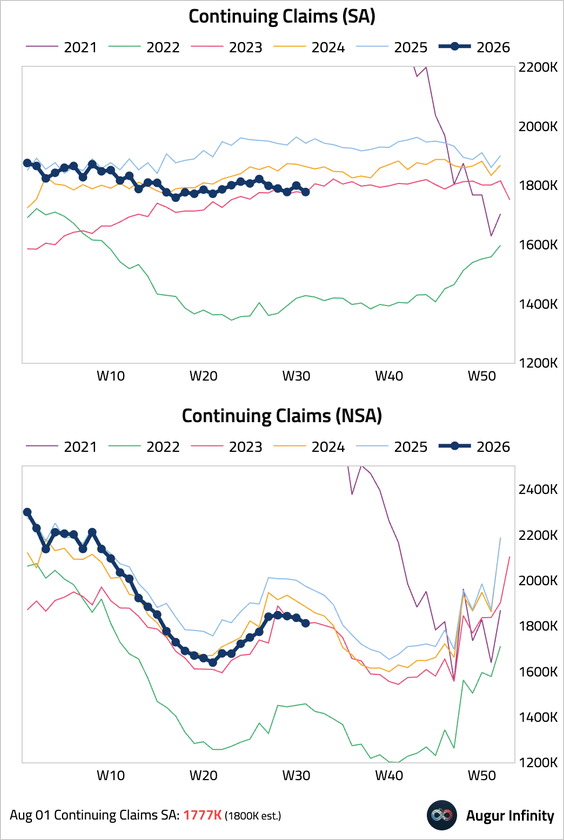
– The four-week moving average continues to decline as well.
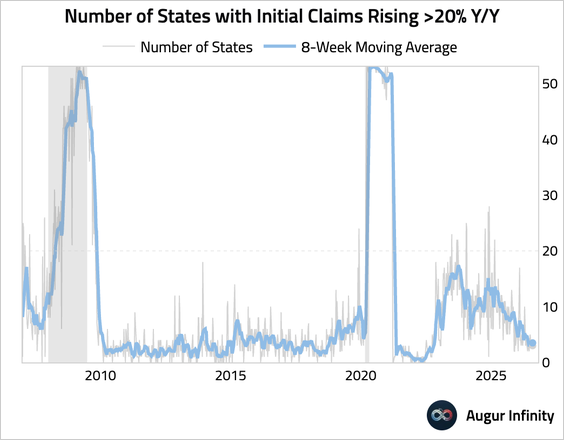
• The number of states with initial claims rising over 20% year over year remains low.
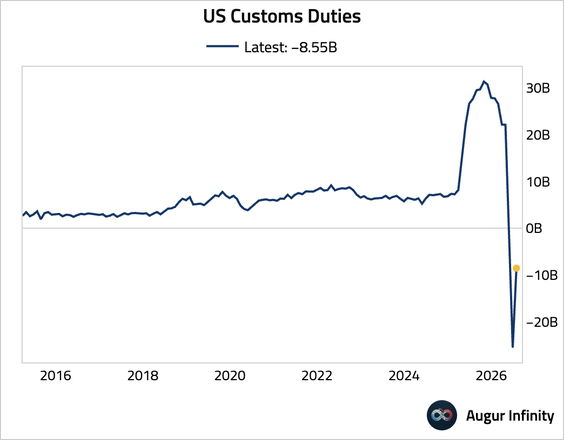
6. Customs duties have gone from being a budget tailwind to a headwind.
7. Following larger tax refunds in 2026, savings and deposits remain elevated across income cohorts, …

Subscribe to read the rest.
Become a subscriber of Augur Digest Premium to see all 94 charts today.
Upgrade