
The United States
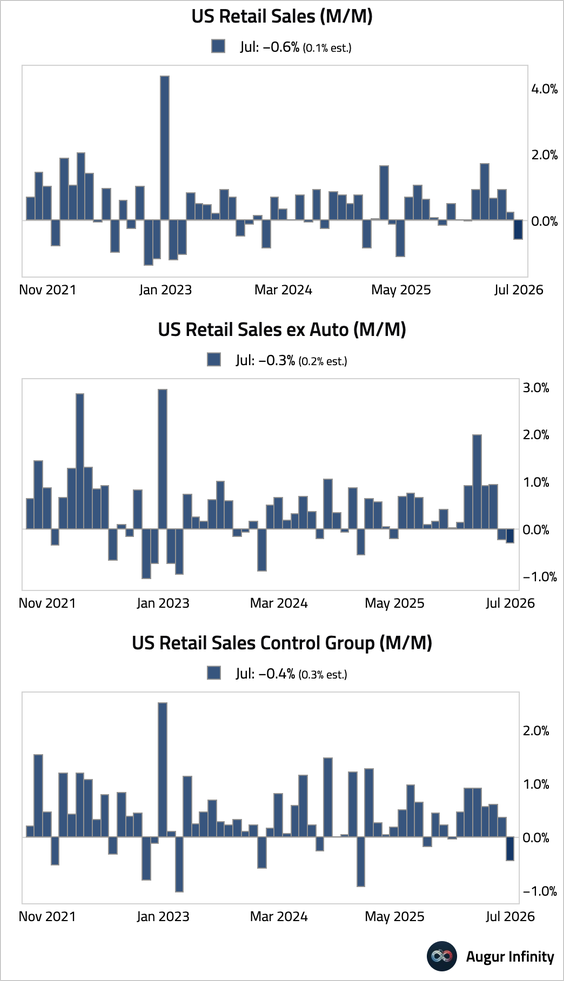
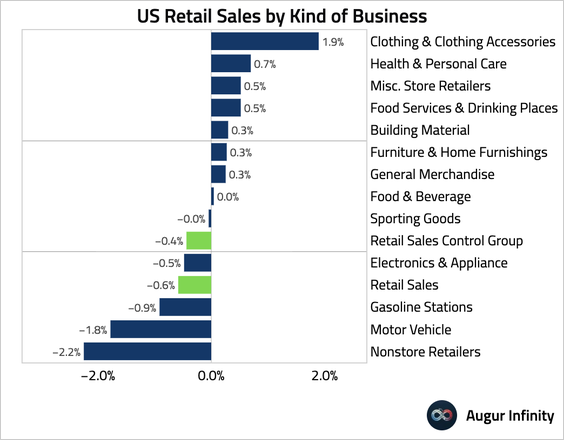
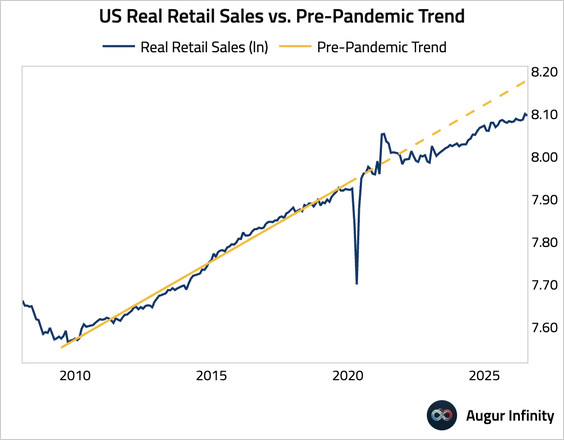
1. Retail sales unexpectedly dropped in July and missed consensus estimates across the board. The key “control group”—a direct input for GDP—fell at the fastest pace since January 2025.

Source: Reuters Read full article
• Promotional sales events such as Amazon Prime Day occurred earlier this year, in June, pulling forward sales. The drop in July is largely a payback from those events, …
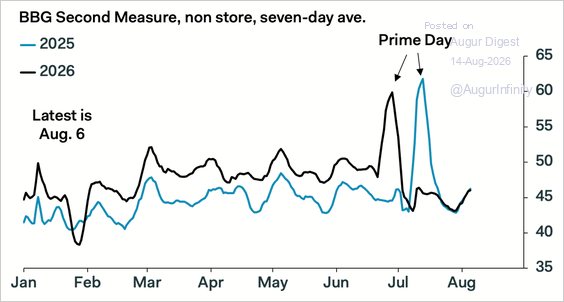
… dragging down nonstore sales.
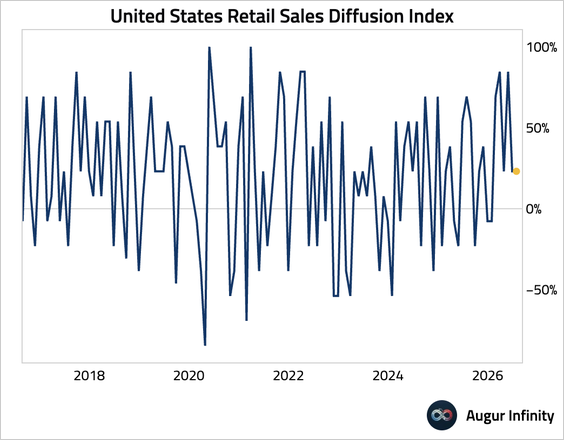
• The retail sales diffusion index held steady.
• Here are real retail sales versus the pre-pandemic trend.
2. The University of Michigan consumer sentiment index deteriorated sharply, undershooting market expectations. The report noted that “large reductions were seen among older consumers, lower-income consumers, and those without a college degree,” who are “particularly vulnerable to any erosion of purchasing power stemming from inflation.”
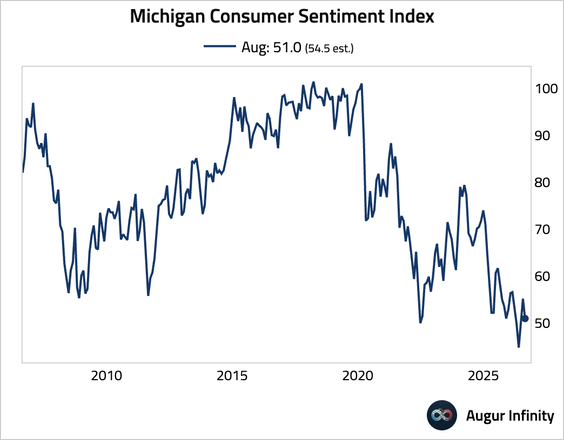

Source: @economics Read full article
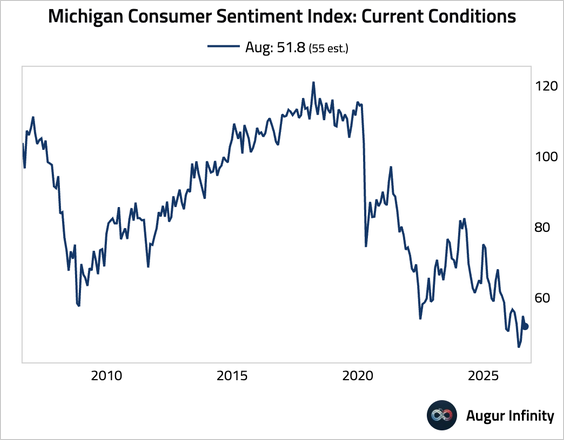
• The decline was broad-based across the current conditions component …
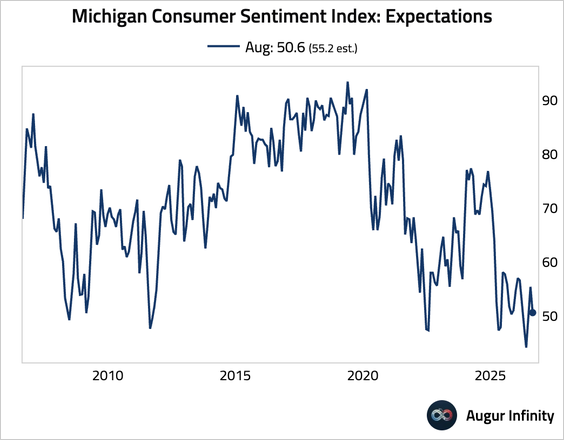
… and the expectations component.
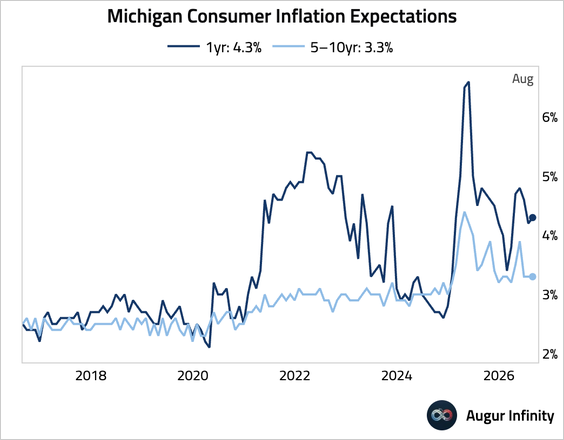
3. Consumers’ median inflation expectations over the next year ticked up, while the longer-term expectation held steady.
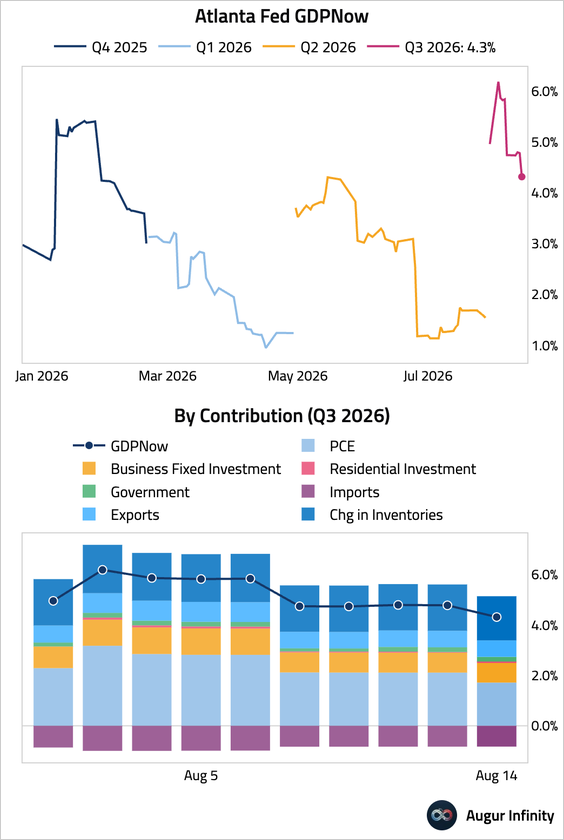
4. The Atlanta Fed’s GDPNow model is now tracking Q3 GDP at 4.3%, down from 5.8% on August 6.
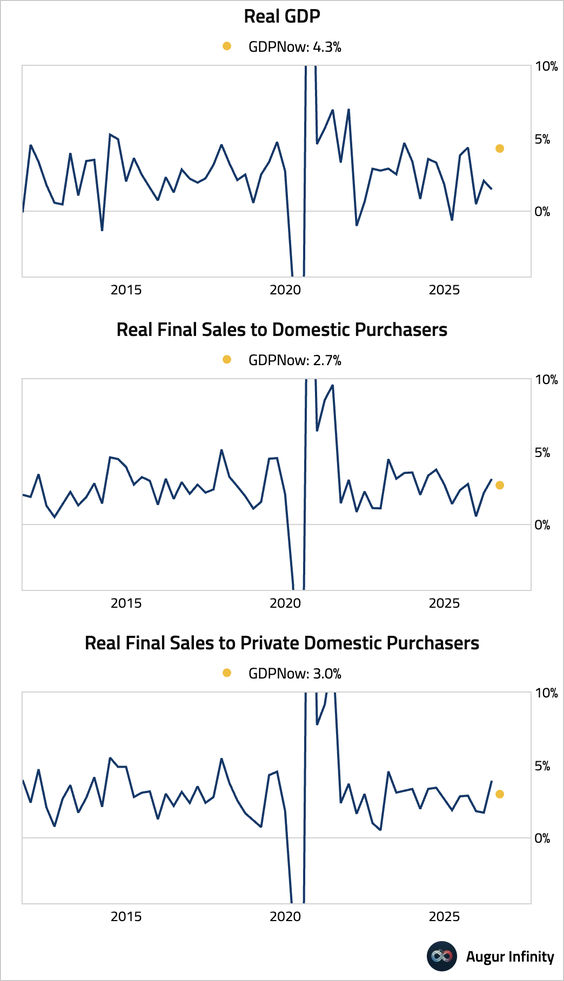
• Real final sales to domestic purchasers, which remove volatile inventories and net trade, are solid at 2.7%. Excluding government spending, real final sales to private domestic purchasers are forecast at 3%.
5. This chart shows the components of GDP, averaged by decade, from the 1950s through today.
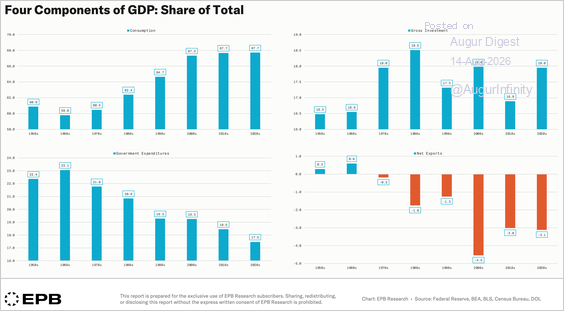
Source: @EPBResearch
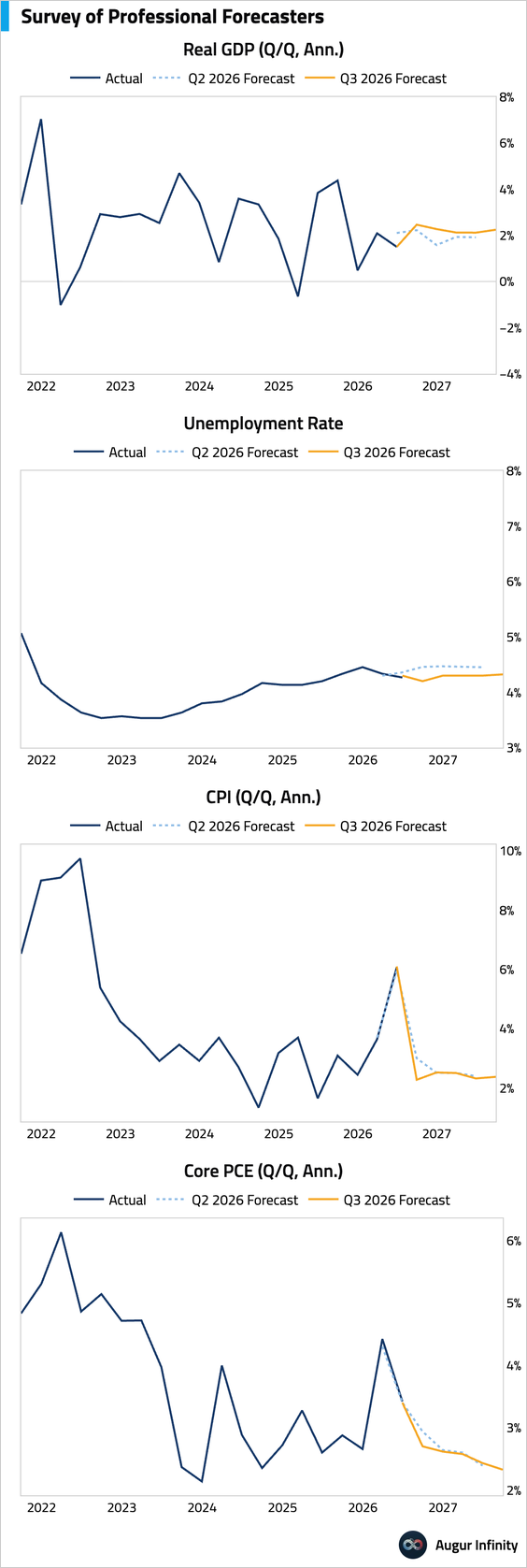
6. Professional forecasters raised near-term real GDP growth forecasts, lowered unemployment expectations, and reduced near-term inflation forecasts.
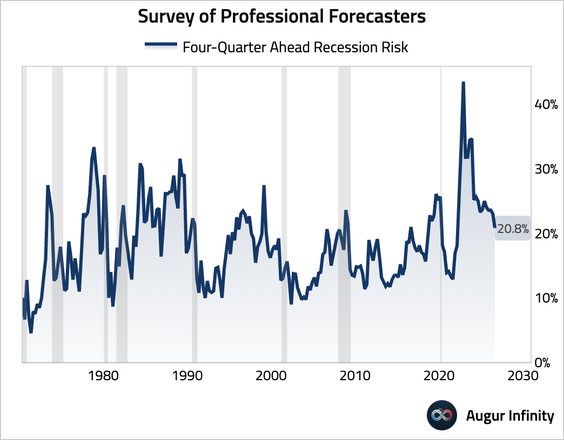
• Implied recession probability four quarters ahead fell.
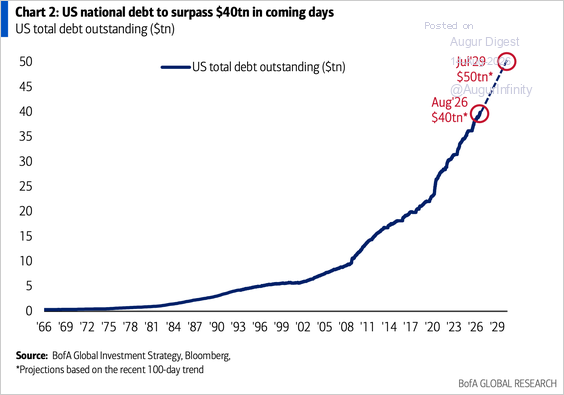
7. US national debt is about to surpass $40 trillion.
• Federal debt has consistently defied CBO forecasts.

Subscribe to read the rest.
Become a subscriber of Augur Digest Premium to see all 88 charts today.
Upgrade