
The United States
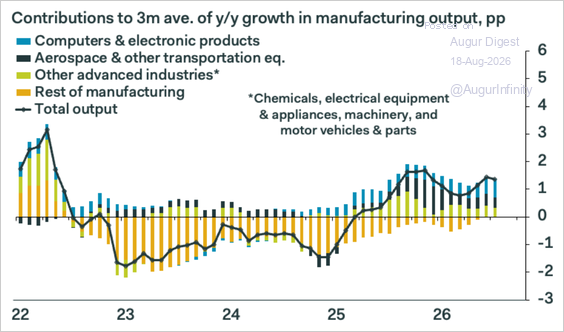
1. Industrial production posted modest gains for a second consecutive month.
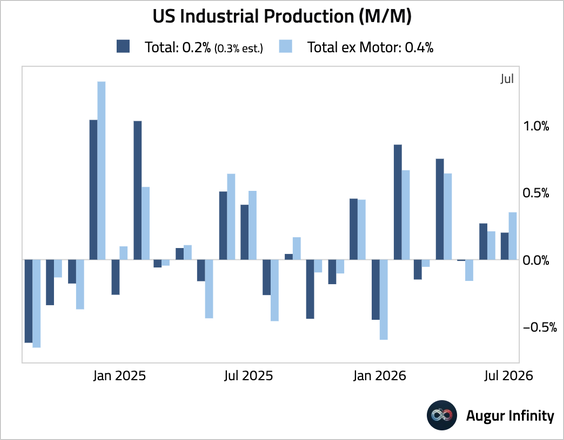
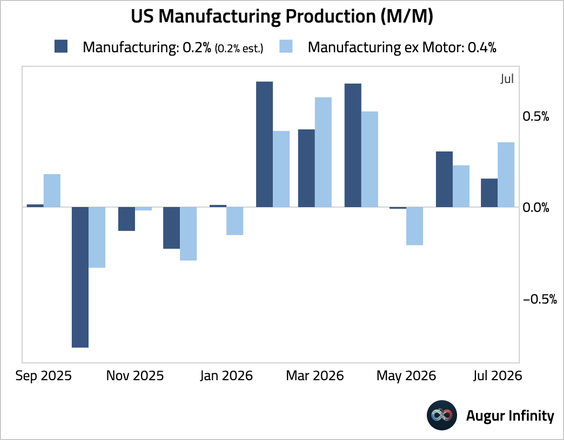
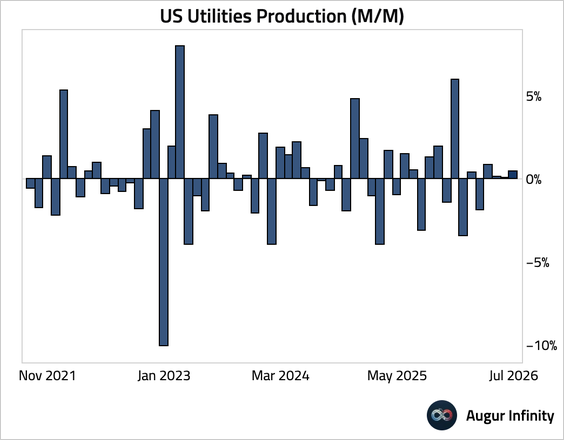
• Both manufacturing and utilities output rose.
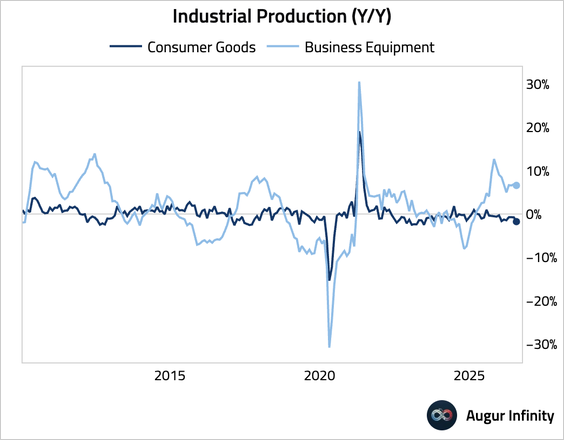
• Production of consumer goods remained in contraction, but the capex-sensitive business equipment output has been strong.
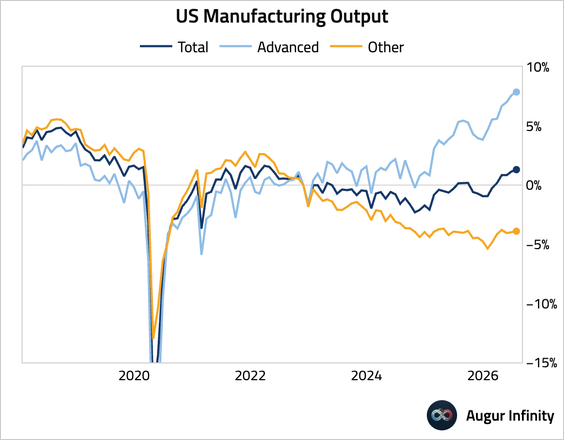
• AI-driven computer and electronics production continues to surge, accounting for roughly half of overall manufacturing output growth, while nearly all remaining gains are concentrated in aerospace and other advanced industries. In contrast, lower-value-added manufacturing has stagnated.
h/t @samueltombs, Pantheon Macroeconomics
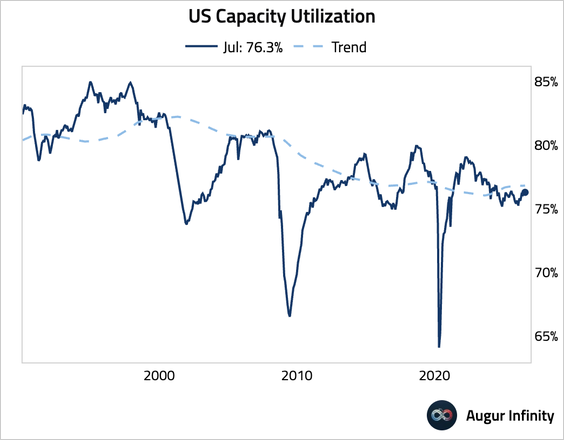
• Capacity utilization inched up.
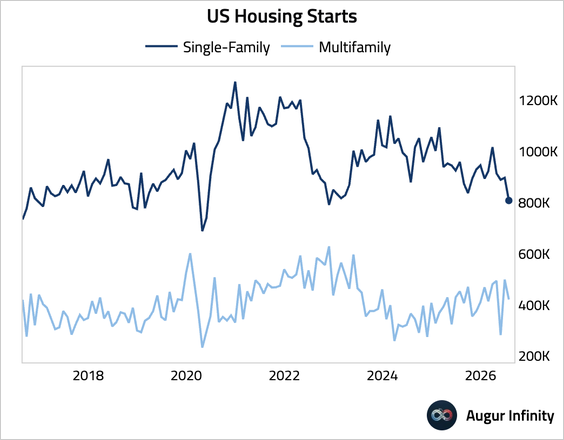
2. Housing starts tumbled more than expected, …
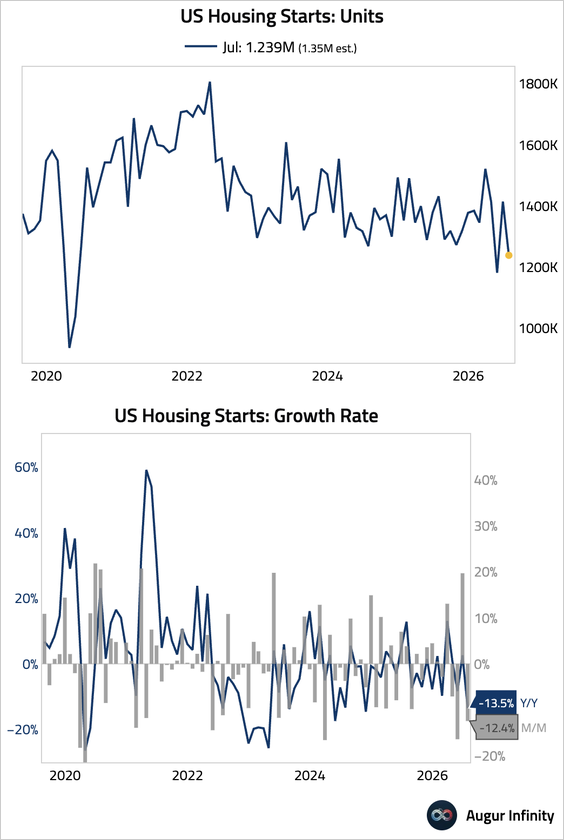
… with single-family starts slumping to the lowest level since November 2022.
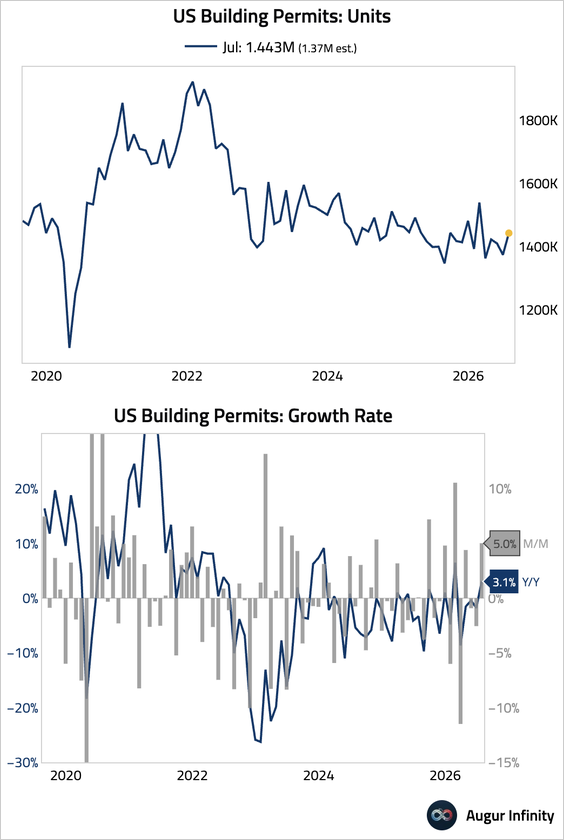
– Building permits rebounded firmly, signaling a potential stabilization in residential construction ahead.
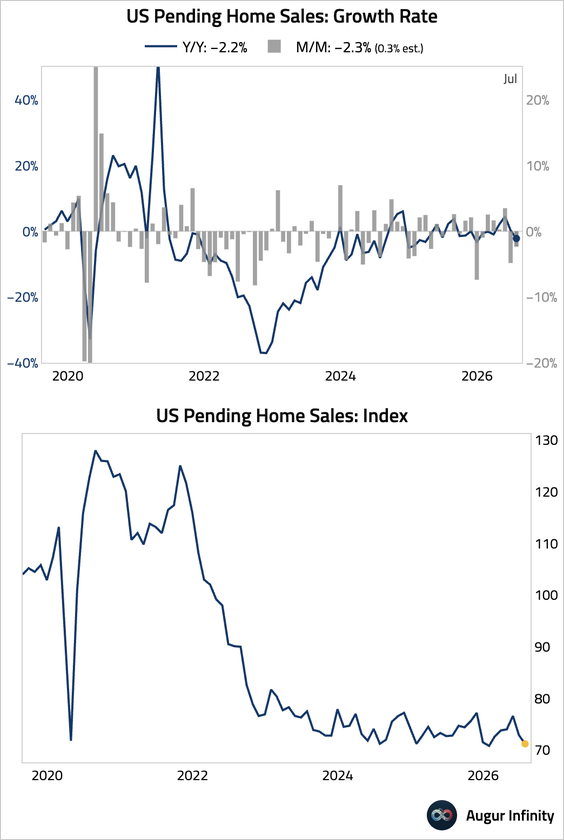
• Pending home sales fell in July to their joint-second-lowest level on record as higher mortgage rates, weakening consumer confidence, and softer hiring weighed on demand.
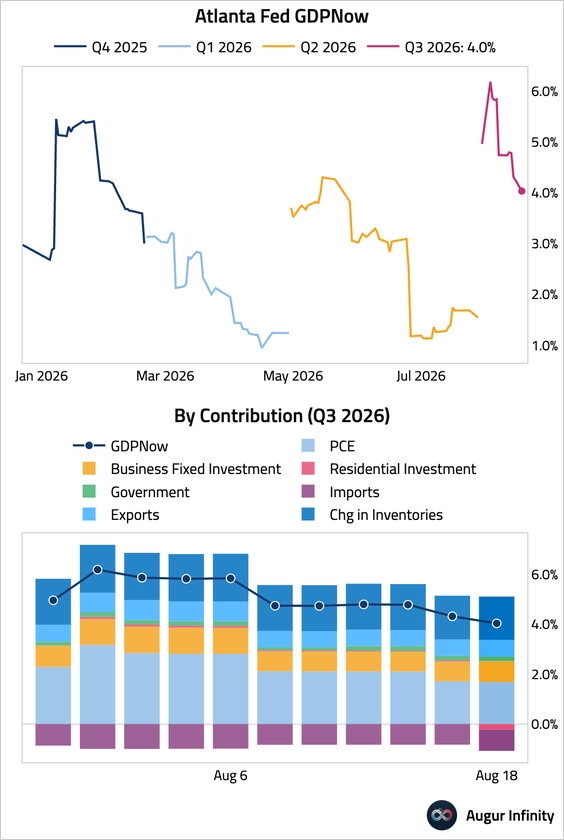
3. The Atlanta Fed’s GDPNow model is now tracking Q3 GDP at 4%, down from 4.3% on August 14.
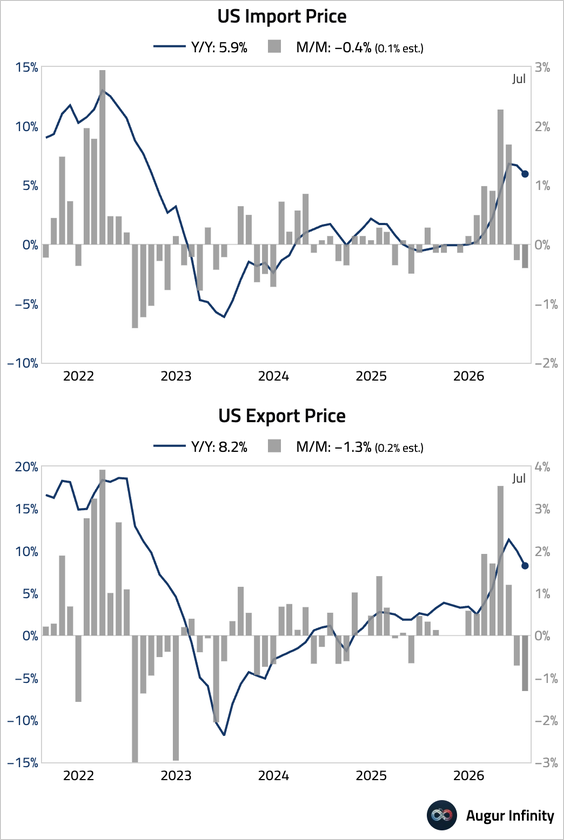
4. Import and export prices both declined.
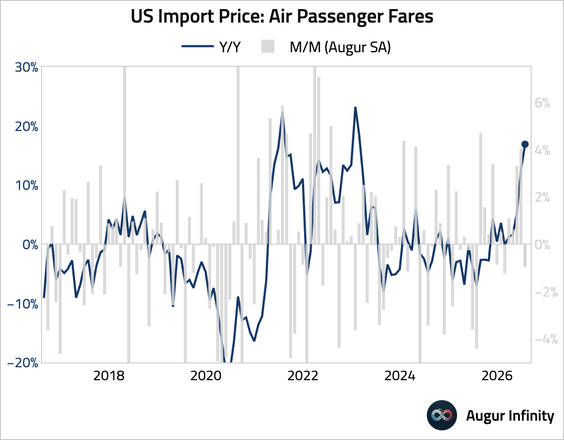
• The international airfares component of import prices—the source data for the foreign travel component of core PCE—fell month over month.
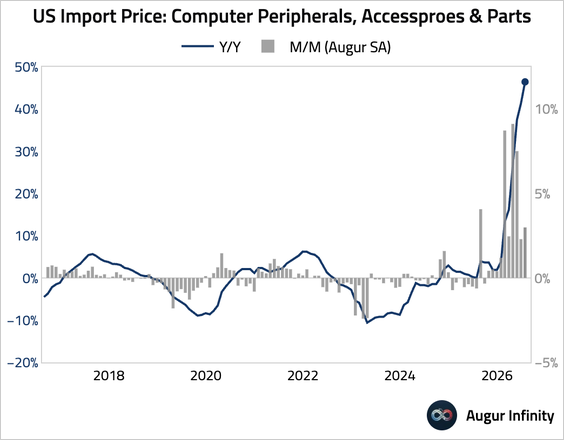
• Import prices for computer peripherals and parts point to further upward pressure on core PCE inflation from electronics prices this year.
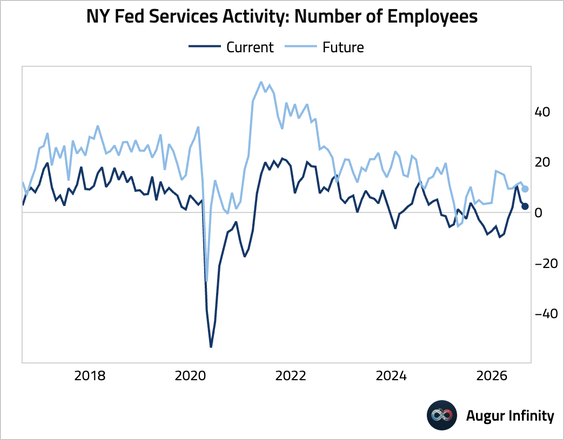
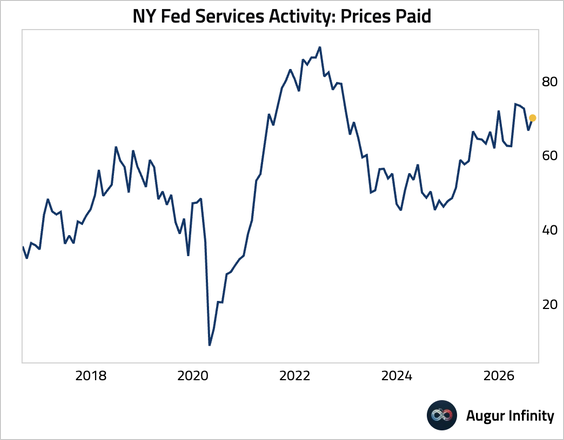
5. Service sector activity in the New York region stalled.
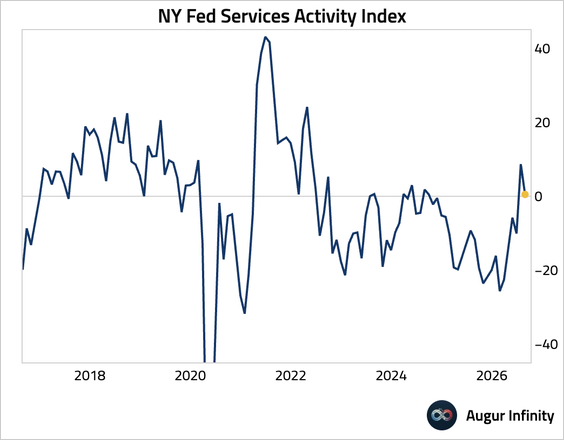
• Employment eased.
• Input cost pressures rose, threatening margins.
6. Private payroll gains edged up in the four weeks ending on August 1, according to ADP.

Subscribe to read the rest.
Become a subscriber of Augur Digest Premium to see all 76 charts today.
Upgrade